

Every March 30th, we celebrate International Zero Waste Day, a date promoted by the United Nations to highlight the need to transform our production and consumption model.
However, beyond the institutional framework, this day raises a strategic question for the business community: Is it possible to operate while minimizing waste generation without compromising competitiveness?
The answer is not only yes, but more and more companies are demonstrating that the Zero Waste approach is not a trend, but a logical evolution within advanced waste management.
For industrial, logistics, or service companies, Zero Waste does not mean eliminating absolutely all waste overnight. It means redesigning processes, optimizing resources, and turning what was once a cost into an opportunity for operational improvement.
At TMA, we support companies on this journey, integrating Circular Economy strategies, resource recovery, and Zero Waste certifications tailored to each sector.
WHAT IS THE ZERO WASTE MODEL IN COMPANIES AND WHY DOES IT GO BEYOND RECYCLING?
In the corporate world, the concept of Zero Waste takes on a strategic dimension focused on efficiency.
In a company, moving towards Zero Waste does not mean completely eliminating all waste immediately.
It means transforming the way resources are designed, managed, and used so that waste generation is minimized and materials retain their value for longer.
 A Zero Waste model involves:
Minimizing generation at the source by acting directly on the processes that produce waste.
Maximizing reuse and recovery, giving a second life to materials that were previously discarded.
Reducing final disposal to a minimum, prioritizing solutions that keep resources in circulation.
Integrating waste into new production cycles, turning it into inputs for other internal or external processes.
This approach is not a statement of intent, but a measurable, verifiable system aligned with international standards.
In the business context, Zero Waste translates into operational efficiency, process control, risk reduction, and continuous improvement.
FROM TRADITIONAL WASTE MANAGEMENT TO EFFICIENT RESOURCE MANAGEMENT
For years, waste management in companies was understood as an operational obligation: collecting, classifying, and disposing of what was no longer useful. Today, that approach is clearly outdated.
The transition to the Circular Economy and Zero Waste models has completely transformed how organizations understand their materials, processes, and competitiveness.
Linear model: reactive and focused on disposal
Waste management as the end of the process.
-
- Waste was treated as an inevitable byproduct of the activity.
- The priority was to remove and manage it, not to prevent it.
- The available information was minimal: little traceability, scant data analysis.
- Material separation was limited, which reduced recovery options.
- Processes were designed without considering the end-of-life of materials.
- Management was outsourced without a strategic vision: “let someone else take care of it.”
- The cost was assumed to be a fixed expense, without exploring optimization alternatives.
- Sustainability was seen as an added benefit, not as a competitive advantage.
In this model, the company acted at the end of the cycle, reacting to what had already been generated.
Circular model: preventive and value-oriented
Waste management as a lever for efficiency and value.
-
- Waste is analyzed as a potential resource, not as refuse. Efforts are made to prevent waste generation at the source by redesigning processes and materials.
- Traceability is complete: data, indicators, and continuous analysis.
- Efficient separation allows for maximizing value and recovering high-quality materials.
- Products and packaging are designed with their second life in mind.
- Management is integrated into the corporate strategy and ESG objectives.
- Costs are reduced thanks to optimized consumption and value recovery.
- Sustainability becomes a key criterion for customers, suppliers, and tenders.
In this model, the company acts from the beginning of the cycle, anticipating, optimizing, and generating value.
Business results of implementing a Zero Waste model
Companies that have adopted circular and Zero Waste models are achieving tangible benefits:
-
- Significant reduction in operating costs thanks to resource recovery and prevention at the source.
- Greater efficiency in the use of materials and energy.
- More robust and traceable processes, facilitating audits and certifications.
- Strengthened regulatory compliance in the face of an increasingly demanding regulatory framework.
- Improved corporate reputation and ESG positioning.
- Access to international supply chains that require verifiable sustainability criteria.
- Internal innovation, by rethinking products, packaging, and workflows.
In short, the shift from a linear to a circular model not only reduces environmental impact but also improves competitiveness and business resilience.
CIRCULAR ECONOMY AND ZERO WASTE: THE STRATEGIC FRAMEWORK FOR BUSINESSES
The Zero Waste model is based on the principles of the Circular Economy, an approach that seeks to keep resources in use for as long as possible, extract their maximum value, and reduce dependence on virgin raw materials.
 Applying the Circular Economy in practice involves:
-
- Reintegrating recovered materials into new processes, reducing the need to acquire new resources and decreasing the environmental footprint.
- Collaborating with specialized managers capable of maximizing recovery and providing real traceability at every stage of the process.
- Designing products and packaging with a second life in mind, facilitating their reuse, disassembly, or recyclability.
- Measuring and optimizing waste flows, identifying critical points and opportunities for continuous improvement.
Adopting this approach is not only a responsible decision: it is a strategy to strengthen business resilience, anticipate regulatory changes, and improve the overall efficiency of the organization.
ZERO WASTE AS A COMPETITIVE ADVANTAGE
One of the most frequent misconceptions is that Zero Waste is an additional cost or a purely environmental effort.
 Reality proves otherwise: companies moving towards this model obtain tangible, measurable benefits directly linked to their competitiveness.
-
- Significant reduction in operating costs, thanks to less need for disposal and better use of materials.
- Optimized resource consumption by identifying and eliminating inefficiencies that previously went unnoticed.
- Improved traceability and internal control, facilitating audits, certifications, and regulatory compliance.
- Greater market differentiation, especially with customers and supply chains that demand verifiable sustainability criteria.
- Innovation in processes and products by rethinking materials, packaging, and internal flows from a circular perspective.
Zero Waste, far from being a symbolic goal, thus becomes a strategic lever that drives efficiency, reputation, and competitiveness.
HOW TO IMPROVE WASTE MANAGEMENT IN BUSINESS STEP BY STEP
How to implement a Zero Waste strategy in business
Moving towards Zero Waste is not a one-off action, but a structured process that transforms how a company understands and manages its resources.
It requires methodology, data, and a cross-functional vision that involves the entire organization.
These are the key phases for successful implementation:
Initial diagnosis: understanding to transform
-
-
-
- Identify types, volumes, and points of waste generation.
- Analyze internal flows, consumption, and processes that generate inefficiencies.
- Evaluate the level of segregation and the quality of recovered materials.
-
-
Without a rigorous diagnosis, any strategy will be incomplete.
Opportunity analysis: identifying value where there was previously a cost
Once the flows have been identified, it’s time to find opportunities:
-
-
-
- Materials suitable for internal reuse.
- By-products with potential for material or energy recovery.
- Packaging or consumables that can be replaced with more circular alternatives.
- Processes that can be optimized to reduce consumption.
-
-
This is where many companies discover that some of their waste can be transformed into resources.
Optimization at the source: preventing waste from ever existing
Prevention is the heart of Zero Waste:
-
-
-
- Redesign processes to eliminate inefficiencies.
- Replace single-use materials with reusable or returnable options.
- Adjust purchasing and procurement to avoid overconsumption.
- Review packaging and formats to reduce their impact.
-
-
Every piece of waste avoided is a lower cost and a step closer to circularity.
Efficient separation: the key to quality recovery
Proper segregation makes the difference between recyclable waste and waste that loses its potential:
-
-
-
- Implement separation systems adapted to each waste stream.
- Train staff to ensure correct sorting.
- Design accessible and operational collection points.
- Ensure that materials maintain the necessary quality for recovery.
-
-
Efficient separation is the bridge between prevention and circularity.
Specialized management: maximizing material recovery
Having a specialized partner allows you to:
-
-
-
- Increase recovery rates.
- Guarantee traceability and regulatory compliance.
- Identify new opportunities for improvement.
- Integrate solutions adapted to each sector and process.
-
-
Continuous measurement: what isn’t measured, doesn’t improve
A zero-waste strategy only works if it’s based on data:
-
-
-
- Recovery rate.
- Reduction at the source.
- Costs avoided.
- Progress by area or process.
- Circularity indicators.
-
-
Measurement allows you to demonstrate progress, correct deviations, and consolidate improvements.
Implementing a zero-waste strategy doesn’t mean achieving perfection, but rather constantly moving towards a more efficient, circular, and competitive model.
Every improvement at the source, every material recovered, and every optimized process brings the company closer to a model where resources are used to the fullest and waste is reduced to a minimum.
STRATEGIES TO REDUCE BUSINESS WASTE
The move towards a zero-waste model begins with a strategic decision: to stop viewing waste as an operational problem and start managing it as a competitive advantage.
Companies evolving towards a Circular Economy share a common pattern: they change their mindset before changing their processes.
Below, we debunk some common beliefs and analyze which decisions make the difference.
True or false: changing the mindset about Zero Waste
 “Separating waste is enough to be a zero-waste company.”
FALSE. Separation is just one tool. Zero Waste starts much earlier: in process design, in the choice of materials, and in prevention at the source. Companies that implement changes at the source typically reduce their operating costs related to materials and waste disposal.
“Circularity is solely the responsibility of the environmental department.”
FALSE. Circular management affects purchasing, production, logistics, maintenance, and management. Without cross-functional involvement, there is no real transformation.
When all areas collaborate, material flows can be optimized, losses reduced, and expenses cut, increasing the company’s overall efficiency.
“Zero Waste reduces operational flexibility.”
FALSE. Reviewing processes often reveals hidden inefficiencies and allows for more agile adaptation of operations.
Companies that implement Zero Waste have managed to reduce production times and improve inventory management, increasing responsiveness without additional costs.
 “Waste can become a resource.”
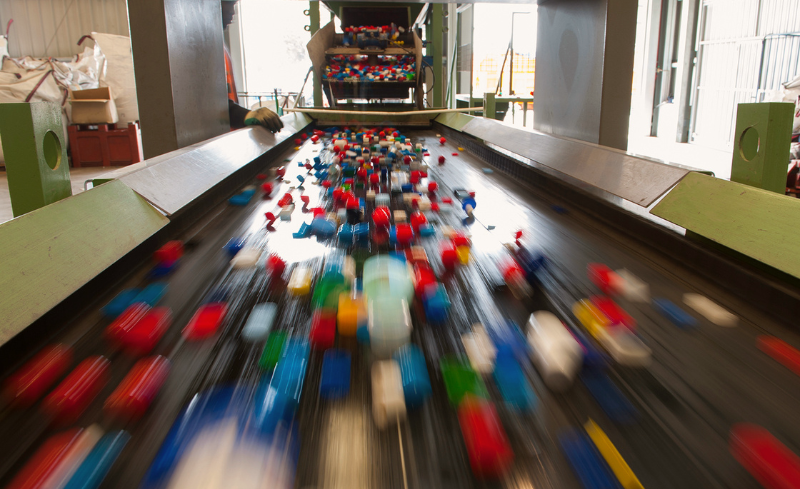
TRUE. When a material finds a new application inside or outside the organization, it ceases to be a cost and becomes part of a new production cycle.
Organizations that utilize byproducts or recovered materials can generate additional revenue or reduce raw material purchases.
“Sustainability always implies higher costs.”
FALSE. Adopting a zero-waste model allows for waste reduction, optimized consumption, and the reuse of materials, which often generates net savings and improves profitability.
“Only large companies can implement Zero Waste.”
FALSE. Companies of all sizes can move towards circularity. Adapting processes and materials progressively allows for measurable and scalable results, even in SMEs.
“Prevention at the source does not add economic value.”
FALSE. Preventing waste from being generated means lower disposal costs, less need to purchase new materials, and greater efficiency. Many companies report direct savings in operating costs.
“Zero Waste only has environmental benefits.”
FALSE. In addition to reducing environmental impact, Zero Waste improves traceability, strengthens corporate reputation, and can open opportunities in supply chains that demand sustainable criteria.
“Innovation is key to moving toward Zero Waste.”
TRUE. Reviewing products, packaging, and processes allows for the creation of new value streams and the optimization of resources, turning circularity into a competitive advantage.
Business decisions for becoming a circular company
 The Zero Waste model isn’t just a label: it’s a different way of making business decisions.
No: Only act when waste has already been generated.
Yes: Review processes, packaging, and materials to prevent waste from appearing in the first place.
No: Ignore byproducts and internal waste.
Yes: Identify internal or external valorization opportunities to transform them into resources.
No: Only manage waste when it accumulates.
Yes: Implement continuous monitoring and traceability systems to anticipate and act preventively.
No: Underestimate the impact of packaging.
Yes: Redesign packaging to maximize reuse and recyclability.
No: Centralize responsibility solely within the environmental team.
Yes: Involve all areas (purchasing, production, logistics, marketing) in the circular strategy.
No: Maintain outdated procedures without reviewing their efficiency.
Yes: Periodically review processes and workflows to identify inefficiencies and reduce waste.
No: Don’t view waste as an isolated problem.
Yes: Consider it part of the value chain and innovation strategy.
No: Don’t measure results.
Yes: Establish key performance indicators (KPIs) for Zero Waste and circularity.
No: Don’t think that Zero Waste is only environmental.
Yes: Integrate it as a lever for efficiency, savings, and competitive advantage.
No: Don’t react to waste generation.
Yes: Plan and anticipate changes in processes and materials to minimize generation.
No: Don’t ignore the destination of generated waste.
Yes: Ensure traceability and control of all flows to maximize recovery and regulatory compliance.
No: Don’t consider waste as an unavoidable cost.
Yes: Transform it into resources that provide economic, operational, or reputational value.
No: Implement isolated actions without strategic integration.
Yes: Link all zero-waste initiatives to the corporate strategy and measurable objectives.
No: Consider waste management as a mere administrative formality.
Yes: Integrate it into the business strategy, linking it to efficiency, reputation, and positioning in the value chain.
No: Be content with simply complying with regulations.
Yes: Go beyond compliance and use waste management as a driver of continuous improvement.
HOW TO ASSESS WHETHER YOUR COMPANY IS MOVING TOWARDS A ZERO WASTE MODEL
The Zero Waste concept in business practice translates into very specific behaviors, decisions, and systems.
Here are some clear signs that allow you to identify whether an organization is aligned with a Zero Waste approach… or if it still has a way to go.
Your company is moving towards Zero Waste if…
-
- It knows precisely what waste it generates, in what quantities, and at what points in the process.
- It has redesigned processes to prevent waste generation at the source, not just to manage what already exists.
- It has efficient segregation systems that allow it to recover materials of sufficient quality for recycling.
- It reuses materials, packaging, or byproducts internally, reducing unnecessary purchases and consumption.
- It works with specialized waste management companies that prioritize recycling and provide real traceability.
- It integrates recovered materials into new production cycles, whether its own or those of third parties.
- It measures key indicators such as recycling rate, reduction at the source, and avoided costs.
- It has established annual improvement objectives that are reviewed and audited.
- Train and educate your team, because Zero Waste is a cultural shift, not just a technical one.
- Explore Zero Waste certifications to validate your performance and communicate it effectively.
In short: a Zero Waste company is one that controls, optimizes, and transforms its waste streams so that they retain their value for as long as possible.
Your company is not Zero Waste if…
-
- It only manages waste at the end of the process, without addressing its source.
- It doesn’t know the actual destination of its waste or lacks verifiable traceability.
- It views waste management as a formality, not as an opportunity for efficiency.
- It doesn’t properly separate materials, hindering their recovery.
- It generates recurring waste that could be avoided, but hasn’t reviewed its processes.
- It doesn’t analyze data or indicators, so it can’t demonstrate improvements.
- It relies exclusively on disposal solutions, without exploring circular alternatives.
- It doesn’t involve suppliers or customers in waste reduction.
- It hasn’t evaluated reuse or redesign options, despite having the potential to do so.
In other words, a company is not Zero Waste when it only reacts, instead of anticipating and transforming its relationship with materials.
How the Zero Waste model boosts business competitiveness
Zero Waste is not just a label: it’s a way of working that transforms a company’s efficiency and competitiveness.
Companies that adopt these practices:
-
- reduce operating costs,
- optimize consumption,
- identify hidden inefficiencies,
- improve their traceability,
- strengthen their ESG positioning,
- and align themselves with the principles of the Circular Economy.
ZERO WASTE CERTIFICATIONS: HOW TO DEMONSTRATE REAL RESULTS
 For the Zero Waste model to be credible, it must be verifiable.
Zero Waste certifications allow you to:
-
- Audit waste flows.
- Demonstrate recovery rates.
- Demonstrate the actual reduction of unused waste
- Communicate results transparently.
At TMA, we work with recognized standards that guarantee traceability and compliance with the criteria necessary to obtain Zero Waste certifications tailored to the business environment.
These certifications are not just a decorative seal. They are a strategic tool for consolidating market position and strengthening the trust of clients and partners.
TMA’S ROLE IN IMPLEMENTING ZERO-WASTE MODELS IN COMPANIES
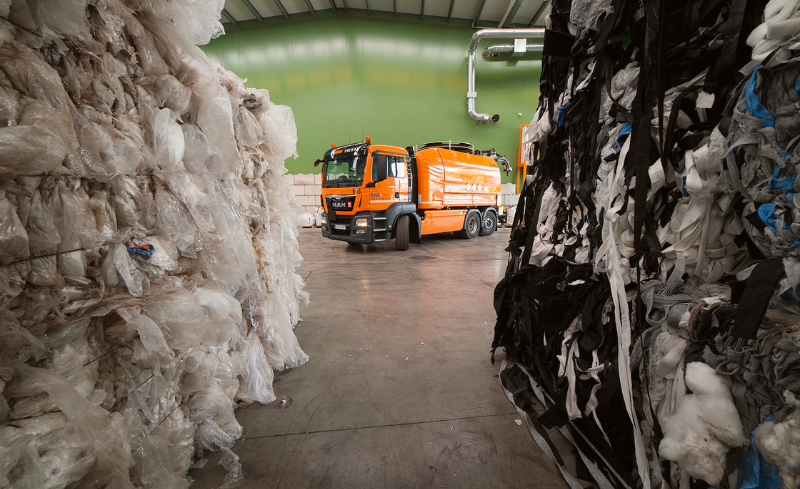
At TMA, we don’t just promote the zero-waste model: we apply it in our own operations.
Our approach is based on advanced management that prioritizes the recovery, efficiency, and integration of materials into new production cycles.
This direct experience allows us to understand firsthand the challenges and opportunities that companies face when they decide to move towards a more circular model.
Thanks to this practical vision, TMA has established itself as a strategic ally for organizations seeking to reduce their impact, optimize resources, and demonstrate a genuine commitment to sustainability.
Through our specialized management, we help companies to:
-
- Identify previously overlooked recovery opportunities.
- Redesign internal flows to minimize waste generation at the source.
- Implement efficient segregation systems that facilitate material recovery.
- Increase your recovery rates with solutions tailored to each sector.
- Move towards Zero Waste certifications, providing traceability, verifiable data, and technical support.
Our model combines technology, regulatory knowledge, and a circular vision that transforms waste management into a driver of competitiveness, not an operating cost.
Becoming Zero Waste is not just an environmental goal: it’s a way of working that improves processes, reduces risks, and strengthens corporate reputation.
If you need efficient waste management, tailored to your business and aligned with your 2026 environmental goals, we would be delighted to help.
Write to us at comercial@tma.es and we will prepare a personalized proposal for you.
Discover our comprehensive waste management services and join us on the path to a more sustainable future.
We take care of our customers and we take care of the environment.
We are much more than comprehensive waste management.
Follow us on TMA’s LinkedIn. Subscribe to our YouTube channel.
Contact us, we will be happy to advise and inform you.