

The carbon footprint has become a key tool for understanding and improving the environmental impact of waste management services. Beyond simply measuring emissions, it allows us to identify where they are generated, how they evolve, and what operational decisions can effectively reduce them.
In this context, TMA and Espais Verds del Vallès have obtained the CALCULO 2024 Carbon Footprint Seal—for the third consecutive year—and have formalized their registration in the Registro de Huella de Carbono, compensación y proyectos de absorción de CO₂ del MITECO (the official national carbon footprint registry), consolidating a working model based on continuous measurement and operational improvement.
This progress reflects an approach to managing environmental services in which data is not only analyzed but also used to optimize processes, reduce emissions, and move towards a circular economy and zero-waste model.
SELLO CALCULO 2024 – MITECO CARBON FOOTPRINT SEAL: THREE CONSECUTIVE YEARS OF CONTINUOUS MEASUREMENT
CALCULO 2024 Carbon Footprint Seal certifies that TMA and Espais Verds del Vallès have calculated their greenhouse gas emissions following the criteria established by the Ministerio para la Transición Ecológica y el Reto Demográfico (MITECO), Spain’s Ministry for Ecological Transition.
Beyond the recognition, the real value lies in continuity. Three consecutive years of calculations allow for comparison of results, detection of trends, and an understanding of how the actual environmental impact of the activity evolves.
This sustained work has allowed for the consolidation of a working method based on three principles: rigorous measurement, sound analysis, and consistent action. Without this foundation, any emissions reduction strategy would lose effectiveness and long-term viability.
MITECO CARBON FOOTPRINT REGISTRATION: FROM CALCULATION TO COMMITMENT
The attainment of the Sello CALCULO 2024 is part of the process that culminates in registration in the Registro de Huella de Carbono of MITECO, an official tool of the Ministerio para la Transición Ecológica y el Reto Demográfico of Spain.
This registration means that the organization:
-
- Has calculated its carbon footprint using verifiable criteria, providing reliable data for environmental decision-making.
- Commits to the progressive reduction of emissions, integrating sustainability into its operational management.
- Joins a national climate action framework, aligned with decarbonization objectives.
In this way, the calculation ceases to be an isolated technical exercise and becomes a practical management tool.
The information obtained makes it possible to identify which activities generate the most emissions—such as transportation, energy consumption, or certain treatment processes—and to take direct action on them.
This translates into concrete decisions, such as optimizing collection routes, adjusting service frequencies, improving equipment efficiency, and prioritizing waste recovery over disposal. Overall, carbon footprint calculation becomes an integral part of daily operations, guiding improvements toward a real reduction in environmental impact.
CARBON FOOTPRINT IN WASTE MANAGEMENT: FROM DATA TO ACTION
Working with the carbon footprint in a structured way allows us to move from intuition to data-driven decision-making.
In the case of TMA and Espais Verds del Vallès, this approach translates into concrete improvements in the day-to-day operation of the service, especially in those areas with the greatest environmental impact.

The main lines of action include:
-
- Optimizing routes and logistics, reducing kilometers traveled and fuel consumption in waste collection and transport.
- Progressively improving the fleet and equipment, incorporating energy efficiency criteria that reduce emissions per service.
- Optimizing waste management processes, improving segregation and reducing unnecessary transfers.
- Efficient use of energy resources, both in facilities and in machinery and operations.
These measures are prioritized based on the data obtained from calculating the carbon footprint, allowing action to be taken where the greatest impact is generated.
CIRCULAR ECONOMY IN WASTE MANAGEMENT: REDUCING IMPACT AND EMISSIONS
The circular economy is a key pillar of TMA’s activity, especially due to its direct relationship with waste management.
Compared to the traditional linear model, this approach seeks to keep resources in use for as long as possible, reducing both waste generation and associated emissions.
In practice, this involves:
-
- Recovering materials, avoiding their disposal and promoting their use in new cycles.
- Improving recycling, increasing the quality of source separation and reducing non-recoverable fractions.
- Collaborating with clients and government agencies to optimize waste flows.
- Reintroducing materials, extending their useful life and reducing the need for virgin raw materials.
This approach not only has a direct environmental impact in a specific phase of the service, but also influences the entire waste management cycle. When the carbon footprint is analyzed comprehensively—from collection to final treatment—it becomes clear that every operational decision has a cumulative effect on the system’s total emissions.
In practice, optimizing how waste is collected, transported, and treated allows for reduced energy consumption, minimized travel, and improved efficiency of treatment facilities. This translates into an overall decrease in emissions throughout the entire value chain, not just at a single point in the process.
ZERO WASTE: KEY TO REDUCING THE CARBON FOOTPRINT
The zero waste goal is a direct consequence of integrating carbon footprint and the circular economy. It’s not just about managing waste better, but about reducing it at the source and optimizing the entire system.
Reducing waste generation means acting in the initial stages of the process, improving overall efficiency and preventing subsequent impacts.
To move in this direction, TMA works on several fronts:
-
- Waste prevention at the source, optimizing processes to reduce non-recyclable materials.
- Improving selective collection, facilitating more efficient separation that increases recovery rates.
- Raising awareness and providing technical support to clients, promoting best practices in waste generation and management.
- Innovating treatment solutions, aimed at reducing the fraction destined for disposal.
This approach has a direct impact on the carbon footprint, since every waste item that is avoided, properly separated, or recovered reduces emissions at different stages of the system.
On the one hand, it reduces the number of trips associated with transporting waste to treatment plants or controlled landfills. On the other hand, it reduces the energy required for disposal processes, which are usually the most energy-intensive. Furthermore, by recovering materials, the production of new resources is avoided, also reducing indirect emissions.
Overall, efficient waste management acts as a real driver of decarbonization within the environmental sector.
ESPAIS VERDS DEL VALLÈS: SUSTAINABILITY IN THE URBAN AND NATURAL ENVIRONMENT
In the case of Espais Verds del Vallès, sustainability is directly applied to the management of urban and natural spaces, where every operational decision has a visible impact on the environment.
The objective is to improve the environmental efficiency of maintenance services through specific actions such as:
-
- Efficient use of water in irrigation, adjusting consumption to the actual needs of each space.
- Selection of plant species adapted to the local climate, reducing the need for intensive maintenance.
- Gradual reduction in the use of chemical products, favoring more environmentally friendly alternatives.
- Promotion of urban biodiversity, contributing to the resilience of ecosystems.
Although these actions are part of daily operations, they are directly related to the carbon footprint.
Fuel consumption, equipment efficiency, service planning, and the distance between service points directly influence emissions. Therefore, carbon footprint analysis allows us to identify which processes generate the greatest impact and where there is the greatest potential for improvement.
In this way, daily management ceases to be purely operational and becomes integrated into a data-driven environmental strategy, where every decision contributes to reducing the overall impact of the service.
SELLO CALCULO 2024 – MITECO CARBON FOOTPRINT SEAL: CONTINUOUS IMPROVEMENT AND ENVIRONMENTAL TRANSPARENCY
Obtaining the CALCULO 2024 Carbon Footprint Seal and registration with the MITECO Registry represent the consolidation of a work system based on continuous improvement.
In the case of TMA and Espais Verds del Vallès, having three consecutive years of calculation data allows them to understand current emissions and analyze their actual evolution over time.
This is especially relevant because it makes sustainability a measurable, comparable, and verifiable process.
Each annual update of the carbon footprint provides a more precise view of the organization’s environmental performance, allowing for more technically rigorous adjustments to strategies.
This process provides three fundamental elements that structure the entire environmental strategy:
-
- Comparative measurement of emissions, which allows for analysis of actual year-on-year evolution and the detection of trends of improvement or deviation in the different operational areas.
- Data-driven decision-making, which replaces general approaches with concrete analyses of energy consumption, transportation, and waste management, improving the efficiency of the measures implemented.
- Environmental transparency, which strengthens the traceability of the work performed and lends credibility to clients, government agencies, and other stakeholders, especially in highly regulated sectors such as waste management.
Together, these elements consolidate a more mature environmental management model, where sustainability is based not on declarations, but on verifiable data and concrete operational decisions.
All of this allows for real progress toward decarbonization.
DECARBONIZATION, CIRCULAR ECONOMY, AND ZERO WASTE: AN INTEGRATED MODEL
The third consecutive CALCULO 2024 Seal and registration in the MITECO reflect the consolidation of an environmental management model that coherently integrates measurement, operation, and continuous improvement.
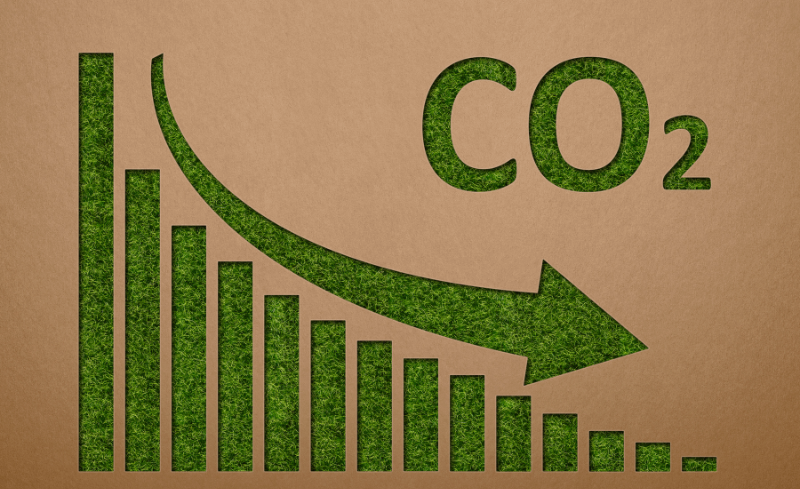 At TMA and Espais Verds del Vallès, carbon footprint reduction, the circular economy, and zero waste are not seen as separate strategic lines, but rather as interconnected parts of a single operating system.
Measuring emissions allows us to identify where impacts are generated. The circular economy provides the tools to reduce them at the source. And the zero waste objective guides management toward minimizing losses throughout the entire system.
This integrated approach has a dual effect. On the one hand, it effectively reduces the environmental impact of our activities. On the other hand, it improves the operational efficiency of our services, optimizing resources, reducing energy costs, and increasing the traceability of all processes.
In an increasingly demanding regulatory and environmental context, this model not only meets the objectives of the Ministerio para la Transición Ecológica y el Reto Demográfico (MITECO), Spain’s Ministry for Ecological Transition, but also positions TMA within a genuine transition toward a more efficient and measurable waste‑management model aligned with current climate challenges.
RELATED NEWS
We obtain the first “CALCULO” certification in the Carbon Footprint Registry.
Discover our comprehensive waste management services and join us on the path to a more sustainable future.
We take care of our customers and we take care of the environment.
We are much more than comprehensive waste management.
Follow us on TMA’s LinkedIn. Subscribe to our YouTube channel.
Contact us, we will be happy to advise and inform you.