On International Plastic Bag Free Day, every July 3rd we reflect on one of the waste products that best represents the challenges facing our society. Although their consumption has been considerably reduced in recent years, plastic bags continue to remind us of the importance of preventing waste generation, reusing materials, and committing to proper management that promotes the Circular Economy.
For years, plastic bags have become the symbol of waste pollution. Images of bags floating in seas and oceans, caught in vegetation, or scattered in natural spaces have served to raise awareness among millions of people about the impact that a product designed to be used for just a few minutes can have.
But is it still necessary to talk about plastic bags in 2026?. The answer is yes.
Although significant progress has been made in recent years thanks to legislation, innovation, and public awareness, the problem of plastic waste remains one of the main environmental challenges worldwide. Furthermore, we now know that plastic bags represent only one part of a much larger challenge: moving towards a model where waste is reduced at its source, materials remain within the production cycle for as long as possible, and the Circular Economy gradually replaces the single-use model.
In this article, we bring together several approaches. Because understanding the problem is the first step. Changing our habits is the second.
And improving waste management to promote the Circular Economy is the third.
ADVANCES IN REDUCING PLASTIC BAGS
When we first started talking about plastic bags, the main objective was to raise awareness of their enormous environmental impact.
At that time, it was necessary to explain why such a seemingly small product could become a global problem.
Plastic bags are lightweight, inexpensive, and durable—characteristics that explain why they were used extensively for decades in supermarkets, shops, and numerous economic sectors.
However, these same characteristics mean that, when not managed properly, they remain in the environment for long periods of time.
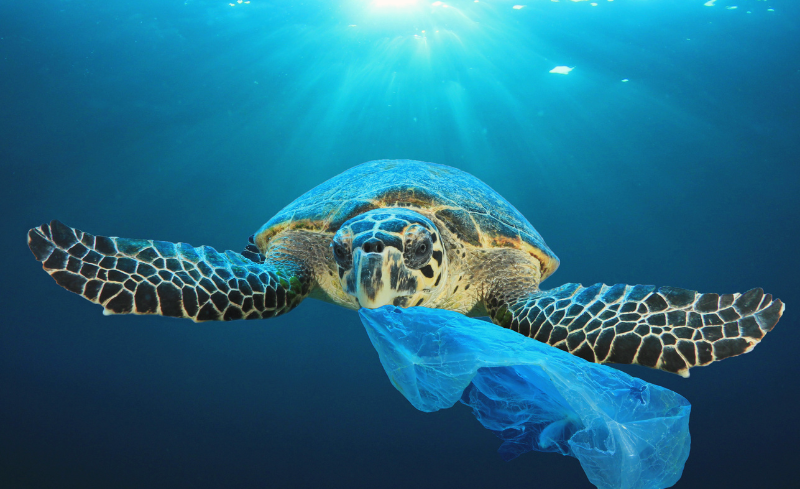 In our article “The environmental impact of plastic bags and how to recycle them correctly,” we delved into this very issue, analyzing how bags can end up fragmenting into microplastics, affecting marine life and contributing to the pollution of rivers, beaches, and oceans.
Later, we wanted to go a step further. Once we understood the problem, it was time to talk about solutions.
This led to the article “How to Reduce the Use of Plastic Bags: Why Stop Using Them, Best Practices, and Sustainable Habits,” where we compiled everyday actions that anyone can easily incorporate into their daily routine: using reusable bags, buying in bulk, avoiding unnecessary packaging, reusing bags before recycling them, and promoting more responsible consumption habits.
Today, we want to connect these two ideas.
Because reducing plastic bags isn’t just about stopping their use.
It means rethinking how we consume, how we produce, and, above all, how we manage waste so that it can be transformed back into resources.
WHY PLASTIC BAGS REMAIN AN ENVIRONMENTAL PROBLEM
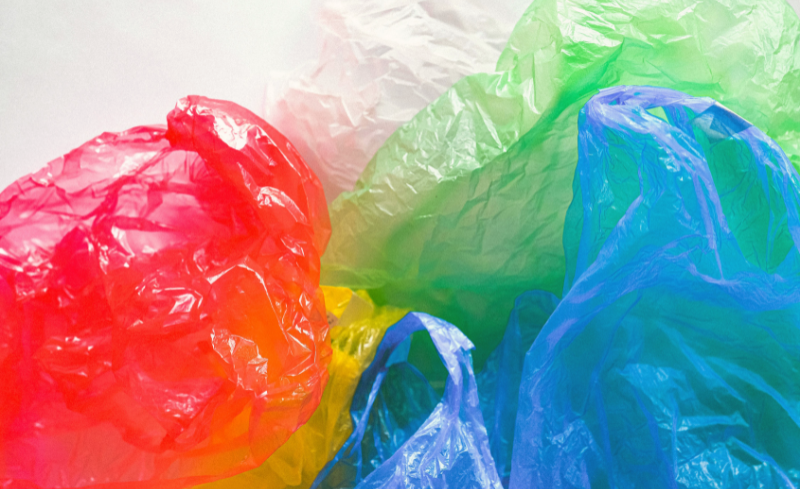
In recent years, there has been much talk about plastic pollution, and it can sometimes seem as though the problem of plastic bags is practically solved.
Nothing could be further from the truth.
Although the consumption of plastic bags has decreased considerably thanks to regulations and greater public awareness, millions of bags continue to be used every day around the world.
Many have a useful life of less than fifteen minutes.
However, when they leave the waste management system, they can remain in the environment for hundreds of years.
Furthermore, the problem doesn’t end when a bag begins to degrade.
Unlike other materials, plastic doesn’t disappear easily. It fragments into increasingly smaller particles known as microplastics, which can be dispersed in soil, rivers, and oceans.
These microplastics are already part of numerous ecosystems and have been detected in fish, shellfish, drinking water, and even in foods we commonly consume.
If you want to learn more about how this process occurs and its consequences for the environment, we recommend reading our article “The environmental impact of plastic bags and how to recycle them correctly,” where we analyze this problem in depth.
Reducing the use of plastic bags remains important because it helps decrease the generation of new waste and reduces the pressure on management and recycling systems.
But today we know that the real challenge goes much further.
WHAT HAS CHANGED SINCE INTERNATIONAL PLASTIC BAG FREE DAY BEGAN
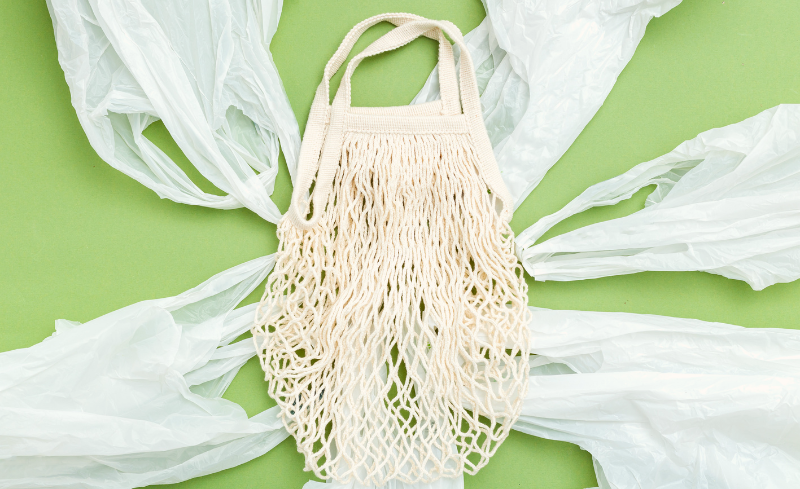
Looking back, it’s clear that many things have changed.
Just a few years ago, it was common to receive several free plastic bags at practically any establishment. Today, the reality is very different.
Most consumers now routinely use reusable bags.
Many businesses have significantly reduced the distribution of single-use bags.
Public administrations have promoted regulations to limit certain disposable products.
And companies are increasingly incorporating sustainability criteria into their strategies.
All of this demonstrates that awareness works.
However, we have also learned that eliminating plastic bags alone does not solve the problem.
Plastic remains present in packaging, containers, e-commerce, logistics, food, industry, and a large number of economic activities.
Therefore, International Plastic Bag Free Day should no longer be understood solely as a call to stop using a bag at the supermarket.
It should serve as an opportunity to reflect on our relationship with waste as a whole.
Today, the challenge lies in reducing the consumption of unnecessary materials, designing products with reuse in mind, improving recycling systems, and ensuring that resources remain within the production cycle for as long as possible.
In other words, moving from a linear economy based on producing, consuming, and discarding to a truly circular model.
PLASTIC BAGS AS PART OF THE GLOBAL WASTE PROBLEM
Bags were one of the first products to spark major environmental concerns.
But today they represent only a small fraction of the total volume of plastic waste we generate.
Plastic is present in virtually every sector.
We find it in food packaging, industrial packaging, pallet film, e-commerce, agriculture, construction, automotive, healthcare, and logistics, among many others.
We mustn’t forget that plastic has also provided significant benefits.
Its strength, lightness, and versatility make it a very useful material for multiple applications.
The problem isn’t the material itself, but how we use it.
For decades, we have normalized a model where numerous products are designed to be used only once before becoming waste.
That’s precisely why applying the waste hierarchy is becoming increasingly important.
The best waste is the waste that is never generated.
When this isn’t possible, the priority should be reuse.
Then, recycle and recover those materials that can still have a second life.
Disposal should only be considered as a last resort.
This change in approach is one of the pillars of the Circular Economy and explains why International Plastic Bag Free Day remains as relevant as ever.
It’s not just about talking about a bag.
It’s about reflecting on how we use resources and what we can do to use them much more efficiently.
WHAT HAPPENS TO A PLASTIC BAG WHEN IT BECOMES WASTE?
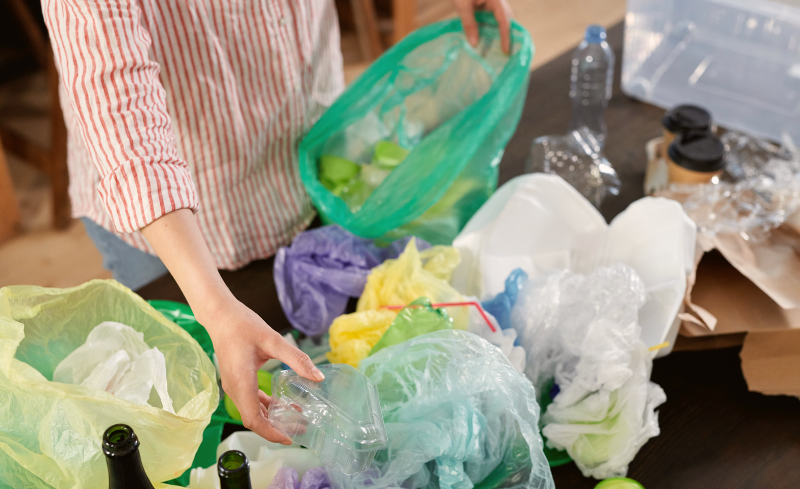
When we put a plastic bag in the right place, a process begins that often goes unnoticed by most people.
However, this phase is crucial in deciding whether the material will have a second life or end up being disposed of.
It all starts with the collection and proper separation of waste.
If the bags arrive mixed with other materials or contaminated by organic matter or other waste, the chances of recycling decrease considerably.
On the contrary, proper segregation facilitates subsequent sorting, treatment, and recovery processes.
That’s precisely why waste management doesn’t begin at the treatment plant, but much earlier: it starts the moment each type of waste is deposited in the correct container.
Once sorted, many plastic wastes can be incorporated into different recycling processes that yield new raw materials.
These recycled raw materials can then be used to manufacture new products, reducing the need to consume virgin plastic and decreasing the use of natural resources.
Not all plastic wastes can be recycled in the same way, nor do they all have the same characteristics.
That’s why it’s so important to have specialized waste management companies capable of identifying the most appropriate treatment for each type of waste and maximizing its recovery.
CIRCULAR ECONOMY: THE ROLE OF RECYCLING AND PREVENTION
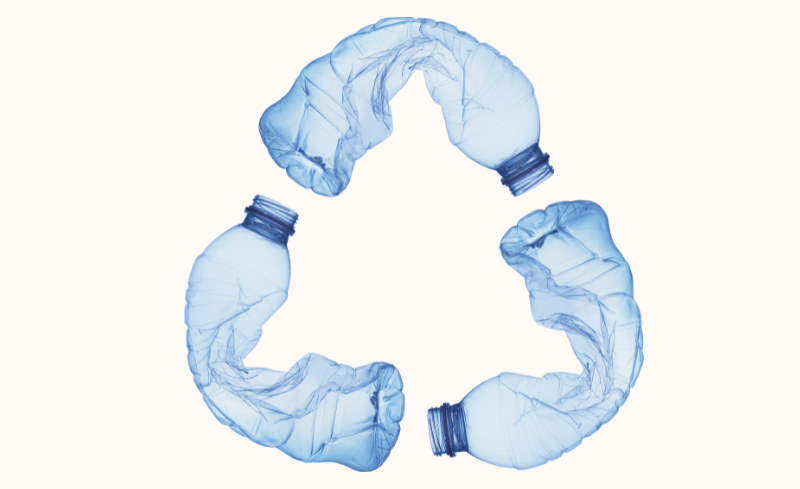
When we talk about the Circular Economy, many people immediately think of recycling.
However, recycling is only one part of the process.
The true Circular Economy begins much earlier.
It starts when we design products that last longer.
When we avoid unnecessary materials.
When we reuse resources before they become waste.
When we optimize processes to generate less waste.
And, finally, when the waste that is inevitably produced receives the appropriate treatment to be reintegrated into the production cycle.
In this sense, comprehensive waste management plays an essential role.
It’s not just about collecting waste.
It’s about understanding its composition, classifying it correctly, identifying opportunities for recovery, and ensuring that each material receives the most appropriate treatment.
Because every piece of waste that is transformed back into a resource means less extraction of raw materials and a reduction in environmental impact.
HOW TO REDUCE PLASTIC BAGS: HABITS AND ALTERNATIVES
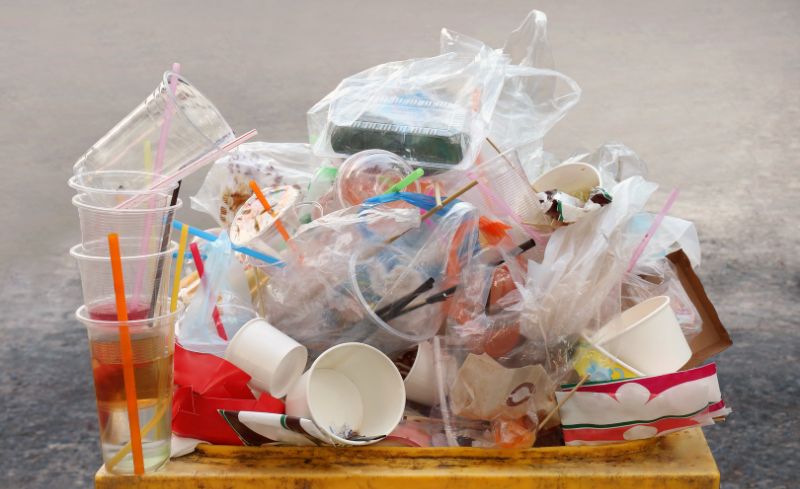
Individual changes remain fundamental. Millions of small, everyday decisions have the potential to generate a very significant impact when maintained over time.
In our article “How to reduce plastic bag use: why stop using them, best practices, and sustainable habits,” we shared numerous recommendations for incorporating more responsible habits without requiring a major effort.
These include always carrying a reusable bag, buying products in bulk whenever possible, avoiding unnecessary packaging, reusing bags before recycling them, and prioritizing products with less packaging.
All these actions remain valid. However, it’s important to remember that sustainability doesn’t depend on a single decision. Using a reusable bag isn’t enough if we continue to maintain consumption habits based on disposable products.
The real transformation lies in adopting a broader perspective.
Ask ourselves if we really need certain packaging.
Choose durable products.
Shop more strategically.
Reuse instead of replacing.
And, when waste is unavoidable, ensure it receives the appropriate treatment so it can be reintegrated into the production cycle.
Only in this way will we achieve a collective change through small individual actions.
THE ROLE OF COMPANIES IN REDUCING SINGLE-USE PLASTICS
While individual decisions are important, the shift towards a more sustainable model also depends heavily on companies. From small businesses to large industries, all organizations generate waste and have the capacity to reduce it through decisions that affect the entire value chain.
In recent years, concepts such as sustainability, the Circular Economy, and ESG criteria have ceased to be a trend and have become strategic elements. Customers, suppliers, government agencies, and investors increasingly value the environmental commitment of organizations, which is no longer measured solely by regulatory compliance, but also by their ability to minimize the environmental impact of their activities.
In this context, reducing the use of plastic bags can be an excellent starting point for reviewing many other aspects related to materials management.
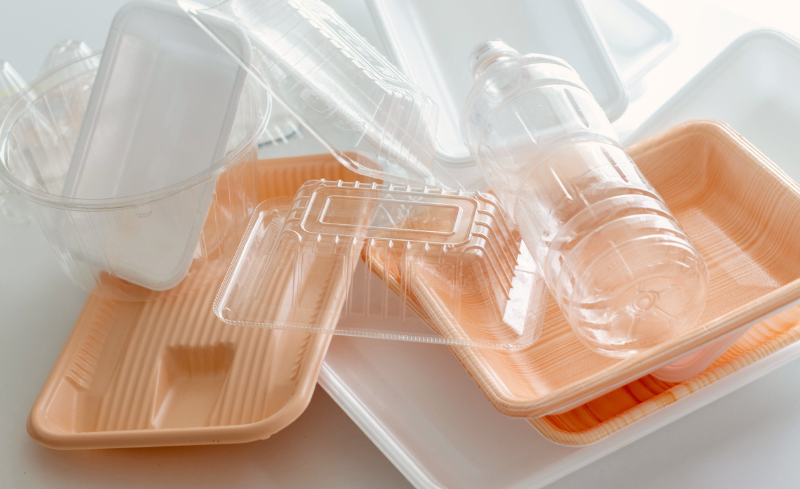
For example, a company might ask itself:
Are we using more packaging than is truly necessary?
Is it possible to replace certain disposable products with reusable alternatives? Is waste being properly separated to facilitate recycling?
Are there materials currently being discarded that could be recovered and reused?
Do suppliers share the same sustainability criteria?
Answering these questions allows us to identify opportunities for improvement that, in addition to reducing environmental impact, often translate into greater operational efficiency and better resource utilization.
Because sustainability is no longer just about recycling more.
It’s primarily about generating less waste from the start.
BEYOND BAGS: REDUCING ALL AVOIDABLE WASTE
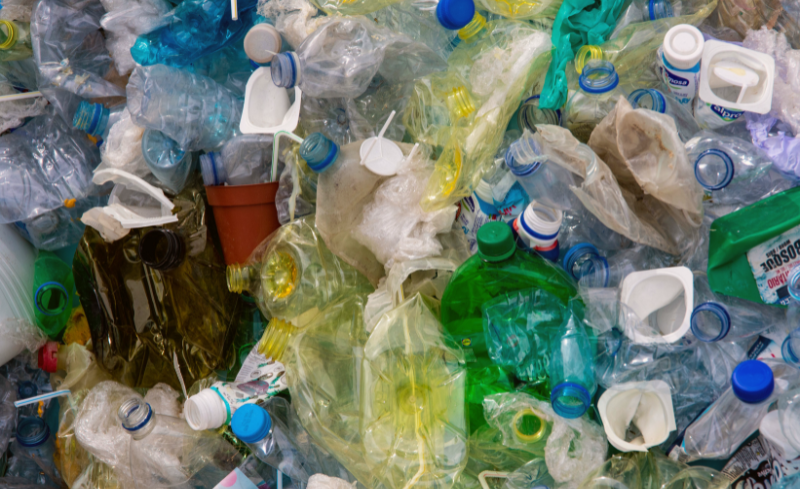 International Plastic Bag Free Day continues to have enormous symbolic value.
But it also reminds us that there is still much work to be done.
Bags were one of the first types of waste that sparked widespread public awareness.
Today we know that there are many other materials we must address:
Single-use containers.
Plastic film.
Packaging.
Promotional materials.
Disposable products.
Materials used in distribution and transportation.
They are all part of the same challenge.
The good news is that many solutions already exist.
Eco-design allows us to manufacture products using fewer materials.
Innovation is developing more sustainable packaging.
Companies are reviewing their processes to reduce waste.
Consumers are changing their purchasing habits.
And specialized managers are working to recover the maximum possible value from materials that reach the end of their useful life.
All of this demonstrates that moving towards a lower-waste economy doesn’t depend on a single action, but rather on the sum of many decisions.
A SMALL GESTURE THAT DRIVES A BIGGER CHANGE IN WASTE MANAGEMENT
Plastic bags have been the symbol of a consumption model that we now know needs to evolve for years.
Saying “no” to a single-use bag remains an important gesture.
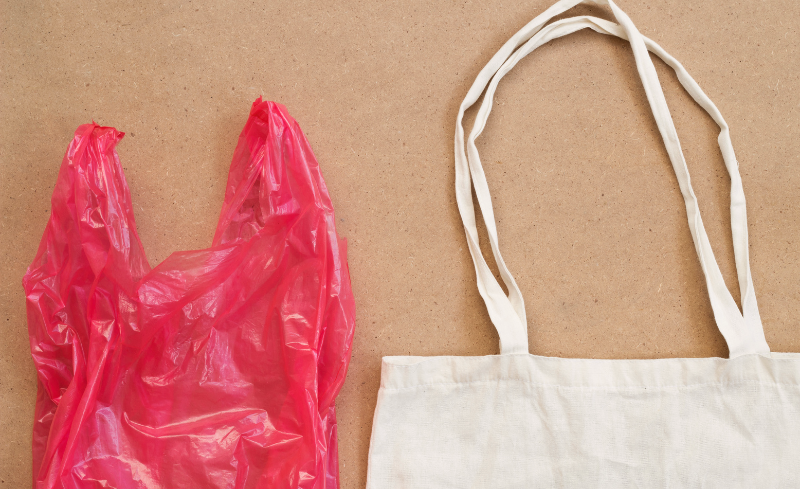 But real change begins when that decision becomes part of a different way of understanding resources.
Consuming more responsibly.
Prioritizing reuse.
Reducing waste at the source.
And properly managing those materials that are inevitably generated.
That is the path to a true Circular Economy.
At TMA, we believe that moving towards a more sustainable future requires the involvement of all of society.
Citizens, businesses, government agencies, and waste managers share the same responsibility: to make better use of resources and minimize the environmental impact of our activities.
International Plastic Bag Free Day reminds us every year that small decisions have great value. And also that big changes begin, precisely, with small gestures.
FREQUENTLY ASKED QUESTIONS ABOUT PLASTIC BAGS
Why is International Plastic Bag Free Day celebrated?
It is celebrated every July 3rd to raise awareness about the environmental impact of single-use plastic bags and to promote more sustainable alternatives based on reduction, reuse, and recycling.
Why are plastic bags so polluting?
Because they are usually used for a very short time, but they can remain in the environment for decades or even centuries if they are not properly treated. Furthermore, as they degrade, they fragment into microplastics that affect ecosystems and biodiversity.
What is the best alternative to plastic bags?
The best option is one you can reuse many times.
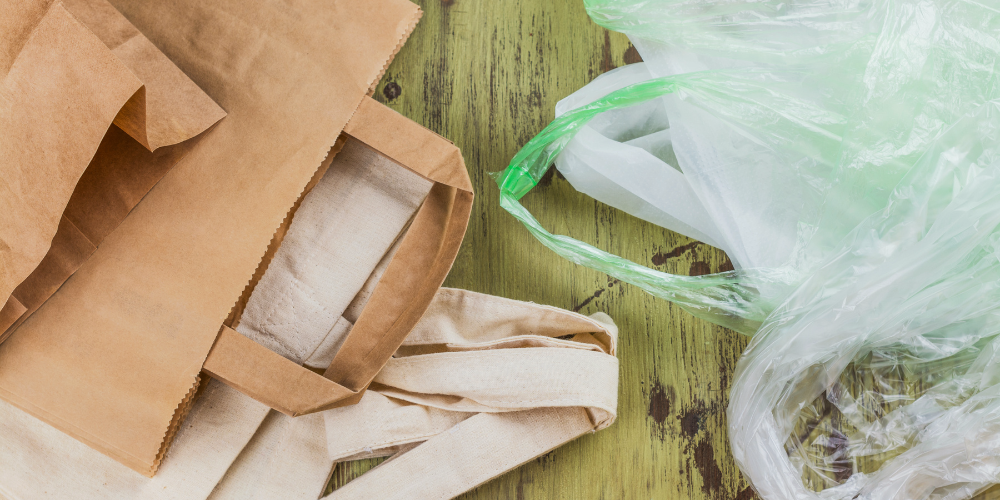
Cloth bags, made of cotton or other durable materials, are usually the most sustainable choices because they last longer and generate less waste.
When they can no longer be reused, it’s important that they can be easily recycled or recovered.
In short: the longer the bag’s lifespan, the more sustainable it is.
Are biodegradable bags really a solution?
Biodegradable bags can be suitable for certain applications, but they don’t eliminate the waste problem on their own.
What’s truly important remains reducing the consumption of disposable products and ensuring proper management at the end of their useful life.
Can all plastic bags be recycled?
This is one of the most common questions.
The answer is: it depends.
The possibility of recycling a bag is conditioned by factors such as:
-
- the type of plastic;
- its condition;
- the presence of organic matter;
- proper separation at the source;
- the technology available for its treatment.
When bags arrive clean and properly sorted, they can become raw material for manufacturing new products, thus reducing the consumption of virgin plastic.
That’s precisely why proper waste management is so important.
¿Dónde deben depositarse las bolsas de plástico?
It depends on the type of bag, but in most cases, they go in the yellow bin.
That’s where lightweight, disposable plastic bags are placed, along with containers and wrappers.
If the bag is reusable (fabric, cotton, textile materials), it doesn’t go in the yellow bin:
it’s necessary to reuse it as many times as possible and, when it’s no longer useful, take it to a specific collection point if the municipality has one.
In short: correct separation is key so that the bags can be recycled or recovered and don’t end up as improper waste.
What can companies do to reduce plastic consumption?
Review packaging, optimize logistics processes, eliminate unnecessary materials, work with suppliers committed to sustainability, train their teams, and implement efficient waste management that promotes material recovery.
KEEP LEARNING ABOUT SUSTAINABILITY AND WASTE MANAGEMENT
If you found this article interesting, we invite you to read more on our blog about reducing plastic and the Circular Economy:
The environmental impact of plastic bags and how to recycle them correctly, where we analyze the environmental consequences of this waste, its effect on ecosystems, and the role of recycling and recovery.
How to reduce the use of plastic bags: why stop using them, best practices and sustainable habits, a practical guide with tips, reusable alternatives, and actions to reduce plastic bag consumption both personally and in organizations.
Together, the three articles form a complete journey: understanding the problem, adopting new habits, and moving towards more efficient and sustainable waste management, an essential step to boost the Circular Economy and build a future with less waste.
Discover our comprehensive waste management services and join us on the path to a more sustainable future.
We take care of our customers and we take care of the environment.
We are much more than comprehensive waste management.
Follow us on TMA’s LinkedIn. Subscribe to our YouTube channel.
Contact us, we will be happy to advise and inform you.