
Forest fire prevention doesn’t begin in summer, nor does it end when the flames are extinguished. It’s a technical undertaking that translates into safety, well-being, and environmental balance year-round. At Espais Verds del Vallès, we have been awarded the contract for the creation of new low-combustibility perimeter buffer zones in the residential areas and/or population centers of Ca n’Armengol, Can Llopard, Nucli Urbà, and Camí Ral in Corbera de Llobregat. This project focuses on protecting homes and infrastructure, as well as maintaining the landscape, promoting biodiversity, and ensuring greater safety for every resident. It’s about planning and managing the landscape so that nature and urban life can coexist safely and sustainably.
ESPAIS VERDS DEL VALLÈS CARRIES OUT LOW-COMBUSTIBILITY WORKS IN CA N’ARMENGOL, CAN LLOPARD, THE TOWN CENTER, AND CAMÍ RAL

Image: Turisme Baix Llobregat
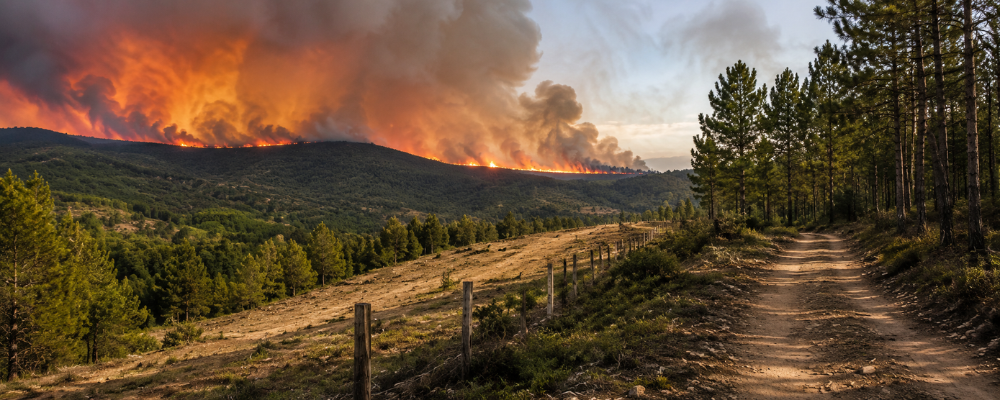
Corbera de Llobregat, a municipality surrounded by a Mediterranean forest, boasts a landscape of high ecological value but also one highly vulnerable to fire.
The objective of this project is clear: to create and maintain perimeter low-combustibility fuel breaks around the town centers, acting as safety zones against potential fires.
These works, which combine forest management, environmental engineering, and landscape sensitivity, protect homes and people, while also preserving biodiversity and the stability of the land.
More than just a one-off measure, this project is part of a preventative forest management strategy, where safety and sustainability go hand in hand.
What are the low-combustibility perimeter buffer zones?
A low-combustibility perimeter buffer zone (or perimeter low-combustibvility fuel break) is a managed area designed to reduce vegetation density and eliminate excess flammable material, maintaining a safe green cover that prevents fire from spreading from the forest to homes or vice versa.
The term “low-combustibility perimeter buffer zones” may sound technical (and perimeter fire prevention zones, too) , but its purpose is very clear: to create a transition zone between the forest and inhabited areas where fire has less chance of advancing.
These strips are essential in municipalities with urbanizations near forests, as they protect lives, property, and ecosystems.
Furthermore, they help improve vegetation management, the visual appearance of the environment, and the balance among native species.
It is not indiscriminate logging, but rather a selective and planned intervention, in which every tree, every shrub, and every square meter of land is analyzed according to its ecological function and flammability level.
A comprehensive fire prevention project in Corbera de Llobregat
The project is being developed in four main areas of the municipality, chosen for their direct proximity to inhabited areas and forests.
By acting in these four areas—Ca n’Armengol, Can Llopard, Nucli Urbà, and Camí Ral—a protective buffer zone is created, reducing the risk throughout the entire urban-forest area of Corbera de Llobregat.
Objectives of the project to reduce forest fires in Corbera
The main objective is to design and implement new perimeter fire prevention zones in the aforementioned residential areas and villages, so that they act as preventative barriers against forest fires.
The specific objectives of this project are:
-
- To comply with current forestry and fire prevention regulations.
- To reduce the spread of fire between external forest areas and built-up areas, as well as vice versa. Facilitate access for firefighting machinery and equipment to the perimeter of the town center and to the interior green spaces.
- Improve access roads, paths, loading areas, and municipal green spaces within the project area.
- Ensure the regular maintenance of the firebreaks and affected areas to maintain their effectiveness over time.
HOW LOW-COMBUSTIBILITY PERIMETER BUFFER ZONES ARE CREATED
The importance of design and prior planning to reduce the risk of fire
Before any machinery or pruning equipment is deployed, we carry out preliminary surveying and technical planning.
We study the terrain, slopes, dominant tree species, easements, nearby houses, and the existing road network.
Based on this information, we define the operational boundaries, the location of fuel loaders, and access routes. This step is essential to ensure that every subsequent action is safe, efficient, and environmentally responsible.
Sustainability is therefore a cross-cutting criterion of the project: preventing fires without disrupting the natural balance.
Stages of the fire prevention project in Corbera de Llobregat
Once the fire strip is defined, vegetation management begins, a process that combines forestry machinery and specialized manual labor.
-
-

Image: Expedia
Selective felling: the most flammable or poorly located trees are removed, prioritizing safety and the stability of the terrain.
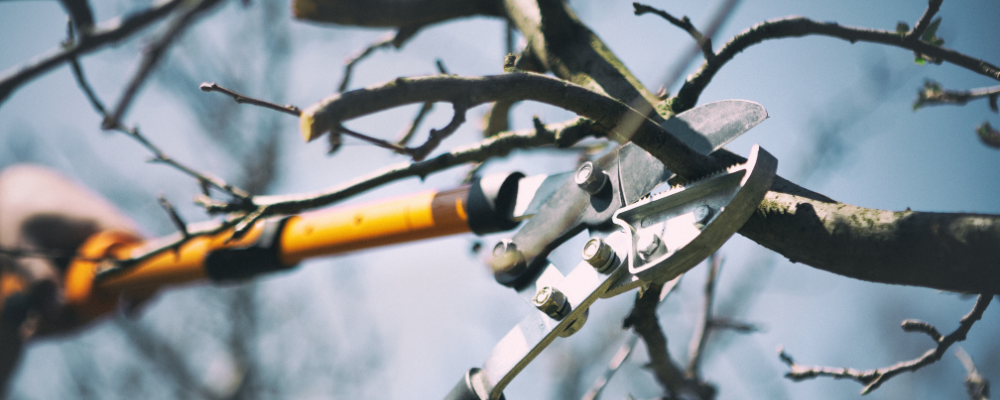
- Lower pruning: The lower part of the tree canopies is cut, removing branches that could act as fire ladders.
- Undergrowth clearing: The density of the undergrowth is reduced, preventing flames from spreading along the ground.
- Skimming and temporary storage: The trunks and branches are moved to loading areas for later processing.
- Shredding of plant debris: All the cut material is shredded, preventing accumulations that could become hazardous again.
- Uniform distribution: The shredded debris is spread evenly so that it decomposes and acts as soil protection against erosion.
- Restoration and leveling: Once the work is completed, the land is left in conditions similar to the original, with a stable slope and protected soil.
-

In this way, each meter of the firebreak combines ecological and safety functions. The land remains green, but it is managed: less dense, more accessible, and much safer.
Sustainable technical criteria for perimeter fire prevention zones
Each perimeter low-combustibility fuel break is designed following criteria that combine safety and respect for the environment.
The aim is to create balanced spaces where fire has a harder time spreading, but nature can continue to thrive.
At Espais Verds del Vallès, we follow proven technical criteria that respect the ecosystem:
-
-
Image: Komoot
Minimum width of 25 meters: around urban areas, a wide strip is left to act as a safety barrier between houses and the forest.
- Selection of appropriate species: broadleaf trees, such as holm oaks, oaks, and cork oaks, are prioritized because they burn less easily. Conversely, pines and resinous scrub, which are more flammable, are reduced.
- Spacing between trees: sufficient space is left between them—approximately eight meters between trunks and four meters between canopies—to prevent fire from easily jumping from one tree to another.
- Controlled pruning: the lowest branches are removed, up to about two meters from the ground, to prevent flames from climbing from the ground to the canopy.
- Undergrowth clearing: low vegetation, such as shrubs and young shoots, is reduced to prevent the accumulation of easily flammable material.
- Soil management: in sloping areas or areas at risk of erosion, some vegetation is retained to protect the soil and prevent rainwater runoff.
-

This balance reduces the risk of fire without degrading the ecosystem or disrupting its natural dynamics. Each area—Ca n’Armengol, Can Llopard, the town center, and Camí Ral—has different characteristics, but the approach is the same: prevent, protect, and maintain.
In short, the goal is not to “empty” the forest, but to manage it and make it more fire-resistant, while maintaining its natural balance.
Complementary infrastructure for the management of low-combustibility perimeter buffer zones
-
- Forest loaders: Areas where cut materials are accumulated before removal or mulching. They are strategically located to minimize visual impact and travel distances.
- Access roads and paths: Designed with gentle slopes (max. 13%), wide turning radii, and adequate cross-drainage to allow the passage of machinery and emergency vehicles without damaging the terrain.
- Natural drainage: Small undulations in the path redirect water and prevent erosion.
This infrastructure is invisible to most citizens, but essential to guarantee the operational effectiveness of the prevention system and also facilitates periodic maintenance and ongoing landscape management.
Implementation methods and adaptation to the terrain
-
- Manual methods (when mechanization is not possible): lower pruning, manual clearing, chainsaw felling, light mulching, and brushcutting.
- Mechanized methods (accessible areas): use of tractors, tanks, or heavy machinery with hammer/shredder equipment, dragging, manual clearing, etc.
- For special trees (leaning or near infrastructure): special techniques are used with cranes or winches to guide the fall, ensuring safety for infrastructure and people.
PLANT WASTE MANAGEMENT IN FIRE PREVENTION
An essential part of the project is the responsible management of plant debris generated during the work.
At Espais Verds del Vallès, we believe that pruning and clearing do not end when the vegetation is cut, but rather when the material is safely and usefully reintegrated into the natural cycle.

Image: Espais Verds del Vallès
We believe that this is not waste, but a natural resource that must be managed with technical and environmental considerations.
-
- We shred all plant material until we obtain fragments smaller than 20 cm. This prevents dangerous accumulations and promotes natural decomposition.
- When terrain conditions permit, the debris is evenly distributed over the surface as mulch. This layer protects the soil from erosion and retains moisture.
- In steeper areas or those at risk of landslides, the debris is removed and managed off-site to prevent future problems.
In this way, what could be considered waste becomes a resource that improves soil structure and contributes to sustainability.
With these measures, the project fulfills a dual purpose: reducing the risk of fire and improving soil quality. Organic matter returns to the natural cycle, completing a sustainable process that transforms prevention into regeneration.
ENVIRONMENTAL, SOCIAL, AND TERRITORIAL BENEFITS OF FIRE PREVENTION
The intervention provides tangible benefits on three complementary levels:
Public safety
-
- Significant reduction in the risk of fire spread.
- Improved access for emergency teams.
- Direct protection of homes, infrastructure, and people.
Ecological balance
By prioritizing low-flammability species and preserving some residual vegetation, the project respects biodiversity.
The aim is not to desertify the forest, but to manage it according to safety criteria.
-
- Conservation of less flammable native species.
- Improvement of ecological balance and the landscape.
- Reduction of soil erosion through the management of plant debris.
Improvement of the urban environment
The actions not only protect, but also beautify: more organized green areas, improved access, and well-designed paths.
-
- Enhancement of the value of residential areas as safe green spaces.
- Perception of a well-cared-for and sustainable environment.
- Visual integration of the buffer zones with the Mediterranean landscape.
These improvements go beyond immediate prevention: they transform the way communities interact with their natural environment, fostering a culture of respect and shared environmental responsibility.
ESPAIS VERDS DEL VALLÈS: EXPERIENCE AND COMMITMENT TO FIRE PREVENTION AND SUSTAINABLE FOREST MANAGEMENT

Image: Turisme Baix Llobregat
Every project we undertake is planned from a holistic perspective: protecting people and the environment while maintaining a focus on the ecological function of forests.
Our approach combines technical expertise, innovation, and environmental commitment: protecting, conserving, and improving the natural environment through both technical skill and sensitivity.
The work carried out in Corbera de Llobregat reflects our philosophy: prevention is an opportunity to enhance the landscape, strengthen safety, and protect life.
Every decision—from where to create an access point to how to shred vegetation—is made with sustainability, efficiency, and safety in mind.
Our technical team, comprised of forestry specialists, engineers, and skilled operators, combines experience, modern machinery, and respect for nature.
FIRE PREVENTION TODAY AND ENVIRONMENTAL CARE ALWAYS

Image: Turisme Baix Llobregat
The construction of new low-combustibility perimeter buffer zones is an investment in safety, well-being, and the future.
Thanks to the collaboration between the Corbera de Llobregat City Council and Espais Verds del Vallès, the municipality now has an effective, sustainable fire protection system that is perfectly integrated into its surroundings.
Every firebreak cleared, every pruning, and every shredded tree represents another piece in a larger shared project: a safer, greener, and better-cared-for territory.
At Espais Verds del Vallès, we reaffirm our commitment to sustainable forest management that protects the environment and people.
Because preventing fires is protecting who we are: nature, community, and territory.
We care for our clients.
We care for the environment.
If you would like more information about our services or have any questions, please don’t hesitate to contact us at espaisverds@tma.es.
At Espais Verds del Vallès, we work for a greener, safer, and more sustainable future for all!
Discover our comprehensive Gardening.
Follow us on TMA’s LinkedIn. Subscribe to our YouTube channel.
Contact us, we will be happy to advise and inform you.