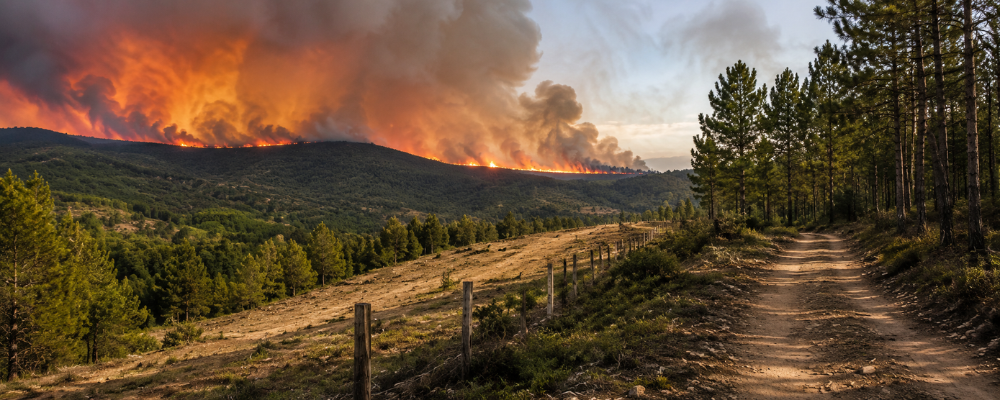

The creation of wildfire protection strips is one of the main prevention tools in municipalities located in urban-forest interface zones, where the contact between the natural environment and homes increases the risk of fire spread.
In this context, Espais Verds del Vallès has been awarded the contract to carry out the construction and maintenance of the outer fire protection strip around the town of Arenys de Mar. This is a strategic action aimed at reinforcing the safety of the municipality and reducing the vulnerability of the surrounding area to potential wildfires.
The main objective of the project is to reduce the amount of vegetation fuel, improve accessibility for emergency teams, and increase the protection of people, homes, and infrastructure located in the forested area.
This intervention falls within the municipal plans for fire prevention and risk reduction in residential areas and wildland-urban interface zones, an increasingly relevant line of action given the rise in extreme weather events associated with climate change.
With this project, Espais Verds del Vallès reinforces its position in the field of sustainable forest management applied to the protection of urban environments.
REDUCING THE RISK OF WILDFIRES
Reducing the risk of wildfires requires preventive land management that limits the spread of fire and protects the population.
One of the most effective tools for this is the creation of firebreaks around populated areas, which act as strategic barriers to reduce the continuity of vegetation fuel.
This tender is specifically aimed at the creation and maintenance of these firebreaks.
The objective of this project is the execution of forestry work in this outer firebreak.
What is a firebreak?

Imagen: visitarenys.com
A firebreak is a space located between the forest and inhabited areas where clearing, pruning, and tree thinning are carried out to interrupt the continuity of vegetation.
Thanks to this intervention, in the event of a fire, the flames lose intensity, advance more slowly, or may even be stopped before reaching homes or infrastructure.
The main objective of the project is to protect the urban area by creating a perimeter strip of low flammability, reducing both the vertical and horizontal continuity of vegetation.
This land-use plan improves the overall safety of the environment and increases the response capacity of firefighting teams to potential wildfires, helping to minimize damage and strengthen the resilience of the landscape.
Benefits of the firebreak
The creation and maintenance of this strip allows for:
-
- Slowing the spread of fire towards inhabited areas, reducing its intensity and speed of advance.
- Facilitating access for firefighting teams, thanks to the opening of spaces and service roads.
- Protect homes, infrastructure, and people, especially in wildland-urban interface areas.
- Improve the resilience of the forest ecosystem, promoting a more balanced structure that is less vulnerable to fires.
FORESTRY WORK TO REDUCE FIRE RISK
To achieve these objectives, the project includes a series of technical forest management actions aimed at reducing the amount of vegetation fuel and improving environmental safety:

Reduction of tree density
Selected trees are removed to decrease forest density and ensure minimum distances between trees, reducing the spread of fire at higher elevations.
Clearing and cleaning of undergrowth
Some shrubby and herbaceous vegetation is removed to reduce fine fuel, which is what most rapidly spreads fire.
Low-tree pruning
Low branches are removed from trees to prevent the so-called “fuel ladder,” which allows fire to spread from the ground to the treetops.
Opening and improvement of service roads
Forest roads are created or improved to allow access for machinery and firefighting equipment in case of emergency.
Construction of loading areas
Specific areas are set up where logs and plant debris are temporarily accumulated for later processing.
Management and shredding of plant residues
The generated residues are shredded and spread over the land, preventing their accumulation and promoting their incorporation into the natural soil cycle.
Regulatory framework and forest planning
These types of interventions fall within the framework of forest fire prevention strategies established by Catalan forestry regulations, as well as by municipal civil protection and risk management plans.
Their implementation responds to the need to adapt the territory to increasingly demanding climatic conditions, reducing the vulnerability of urban-forest interface areas to high-intensity fires.
FIRE PREVENTION PROJECT IMPLEMENTATION PHASES
The project awarded to Espais Verds del Vallès is organized into two main work phases, designed to ensure the orderly, safe, and efficient execution of all forestry operations.
Opening and improvement of forest access roads
The first phase focuses on preparing the terrain and ensuring accessibility for machinery and work equipment. Without this preliminary stage, the execution of forestry treatments would not be feasible safely or efficiently.
The main actions include:
-
- Initial surveying of the intervention areas, defining the work boundaries, access points, and loading areas on the ground.
- Construction of loading areas or stockpiles, where the extracted timber and plant debris will be temporarily stored.
- Opening and improvement of service roads, with a minimum width of 3 meters, designed for the transit of forestry machinery and maintenance or emergency vehicles.
These infrastructures are designed as temporary but functional elements, essential for reducing the impact of operations on the natural environment.
Forest management and reduction of vegetative fuel
The second phase focuses on the core of forestry work, directly aimed at reducing the risk of fire.
The actions include:
-
- Selective felling of trees, following technical criteria of density, spacing, and safety.
- Low pruning of the remaining trees, with the aim of increasing the height of the canopies and reducing the vertical spread of fire.
- Limbing and bucking of logs, which can be done on-site or at loading facilities.
- Dragging of the timber to stockpiles using specialized forestry machinery.
- Clearing and mulching of the undergrowth, significantly reducing the surface fuel load.
- Mulching of plant debris on-site or at loading facilities, returning organic matter to the soil.
The overall technical objective of this phase is to achieve a more open and heterogeneous forest structure, reducing the horizontal and vertical continuity of fuel, which significantly decreases the rate of spread of a potential fire.
To this end, strict forest management criteria are applied, such as:
-
- Maximum density of 150 trees per hectare
- Minimum safety distances of 8 meters between trees
- Removal of trees whose canopy encroaches on the firebreak
- Control of the proximity of trees to buildings and inhabited areas
Technical methodology for preventive forestry work
 The project includes different work methods depending on the slope, accessibility, and density of the terrain.
This classification allows for the optimization of resources and ensures the safety of operations.
The main techniques include:
-
- Manual methods, used in areas with difficult access or steep slopes
- Mechanized methods, using forestry tractors or towed trailers
- In-situ shredding, to reintegrate plant debris into the soil
- Limming on a loader, optimizing biomass transport
This combination of techniques allows the intervention to be adapted to the terrain, reducing environmental impact and improving the efficiency of forestry work.
MANAGEMENT OF PLANT REMNANTS AND VALORIZATION OF FOREST BIOMASS
One of the most important aspects of the project is the proper management of all biomass generated during forestry work.
The wood, branches, and vegetation debris that are extracted are not left on the ground, but are instead organized into temporary, controlled storage piles, designed to minimize the risk of fire and facilitate their subsequent treatment.
These accumulations of plant debris must comply with strict safety measures, especially during periods of high risk of forest fires.
 The main conditions include:
-
- A perimeter strip of low combustibility of at least 3 meters must be maintained, completely free of trees or shrubs.
- The piles cannot exceed a maximum length of 50 meters, thus avoiding large concentrations of fuel.
- It is mandatory to leave a safety separation between piles to prevent the fire from spreading in case of accidental ignition.
- It is prohibited to place these accumulations within 50 meters of buildings, sensitive infrastructure, or power lines.
- During periods of high fire risk, additional restrictions defined by current regulations and the project management team apply.
This management system allows for keeping biomass under control, reducing the fuel load in the surrounding forest, and ensuring that the work does not generate new risks during its execution.
Circular Economy applied to forest biomass
Beyond its preventative management, the biomass generated in these types of activities represents a resource with high environmental and energy value.
Espais Verds del Vallès ensures that this biomass is integrated into a sustainable forest management model based on the valorization of plant residues, which may include:
-
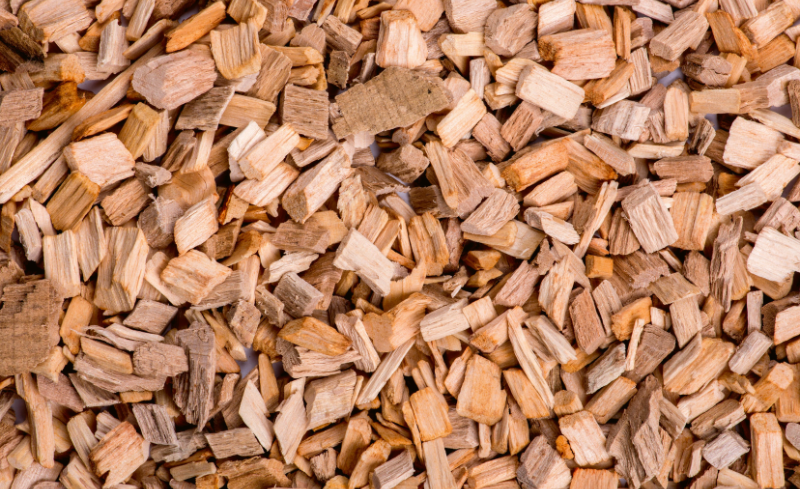
- Chipping and reincorporation into the soil as natural ground cover, improving its fertility and reducing erosion.
- Use as organic matter for the restoration of degraded soils in other forest areas.
- Potential energy use of biomass in specialized facilities, contributing to renewable energy generation and waste reduction.
- Reduction in transport volume and waste disposal, minimizing the project’s carbon footprint.
This approach allows for the transformation of a forest management byproduct into a useful resource, aligning the action with principles of circular economy and environmental sustainability.
Overall, this management system not only reduces the fuel load in the forest environment but also ensures that the generated biomass has a second useful life, reinforcing the project’s commitment to responsible forest management, the circular economy, and the fight against climate change.
ENVIRONMENTAL BENEFITS OF PREVENTIVE FOREST MANAGEMENT
The project incorporates a comprehensive strategy for the environmental, ecological, and landscape improvement of the forest environment.
The planned interventions reduce the risk of fire, improve the overall condition of the ecosystem, and increase its resilience to climate change.
Improved ecological condition of the forest
Reducing tree density and selectively managing the understory contribute to an overall improvement in the forest structure. By decreasing competition among trees for essential resources such as light, water, and nutrients, the development of healthier, more stable, and more resilient specimens is encouraged.
This management also allows for more balanced forest regeneration and promotes natural growth dynamics and species replacement, improving the health of the forest stand.
Increased biodiversity
Opening up the tree canopy and reducing excessive cover facilitate light penetration into the understory, promoting the emergence of native herbaceous and shrub species.
This process directly contributes to:
-
- Greater plant diversity
- Restoration of habitats for local fauna
- A more heterogeneous forest structure
- Improved ecological balance of the ecosystem
The combination of species and different vegetation layers creates a more diverse and resilient forest, better able to withstand environmental disturbances.
Improved forest landscape
From a landscape perspective, the project contributes to creating a more organized, accessible, and visually balanced forest environment.
Reducing excessively dense stands diminishes the feeling of a closed and homogeneous forest, improving the integration between the natural environment and nearby urban areas.
Furthermore, the restoration and improvement of forest roads enhances the functionality of the land and facilitates future management and maintenance.
Reduced erosion and soil improvement
One of the key aspects of the project is the sustainable management of plant debris generated during forestry operations.
The resulting biomass is shredded and distributed evenly across the land, preventing accumulation and promoting natural soil protection.
This system provides significant environmental benefits:
-
- Incorporation of organic matter and improved soil fertility.
- Reduced erosion, especially on sloping terrain.
- Improved moisture retention.
- Decreased biomass transport and associated emissions.
- Reduced landscape impact.
Restoration and maintenance of forest roads
The project includes the opening and improvement of service roads and forest access routes, essential for both preventative management and emergency response.
The improvement of these roads facilitates access for forestry machinery, maintenance equipment, and firefighting services, enhancing operational efficiency and response capacity to forest fires.
Safety for the population and protection of infrastructure
The creation of a low-combustibility perimeter strip reduces the continuity of vegetation fuel and decreases the potential intensity of a fire in urban-forest interface areas.
This increases the protection of homes, infrastructure, and people, as well as improving working conditions for emergency teams.
Taken together, the buffer zone is consolidated as a strategic green infrastructure that combines fire prevention, environmental improvement, and long-term sustainable forest management.
COMMITMENT TO SUSTAINABLE FOREST MANAGEMENT

The awarding of this project to Espais Verds del Vallès represents an important step in the active management of forest areas in the Arenys de Mar region and reaffirms the company’s commitment to responsible forest management and fire prevention.
The combination of technical planning, specialized machinery, and sustainability criteria makes this project an example of how modern forest management can reduce risks, protect the population, and improve the resilience of the territory.
The outer buffer zone is not just a forestry project: it is an essential green infrastructure for the safety of the municipality and a key element in the fire prevention strategy on the Catalan coast.
We care for our clients.
We care for the environment.
If you would like more information about our services or have any questions, please don’t hesitate to contact us at espaisverds@tma.es.
At Espais Verds del Vallès, we work for a greener, safer, and more sustainable future for all!
Discover our comprehensive Gardening.
Follow us on TMA’s LinkedIn. Subscribe to our YouTube channel.
Contact us, we will be happy to advise and inform you.