
For years, recycling has been the cornerstone of environmental strategies in companies and organizations: separating waste, improving recycling rates, and complying with regulations. However, in today’s context, recycling alone is no longer enough. Waste management is no longer just an operational task — it directly impacts costs, efficiency, and corporate reputation.
The increase in waste generation, the growing complexity of materials, and rising sustainability demands are pushing companies to adopt a broader and more strategic approach.
Around key dates such as World Recycling Day (May 17), this debate gains renewed visibility.
Despite the growing use of terms like recycling, circular economy, and sustainability, many companies still face the same questions: what waste can actually be recycled? What should be done with non-recyclable waste? In this context, waste recovery becomes a strategic ally.
Understanding how to combine recycling and waste recovery within a circular economy model allows companies to maximize resources, reduce costs, and turn waste into opportunities. Applying these concepts effectively is no longer just about environmental compliance — it is a real competitive advantage and a key step toward more efficient, sustainable, and competitive business models.
IS RECYCLING ENOUGH FOR WASTE MANAGEMENT IN BUSINESSES?
For years, recycling has been synonymous with proper waste management.
Separating, sorting, and sending waste for recycling has become standard practice in both households and businesses.
However, the current context has changed.
Today, companies face far more complex challenges: increasing waste volumes, regulatory pressure, ESG requirements, and the need to optimize costs. In this scenario, relying solely on recycling no longer guarantees efficient waste management.
In fact, many companies with high recycling rates still face a structural issue: they generate too much waste or do not know how to manage non-recyclable fractions.
This is where the difference between compliance and optimization begins.
WHAT RECYCLING IS — AND WHAT IT IS NOT
Recycling is the process by which waste is transformed into raw materials to manufacture new products.
It is a fundamental tool for reducing the consumption of natural resources and minimizing environmental impact.
In business environments, recycling typically focuses on materials such as paper, cardboard, plastics, metals, and glass. However, not all waste generated by a company can go through this process efficiently.
One of the main limitations of recycling is contamination. When materials are not properly separated or contain organic or chemical residues, their recyclability drops significantly. As a result, many materials are rejected at recycling facilities.
Additionally, there is the phenomenon of downcycling, where recycled material loses quality compared to the original. This means it cannot always be reused for the same purpose, reducing its value within the production cycle.
Main limitations of recycling in businesses
-
- Not all materials are recyclable (especially composite materials).
- Requires highly accurate separation at source (and not everything separated is actually recycled).
- Can involve high logistics and treatment costs.
- Recycled material does not always retain original quality.
- Depends on secondary raw material markets.
Examples of effective recycling in businesses
Recycling occurs when waste:
-
- Is transformed
- Becomes raw material
- Is used to manufacture new products
In other words, the material returns to the production cycle.
Clear examples include:
-
- Plastic bottles → new bottles or textile fibers
- Used paper → new paper or cardboard
- Glass → new glass containers
- Metals → new parts or structures
Usual practices that are not recycling
Although often confused, the following are not recycling:
-
- Placing waste in the correct bin (this is separation).
- Reusing an object without transformation.
- Incinerating waste, even if energy is generated.
- Converting waste into fuel.
- Using waste in industrial processes without material recovery.
Common recycling mistakes in businesses
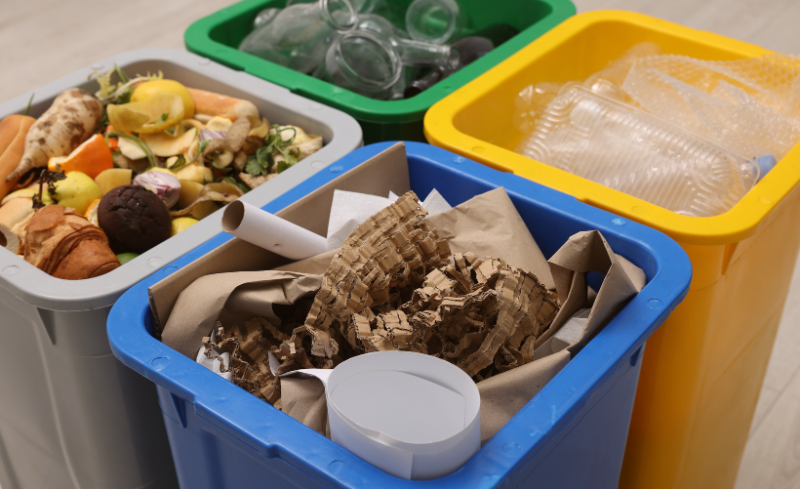
Many organizations believe they are “recycling” simply because they separate waste or because a waste manager collects it regularly. This perception is understandable, but incomplete. Separation is not recycling, and assuming otherwise creates a false sense of sustainability that prevents improvement.
Actual recycling happens later, at treatment facilities, where materials are sorted, cleaned, and transformed into new raw materials. And this is the critical point: not all separated waste is ultimately recycled.
Reasons include contamination from food waste, incorrect mixing, non-recyclable materials, or internal segregation errors.
For businesses, understanding this difference is essential. It is not enough to place colored bins — companies must ensure proper separation, cleanliness, and management to maximize real recycling outcomes. Otherwise, part of the effort — and investment — is lost.
WHAT IS WASTE RECOVERY AND WHY IT IS STRATEGIC FOR BUSINESSES
Waste recovery consists of extracting value from waste, whether in the form of new materials, energy, or useful resources for other processes.
Unlike recycling, which aims to close the material loop, waste recovery expands the possibilities for using waste. This makes it especially relevant for materials that cannot be recycled through conventional means.
In business terms, waste recovery turns a problem into an opportunity. Waste that once represented a cost can become a valuable resource.
Not everything can be recycled — but almost everything can be recovered. This approach allows companies to reduce environmental impact while optimizing costs and improving operational efficiency.
Types of waste recovery
There are different ways to recover waste depending on how it is utilized. Broadly, three main types can be identified:
 Material recovery
 Material recovery
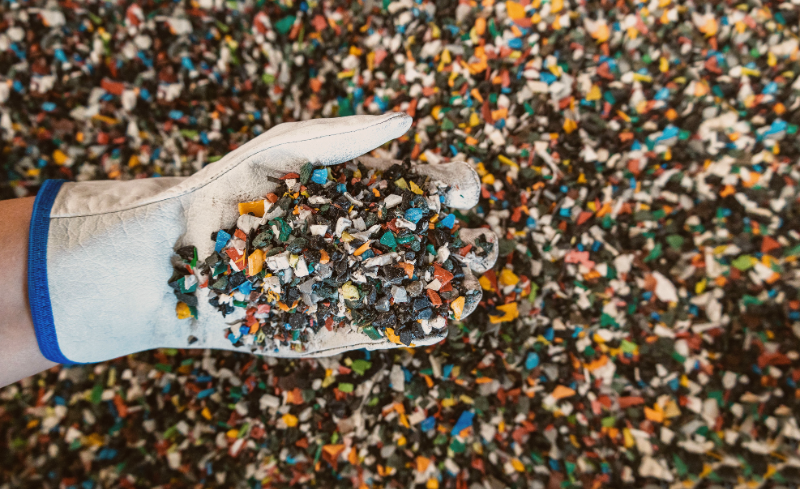
Occurs when waste is transformed into a new raw material that can be used in other production processes. Recycling falls into this category.
Energy recovery
Takes place when waste is used as an energy source.
It is a common option for waste that cannot be efficiently recycled.
Examples include:
-
- Use of waste as fuel in industrial processes.
- Production of RDF (Refuse-Derived Fuel).
- Energy generation in controlled facilities.
Recovery in industrial processess
In this case, waste is not transformed into recycled raw material but is used directly within an industrial process. It replaces conventional materials, either as fuel or as part of the process, without prior recycling.
A common example is the cement industry, where certain waste streams are used as alternative fuel or mineral input.
In this way, the waste is not recycled, but it is still used either for energy or as a material resource, avoiding disposal and reducing the consumption of natural resources.
In practice, these three types of recovery make it possible to utilize most waste streams and significantly reduce the amount sent for disposal.
RECYCLING VS WASTE RECOVERY: WHAT YOU REALLY NEED TO KNOW
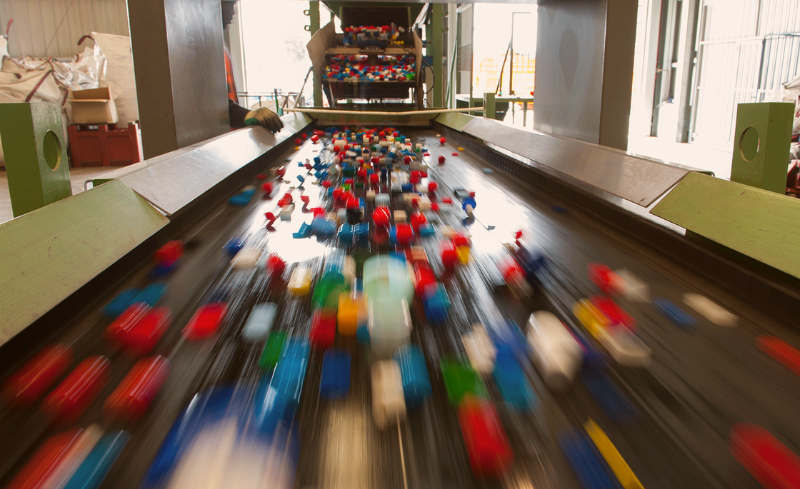
Although often used interchangeably, recycling and waste recovery are not the same.
Recycling focuses on transforming waste into similar new products, keeping materials within the same cycle.
Waste recovery, on the other hand, aims to extract value even when waste cannot be turned into equivalent products. If value is recovered, it is recovery.
Key differences:
-
- Recycling requires clean waste; recovery accepts complex waste.
- Recycling produces materials; recovery can generate energy.
- Recycling is prioritized; recovery complements it.
- Recovery reduces waste sent for disposal.
All recycling is recovery — but not all recovery is recycling. In business terms, this means that waste recovery does not compete with recycling — it complements it.
WHEN TO RECYCLE AND WHEN TO USE WASTE RECOVERY
Although recycling is often considered the most sustainable option, it is not always the most efficient or suitable solution for all types of waste. In certain cases, waste recovery — whether material or energy-based — can deliver better results from both an environmental and economic perspective.
The key is understanding that not all waste can be recycled, and forcing that route can lead to higher impact, increased costs, and lower efficiency.
Waste recovery, on the other hand, allows materials to be used in other industrial processes when recycling is not technically or economically viable.
Situations where waste recovery is the best option

Mixed waste that is difficult to separate
When separation would require excessive energy, time, or technology, recovery may be the more efficient option.
Contaminated materials (organic, chemical residues, oils, etc.)
Contamination prevents recycling, but these materials can still be used in specific industrial processes.
Composite or multi-layer materials
Packaging made of multiple layers, complex plastics, or inseparable material combinations typically have very low recyclability.
Large industrial volumes with no recycling outlet
Sectors such as cement, metallurgy, or energy production can use these waste streams as part of their processes.
When recycling costs exceed the recovered value
If recycling involves high costs and the resulting material has low market value, recovery may be the more sustainable option.
Why is it important to choose the right option between recycling and recovery?
Choosing the right option between recycling and waste recovery is important because each type of waste has its own characteristics: composition, level of contamination, stability, and also a different potential value. Not all materials can be recycled with the same efficiency, and not all are suitable for energy or material recovery processes.
Therefore, making this decision is not automatic. It requires understanding what type of waste it is, what treatment allows for its best use, and how that treatment fits into the production process or the management chain.
Applying the same solution to all waste creates inefficiencies, increases costs, and, in many cases, results in a greater environmental impact than necessary.
Choosing the right approach not only improves environmental performance but also optimizes costs and resources.
FROM RECYCLING TO WASTE RECOVERY: TOWARDS A TRUE CIRCULAR ECONOMY
Recycling remains an essential foundation, but stopping there limits the potential for improvement. Companies that truly advance are those that adopt a broader vision, where each waste stream has a defined strategy and where recycling and waste recovery complement each other to achieve maximum possible utilization.
It’s not just about separating waste, but about:
-
- Analyzing what is actually generated and in what quantities.
- Determining the optimal treatment for each fraction.
- Optimizing costs and processes, avoiding generic solutions.
- Integrating waste management into the company’s overall strategy.
This change is not just technical; it’s strategic. It involves rethinking processes, making data-driven decisions, and understanding that every waste stream can become an opportunity.
Recycling well is compliance. Waste recovery well is optimization.
The transformation happens when a company stops asking, “Where do I throw this away?” and starts asking, “How can I reuse this?” At that point, waste management ceases to be an environmental obligation and becomes a lever for efficiency, savings, and reputation.
Recycling correctly is the first step. But recovering value from what cannot be recycled is what allows a challenge to be transformed into a competitive advantage.
Adopting a comprehensive approach—based on analysis, planning, and circular economy principles—turns every waste product into a resource and makes sustainability cease to be an abstract concept and become a real driver of innovation and growth.
FREQUENTLY ASKED QUESTIONS ABOUT RECYCLING AND WASTE RECOVERY IN COMPANIES
1. What is the difference between recycling and waste recovery in companies?
Recycling transforms waste into new materials that can re-enter the same production cycle. Recovery utilizes waste that cannot be easily recycled, generating energy or using it in other industrial processes. Both processes are complementary within an efficient and sustainable waste management strategy.
2. What is waste recovery and how does it benefit companies?
Waste recovery involves converting discarded materials into useful resources, either as alternative raw materials or as an energy source.
For businesses, this means:
-
-
- Reducing disposal costs.
- Improving sustainability and compliance with environmental regulations.
- Maximizing the use of each waste product within the circular economy.
-
3. What waste cannot be recycled by businesses?
Not all waste is recyclable. The most common include:
-
-
- Multilayer or composite packaging.
- Complex or mixed industrial materials.
- Waste contaminated with organic, chemical, or hazardous substances.
-
Recovery becomes the best option for this type of waste.
4. What waste can be recovered?
Waste that is not recyclable can be recovered, such as:
-
-
- Complex or mixed plastics.
- Contaminated industrial waste.
-
Materials with high energy content. These fractions can be transformed into energy, RDF (recovered solid fuel) or into inputs for other production processes.
5. What is energy recovery and when is it used?
Energy recovery consists of using waste as an energy source. It is applied when recycling is not feasible and the waste has energy value, such as in heat or electricity production industries. It is an efficient way to reduce the fraction of waste sent to landfills.
6. How do you decide whether waste should be recycled or recovered?
It depends on:
-
-
- Waste composition.
- Cleanliness or contamination level.
- Technical and economic feasibility.
-
Waste audits allow you to define the best option, guaranteeing efficiency and cost reduction.
7. How can a company improve its waste management?
Improving three key areas:
-
-
- Diagnosis: Identifying types, volumes, and errors in separation.
- Optimization: Improving separation, reducing residual waste, and implementing recovery methods.
- Monitoring: Measuring KPIs such as percentage recycled, percentage recovered, and cost per ton.
-
In addition, training the operational team and choosing reliable waste management companies are fundamental.
8. What mistakes should companies avoid when managing waste?
The most common are:
-
-
- Believing that everything can be recycled without evaluating technical or economic feasibility.
- Mixing waste at the source, which reduces recyclability and recovery value.
- Failing to measure or analyze management data, which prevents process optimization.
- Lack of team training, which leads to errors in separation and management.
- Failing to review contracts with waste management companies, thus maintaining inefficient solutions.
- Failing to update the strategy according to changes in regulations or the types of waste generated.
-
9. Why are some waste materials not recyclable?
There are several reasons:
-
-
- Difficult-to-separate composition (multilayer plastics, combined packaging).
- Contamination by organic, chemical, or hazardous waste.
- Recycling costs exceeding the value of the recovered material.
-
In these cases, recovery is the most strategic option.
10. What should be done with non‑recyclable waste?
Not all waste streams are recyclable, but that doesn’t mean they must become a cost. Many can be recovered through different pathways:
-
-
- Energy or heat generation via waste‑to‑energy processes.
- Production of Solid Recovered Fuel (SRF) for industries such as cement manufacturing.
- Integration into other industrial processes, leveraging their material or energy content.
-
The goal is to minimize final disposal and maximize the value extracted from each waste stream.
11. How does waste management contribute to the circular economy?
Efficient waste management is a key enabler of the circular economy, as it helps close material loops:
This reduces the consumption of virgin resources, improves process efficiency, and generates economic and environmental value.
12. What is the relationship between recycling, recovery, and regulatory compliance?
Regulatory compliance is the starting point, but a strategy that integrates recycling and recovery delivers broader benefits:
-
-
- Lower operational costs by optimizing the destination of each waste stream.
- Improved efficiency and productivity through better‑structured processes.
- Stronger ESG performance and enhanced corporate reputation.
- Reduced legal risks and potential penalties thanks to proper, traceable waste management.
-
Together, recycling and recovery not only ensure compliance but also drive more profitable and sustainable operations.
NEWS RELATED TO WASTE RECYCLING AND RECOVERY
How to properly manage waste in companies: prevention, valorization and business sustainability.
Comprehensive management of waste in companies: towards the Circular Economy.
Solutions for waste management in companies: practical guide and actions to reduce waste.
If you need efficient waste management, tailored to your business and aligned with your 2026 environmental goals, we would be delighted to help.
Write to us at comercial@tma.es and we will prepare a personalized proposal for you.
Discover our comprehensive waste management services and join us on the path to a more sustainable future.
We take care of our customers and we take care of the environment.
We are much more than comprehensive waste management.
Follow us on TMA’s LinkedIn. Subscribe to our YouTube channel.
Contact us, we will be happy to advise and inform you.