
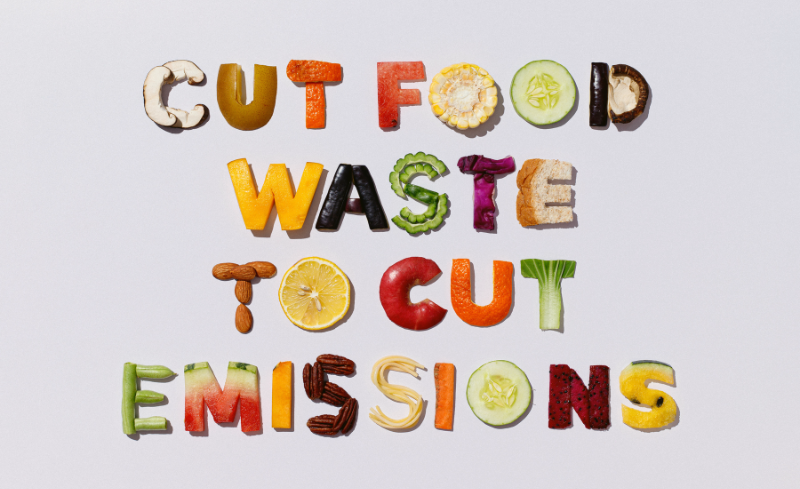
European Waste Prevention Week (EPW) takes place from 16 to 24 November 2024, and is a crucial opportunity to reflect on the environmental impact of waste and the role each of us can play in reducing it. This year, in its 16th edition, the SEPR focuses on the fight against food waste. At TMA, as a company committed to sustainability and the Circular Economy, we join this initiative, which is aligned with our mission to reduce and prevent waste, mitigate its environmental impact and transform it into valuable resources, extending its life cycle. Continue reading to find out how we can all contribute to this and how at TMA we carry out efficient waste management to take care of the environment.
EUROPEAN WEEK FOR WASTE REDUCTION, A NECESSARY COMMITMENT FOR THE ENVIRONMENT
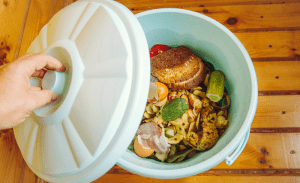 The EWWR is an initiative launched in 2009 with the aim of raising awareness in European society about the importance of reducing waste and minimising its impact on the environment.
It is a unique opportunity to make visible and promote sustainable practices that would otherwise be unknown or could be relegated to the daily lives of a few people.
This 2024, the European Week for Waste Prevention aims to reduce and prevent food waste:
Every year, it is estimated that around 58 million tonnes of food are wasted in the European Union (this is equivalent to about 131 kg per inhabitant), representing a loss of valuable resources and a significant source of greenhouse gas emissions.
At TMA we work to reduce the amount of waste we throw away and ensure that each waste has the opportunity to become a new resource. Reducing waste must be a commitment and a responsibility of all. At the same time, it is an opportunity to innovate and create value, moving towards a truly circular economy.
THE IMPORTANCE OF PREVENTING FOOD WASTE
Food waste has become particularly important, as food production represents a valuable resource and entails a large environmental burden: from the use of water and land to the CO₂ emissions generated during its production, transport and decomposition.
It is a global problem that generates large-scale social, economic and environmental impacts.
Every year, approximately one third of the food produced is lost or wasted.
Food waste accounts for approximately 8-10% of global greenhouse gas emissions.
The fight against food waste helps reduce emissions, improves food security and preserves natural resources.
Why has the fight against food waste recently become so relevant?
Waste equates to wasted natural resources, greenhouse gas emissions and an ethical problem when we think about world hunger.
Some data from Spain reflect the magnitude of this problem. In 2023, approximately 1,214.76 million kilograms of food and beverages were wasted, and 4.3% of food purchased at home ended up in the trash.
With the aim of reducing all types of waste, at TMA we act to reduce waste and encourage its use: we help companies and institutions in the comprehensive management of their waste, implementing sustainable solutions that minimize the environmental impact of the waste they generate in their activities.
Food waste has environmental, economic and social consequences. How does it affect the environment and what are the most significant costs of this problem?
Food waste generates large amounts of greenhouse gases due to the energy, water and other resources needed to produce, transport and store food that is then not consumed.
In addition, waste also represents an enormous economic cost, affecting both producers and consumers.
Socially, it is a contradiction that so much food ends up in the trash when there are millions of people who have difficulty accessing adequate food.
TIPS AND GOOD PRACTICES TO REDUCE FOOD WASTE
Reducing food waste is a task in which we can all participate, from companies to consumers. Below we share some practices that we can easily carry out to reduce food waste.
Good practices that we can carry out as consumers:
-
- Plan your shopping: Make a shopping list, buy only what you need, and plan your meals in advance to avoid over-eating food that could end up going to waste.
- Use leftovers to create new recipes or freeze food that won’t be consumed right away.
- Go through food stored in the refrigerator and freezer to use up food that is closer to its expiration date.
- Store properly: Store food properly to extend its shelf life and reduce the risk of spoilage.
- Freeze fresh food that won’t be used right away to extend its shelf life.
- Learn to read labels and tell the difference between the expiration date and the best before date.
- Reduce portions to avoid food left over on your plate.
- Donate unused food to local food banks or people in need.
- Buy in bulk to reduce the use of plastic packaging.
- Learn to compost food scraps to create organic fertilizer. Use FIFO (first in, first out) for perishable foods.
- Take advantage of creative recipes: look for recipes that use ingredients that would normally go to waste.
- Support local producers: reduce transport distances and resulting emissions and support the local economy.
Good practices for businesses:
-
- Optimize storage: improve storage conditions to extend the shelf life of food.
- Donate unsold surplus food
- Offer discounts on products close to their expiry date.
- Reuse food: create products derived from food that cannot be sold as fresh, such as jams or sauces.
- Collaborate with local producers: work with local farmers to reduce waste at the production stage.
- Measure and monitor: implement systems to measure food waste and look for ways to reduce it.
- Promote the Circular Economy: adopt practices to reuse and recycle materials.
- Create flexible menus that can be adapted to the ingredients available, thus reducing waste.
- Use technology to forecast demand, better manage inventory, prevent over-purchasing and adjust stock.
- Establishing a ‘zero waste’ policy is essential and can inspire other companies.
EFFICIENT MANAGEMENT OF FOOD NOT SUITABLE FOR CONSUMPTION
It is important to remember that the impact of waste goes beyond consumable food. Products not fit for consumption represent a key opportunity to act in favor of the environment, managing them responsibly and preventing them from becoming an additional burden on our environment.
At TMA, we know that unusable food also creates a significant environmental problem if not managed responsibly.
 For this reason, we offer an specialized service for the destruction of food that can no longer be consumed, ensuring that those products that cannot be reused or redistributed are processed in a way that minimizes their impact.
In some cases, can be transformed into resources for other sectors, such as energy generation.
The destruction of unusable food is an example of how waste can be redirected towards more sustainable solutions to eliminate health risks and reduce waste.
It also contributes to promoting the Circular Economy by transforming these materials into usable resources, such as biogas or compost, thus contributing to an environmentally responsible value chain.
This approach allows us to close the cycle of wasted food that cannot be consumed or reused, avoiding contamination and promoting sustainable practices.
Through the controlled destruction and conversion of food unfit for consumption, at TMA we ensure that this type of waste does not harm the environment or waste its potential.
Thus, aligned with the objectives of the European Week for Waste Prevention, we continue to promote practices that contribute to a more conscious consumption model, in which each waste, even non-consumable waste, has a sustainable path towards use and valorisation.
With this type of solutions, TMA reinforces its commitment to reduce the negative impact of food waste and maximize its usefulness at each stage.
TMA’S COMMITMENT: HOW TO MINIMIZE WASTE
At TMA, all phases of the waste management and treatment process we carry out are aimed at caring for the environment and our customers. We reduce the environmental impact of the waste generated in their activities and we do so through efficient comprehensive management, from collection, transport and treatment.
 At TMA we carry out waste valorisation, an approach that allows us to reduce the environmental impact of waste, transforming waste into valuable resources. How do we do it and what are the benefits?
 At TMA we carry out waste valorisation, an approach that allows us to reduce the environmental impact of waste, transforming waste into valuable resources. How do we do it and what are the benefits?
Waste valorisation is key to contributing to the Circular Economy. Instead of treating waste as final waste, we consider it as resources that can be transformed into new materials or energy.
We consider each waste as an opportunity to be transformed into a new resource and in this way, we extend the life cycle of materials: we give a new life to waste. By integrating valorisation into waste management we reduce the environmental impact.
At TMA we are convinced that waste has enormous potential that can be exploited through recycling, recovery and transformation techniques.
The benefits are multiple: it reduces the demand for raw materials, reduces carbon emissions and extends the useful life of materials.
For all these reasons, we work to find innovative ways to valorise waste and reduce the environmental impact that would be caused by disposing of it and not giving it the opportunity to become new resources and products.
At TMA we are committed to offering sustainable and efficient solutions in the comprehensive management of waste, and valorisation is key.
FROM WASTE TO OPPORTUNITY: EFFICIENCY IN WASTE MANAGEMENT
The Circular Economy represents a radical and necessary change in the way we view waste: instead of considering it as the end of a cycle, it is given a new opportunity to be used and re-enter the production system.
In waste management, this approach involves seeing each waste as a potential resource that, instead of being discarded, can be transformed and generate value. Circularity seeks to ensure that resources are constantly reused, thus extending the useful life of materials and minimizing the extraction of new materials.
Waste Recovery, transforming waste into resources
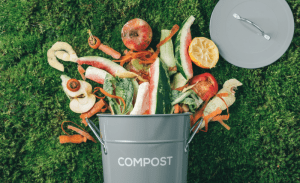 Waste Recovery, transforming waste into resources
Waste recovery is the fundamental pillar of the Circular Economy.
At TMA, we are committed to this mission, and we work every day to implement innovative solutions that guarantee that the waste we manage is recovered so that it can be reincorporated into the production cycle.
When we recover, we are transforming waste into a useful resource, either through recycling, material recovery or energy production.
This process focuses on recovering value, allows us to reduce the volume of wasted waste, reduces pressure on natural resources and contributes to environmental sustainability.
At TMA we minimize the impact of waste on the environment by studying, developing and implementing solutions to convert waste into resources, for the good of our clients and the environment.
In this way, we transfer to the sector our firm commitment to offering the most efficient treatment and recycling solutions for any type of waste generated, no matter how complex the process in question.
Zero Waste, zero waste in the comprehensive management of waste
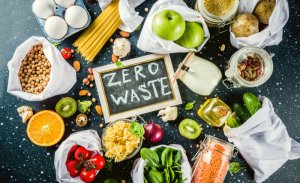 Zero Waste, zero waste in the comprehensive management of waste
The “Zero Waste” philosophy is a pillar of valorisation and the Circular Economy, as it focuses on reducing to a minimum the amount of waste that cannot be recovered or transformed.
At TMA we are Zero Waste and our goal is for most materials to have a second life and be part of a continuous process of reuse and transformation.
The implementation of the Circular Economy and the Zero Waste approach requires constant innovation.
At TMA we are committed to advanced technologies that allow us to manage waste more efficiently and safely, guaranteeing the traceability of each stage and ensuring that each recovered material meets the quality standards to be reincorporated into the production cycle.
For TMA, the Circular Economy and the Zero Waste philosophy are tangible commitments that are reflected in our daily practices. Each action we carry out, from collection and transport to waste treatment, aims to reduce waste and maximize the use of each material and reduce the environmental impact of all phases of the comprehensive waste management process.
Our commitment to waste reduction and recovery reinforces our mission to offer comprehensive and sustainable management that takes care of our customers and also protects the environment.
Innovation in waste management to reduce waste
Technology also plays an essential role in waste management and reducing environmental impact, and at TMA we are committed to innovation at every stage.
Our more than 250 vehicles, of 11 different types, are designed to minimise emissions, as we have a modern fleet that includes electric and LPG hybrid models.
This fleet is continually renewed and optimized, and we use geolocation software to plot more efficient routes, allowing us to reduce fuel consumption, minimize emissions from transport and improve the efficiency of each service we perform.
We also use smart compactors and containers to optimise space and waste management, improving both storage and the cleaning and maintenance of our equipment.
The aim of these measures is to improve operational efficiency and also maximize the recovery potential of each material.
We strive to ensure that each waste can be used as a new resource, thus promoting a more sustainable production cycle aligned with the principles of the Circular Economy.
By adopting these innovative practices, we reinforce our commitment to the environment and to a future in which waste is as minimal as possible.
LESS WASTE, MORE RESOURCES: A MORE SUSTAINABLE FUTURE
The European Week for Waste Prevention is an important moment to rethink our relationship with consumption and waste and a starting point to start acting in a more sustainable way.
Preventing and valorising waste reduces the environmental impact and creates opportunities for a more sustainable future.
At TMA we work every day to transform waste into resources and reduce the environmental footprint of treatment processes and comprehensive waste management.
Responsibility for the environment is shared and we can all contribute to preventing and reducing waste and food waste. Every small effort counts and contributes positively, during this week and every day.
Because food waste leaves a bad taste in the mouth of the plane and we can avoid it.
By participating in the European Week for Waste Reduction, we reaffirm our commitment to sustainability and the Circular Economy.
We take care of our clients and we take care of the environment.
We are much more than comprehensive waste management.
Do you need efficient waste management or more information about the services we offer at TMA? Write to us at comercial@tma.es and we will be happy to provide you with a personalized proposal, fully adapted to your needs.
Discover our comprehensive Waste Management Services.
Follow us on TMA’s LinkedIn. Subscribe to our YouTube channel.
Contact us, we will be happy to advise and inform you.


