
In a world that generates millions of tons of waste every year, it’s essential to stop and think about how we manage it. At TMA, we work every day to demonstrate that sustainable waste management is possible and is key to moving towards sustainability, efficiency, and a Circular Economy. In this article, we explain everything you need to know about integrated waste management, its benefits, challenges, and how we can work together.
WHAT IS COMPREHENSIVE WASTE MANAGEMENT?
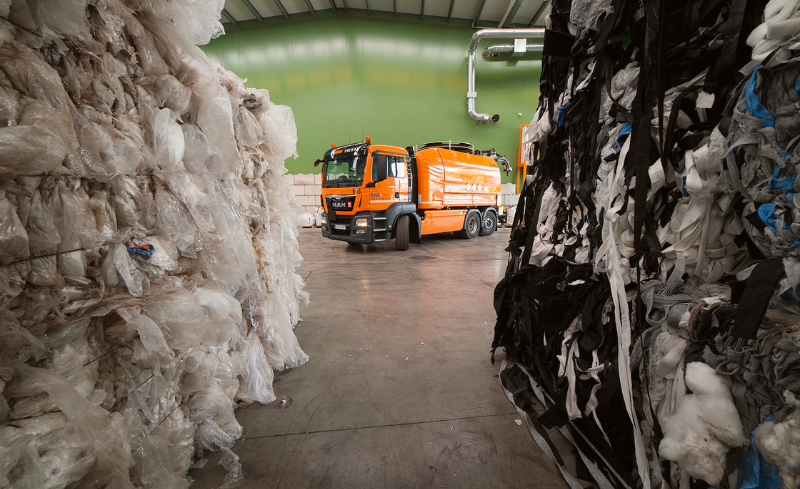
Comprehensive waste management is a planned system designed to properly manage waste generated by human activity and by the companies. It encompasses the entire waste lifecycle, from generation to recovery or final disposal.
This model seeks to optimize resources, reduce impacts, and generate value from what was previously simply discarded.
It’s an approach that considers all stages of the waste lifecycle with a preventive, efficient, and sustainable vision.
The objectives of comprehensive waste management are:
-
- To reduce the quantity and hazardousness of waste.
- To promote reuse, recycling, and recovery.
- To guarantee safe final disposal when there is no other alternative.
- To involve all social actors in the process: citizens, businesses, and public administration.
This implies:
-
- Reducing waste generation.
- Properly sorting waste.
- Collecting waste safely.
- Transporting waste efficiently.
- Treating waste with appropriate technology.
- Recovering waste whenever possible.
- Disposing of waste in a controlled landfill, correctly, and only when there is no other option.
The key is to consider, view, and treat waste as a resource with great potential for reuse.
Because behind every poorly managed waste stream lies an impact: on the environment, on public health, on the economy.
But also, behind every well-managed waste stream lies an opportunity: for transformation, for efficiency, for the future.
At TMA, we understand that waste management is a powerful tool for moving towards more sustainable, circular, and responsible models.
The current context in waste management
Every year, more than 2 billion tons of municipal solid waste are generated worldwide, and this figure is estimated to increase by 70% by 2050: we are projected to produce more than 3.4 billion tons of waste per year if we do not change our habits.
This reality poses serious environmental, social, and economic challenges.
Comprehensive waste management is presented as a key strategy for achieving cleaner cities, more responsible industries, and more resilient communities.
Inadequate waste management can lead to:
-
- Soil and water pollution.
- Greenhouse gas emissions.
- Proliferation of diseases.
- Loss of valuable resources.
- Social and environmental conflicts.
In response, comprehensive waste management allows us to:
-
- Improve public health.
- Reduce environmental impact.
- Recover materials and energy.
- Generate green jobs.
- Promote technological innovation.
- Move towards sustainable production and consumption models.
What types of waste are there?
One of the first steps towards efficient management is understanding what types of waste are generated.
Because not all waste is the same, nor can it all be treated in the same way.
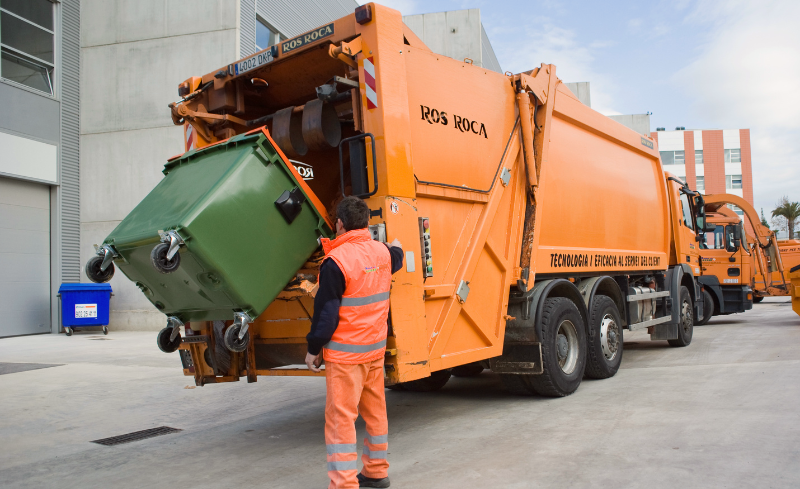 According to its origin:
· Urban: generated in homes, businesses, and offices.
· Industrial: produced by manufacturing or extractive activities.
· Hospital or healthcare: waste from healthcare facilities.
· Agricultural: from agriculture and livestock farming.
· Construction and demolition waste (CDW): generated by construction and renovation projects, typical of the construction sector.
According to composition:
· Organic: food scraps, pruning waste, biodegradable waste.
· Recyclable inorganic: plastic, glass, paper, metals.
· Non-recyclable inorganic: ceramics, diapers, cigarette butts, cleaning waste,…
According to hazard:
· Non-hazardous: like ordinary household waste and do not pose risks to health or the environment.
· Hazardous: contain toxic, flammable, or corrosive substances, such as paints, solvents, or industrial chemical waste.
COMPLETE GUIDE TO COMPREHENSIVE WASTE MANAGEMENT
Integrated waste management is not just about collecting and disposing: it’s about planning each stage to reduce environmental impact, optimize resources, and comply with regulations.
At TMA, we understand integrated waste management from two complementary perspectives: what we do and how we do it.
The phases for effective waste management
There is a logical and effective order that prioritizes prevention over disposal. This approach helps to better manage waste and make the most of available resources.
· Prevention: The most sustainable approach is to not generate waste. How? By redesigning products, avoiding over-packaging, or changing internal processes.
· Reduction: If waste cannot be avoided, at least reduce the quantity or the hazardous nature of the waste. This is achieved by optimizing materials or avoiding polluting substances.
· Reuse: Give materials a second life. For example, reuse packaging multiple times or refurbish equipment.
· Recycling: Transforming waste into new materials or products.
· Valorization: This process aims to recover value from waste unsuitable for recycling or reuse (such as new materials or byproducts). Energy recovery is one such method, allowing energy to be obtained from residual waste in a controlled and environmentally safe manner.
· Treatment: Neutralizing or stabilizing waste before safe disposal.
· Final disposal: Taking waste to controlled landfills is the last resort. It is only done when there is no other viable alternative.
This order is not arbitrary: the higher up the line we operate, the greater the economic and environmental benefit.
And at TMA, we help our clients move up the ladder in this process.
How is it done in practice? The operational stages
In addition to knowing what is best to do, it is important to know how to do it well.
These are the phases that all waste management must comply with, ensuring technical rigor, traceability, and sustainability:

Separation at the source
It all starts where the waste is generated. Proper sorting facilitates recycling and prevents contamination.
Collection and transport
With optimized routes, suitable vehicles, and control systems. At TMA, each type of waste has its own protocol.
Specialized treatment
Not all waste is treated the same. There is organic, hazardous, healthcare, and industrial waste… and each requires different techniques.
Recovery
We recover materials or generate energy from waste, always prioritizing efficiency and environmental responsibility.
Controlled disposal
As a last resort, waste is disposed of in controlled landfills, minimizing environmental risk.
Effective comprehensive waste management combines planning, responsibility, and coordinated technical action. And to achieve this, experience, resources, and commitment are essential.
That’s what we offer at TMA: real solutions to transform waste into opportunities.
Each stage is designed to minimize impact, maximize efficiency, and ensure regulatory compliance. And when the entire process is aligned, waste ceases to be a problem and becomes part of the solution.
WHY SHOULD COMPANIES COMMIT TO WASTE MANAGEMENT?

Companies generate a large amount of waste. But beyond that, they have the ability to influence the entire value chain: suppliers, production processes, logistics, product design, and consumer behavior.
Adopting an efficient comprehensive waste management strategy offers companies several advantages:
-
- Reduced raw material purchasing costs.
- Regulatory compliance and reduced penalties.
- Improved brand image and corporate reputation.
- Alignment with CSR policies and Sustainable Development Goals.
- Access to new business opportunities in the Circular Economy.
At TMA, we collaborate with companies in all sectors to optimize waste management and ensure complete traceability, complying with legal and environmental requirements.
Sustainability is a major competitive advantage for companies
Companies are a key pillar in comprehensive waste management. Many of these companies generate waste and also have the power—and the responsibility—to lead the shift toward a more efficient and circular production model.
In an increasingly regulated and environmentally conscious market, sustainability is no longer optional: it is a differentiating factor that influences reputation, customer relationships, and competitiveness. It is also a competitive advantage.
Organizations that adopt best practices in waste management demonstrate environmental commitment, social responsibility, and a forward-thinking approach.
Among the most effective actions companies can take to promote sustainability, we highlight:

-
- Designing internal waste minimization and sorting plans, tailored to the company’s actual operations.
- Training staff and suppliers in best environmental practices to create a corporate culture aligned with sustainability.
- Collaborating with authorized and certified waste management companies, such as TMA, that guarantee traceability, safety, and regulatory compliance.
- Investing in digitalization and technological innovation, incorporating tools for waste monitoring and continuous improvement.
- Measure and communicate key environmental indicators, such as the amount of waste recovered or the annual percentage reduction.
- Review contracts, materials, and processes from a circular perspective, eliminating inefficiencies and unnecessary waste.
When companies act in this way, the positive impact multiplies throughout their entire value chain.
CIRCULAR ECONOMY AND WASTE: A STRATEGIC ALLIANCE

Waste management is the ideal starting point for applying the principles of the Circular Economy.
Why? Because instead of seeing waste as a problem, it is considered a resource that can be harnessed.
Reusing, recycling, repairing, redesigning, sharing… is not only an environmental shift, but also a new, more efficient, resilient, and equitable economic model.
At TMA, we work every day under this approach because the circular economy is the only sustainable and viable roadmap.
In this context, the zero-waste philosophy is also gaining traction, seeking to minimize waste generation and prioritize conscious decisions at every stage of a product or service’s life cycle.
It’s not about generating absolutely no waste, but about minimizing waste and maximizing recovery, with the goal of ensuring that waste is reused.
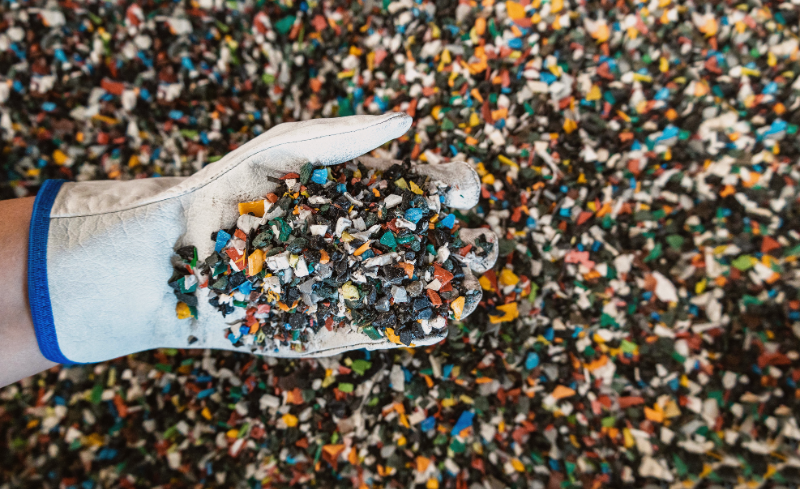
 At TMA, we fully share this vision.
For years, we have integrated the principles of the Circular Economy and the zero-waste philosophy into all our areas of operation:
-
- In our treatment plants, where we work to maximize recycling, material recovery, and valorization.
- In our services for companies, designed to close the loop within their own production processes.
- In our teams, trained with a proactive mindset that seeks to minimize waste from the source.
- And in our own operations, where we optimize routes, reduce emissions, and constantly seek new ways to improve efficiency.
At TMA, we provide real solutions for our clients, combining technology, knowledge, and environmental commitment. We do this understanding that there is no sustainable economy without responsible waste management.
TMA AND COMPREHENSIVE WASTE MANAGEMENT
At TMA, we have been offering comprehensive, flexible, and customized solutions for the collection, transport, treatment, valorization, and final disposal of solid waste for over six decades.
We adapt to the needs of each client, with a clear commitment to the Circular Economy and sustainability.
Our vision is not just technical: it’s environmental, social, and economic.
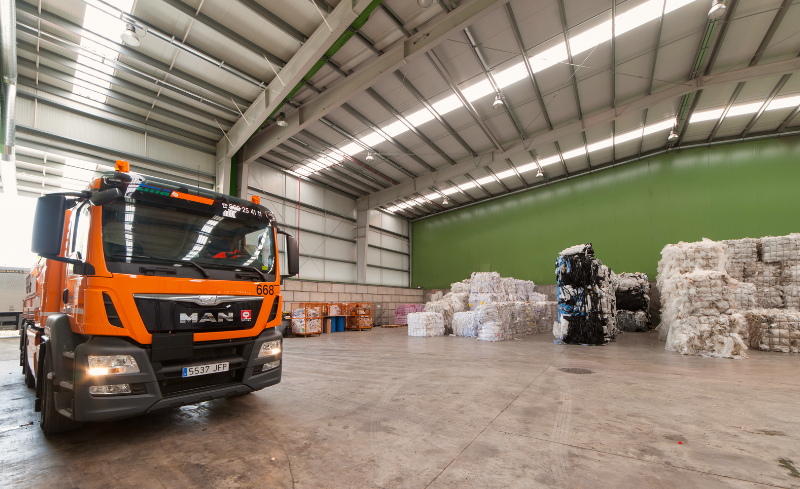
Our own specialized fleet, with over 250 vehicles adapted for each type of waste, guarantees logistical efficiency and reduced emissions.
Our own treatment plants are equipped with advanced technologies for separation, recycling, composting, and recovery.
International certifications (ISO 9001, 14001, and 45001) validate our quality, environmental, and occupational safety management.
We provide technical and documentation support to ensure regulatory compliance, including the management of hazardous, industrial, biohazardous, agricultural, and other types of waste.
Our qualified technical staff receives ongoing training and is prepared to resolve issues, design solutions, and improve processes in collaboration with our clients.
Digital traceability and control systems guarantee transparency throughout the entire waste lifecycle.
We offer services tailored to each sector, from industries and hospitals to municipalities, educational centers, and small, medium and large companies.
A constant commitment to resource recovery, transforming waste into new resources, materials, or energy sources, under a 100% circular approach.
Our vision is clear and in our DNA: To turn waste into an opportunity.
If you want to take action before waste is generated, we recommend reading our article on waste prevention in businesses.
We take care of our customers and we take care of the environment.
We are much more than comprehensive waste management.
If you want to comply with regulations, improve your environmental impact, or adapt your procedures, write to us at comercial@tma.es and we will be happy to provide you with a personalized proposal, fully tailored to your needs.
We are here to help you reduce the environmental impact of your waste and take care of the environment.
Discover our comprehensive Waste Management Services.
Follow us on TMA’s LinkedIn. Subscribe to our YouTube channel.
Contact us, we will be happy to advise and inform you.