
How much food is wasted in a refrigerator every week? And for businesses, how much value is lost through unsold surpluses or ingredients that end up as waste? Food waste isn’t just a domestic problem: it affects the entire production and distribution chain. When we waste food, we lose the food itself and all the natural resources used to produce it: water, energy, land, and human labor. Every September 29th, the International Day of Awareness on Food Loss and Waste reminds us of the magnitude of this problem and the urgency of taking action both at home and in the business world. In this article, we explain practical and effective strategies to reduce food waste, with concrete measures that can be applied daily. Discover how households and businesses can reduce losses, care for the planet, and transform wasted food into useful resources, closing the loop and making better use of food.
THE PROBLEM OF FOOD WASTE: DEFINITION, CAUSES, AND IMPACT
Imagine that three out of ten shopping bags go directly to the trash. This is the stark reality that one-third of all food produced worldwide is wasted.
Faced with this alarming figure, the International Day of Awareness on Food Loss and Waste, promoted by the UN every September 29, should make us reflect. Far from being a distant and alien problem, the solution begins in our homes, businesses, and companies.
Talking about food waste isn’t just about throwing away food: it’s about its economic, social, and environmental impact.
Responsible food waste management, along with waste prevention at every stage of the food chain, is key to building a more sustainable future.
What is food loss and waste?
It’s when food ends up in the trash.
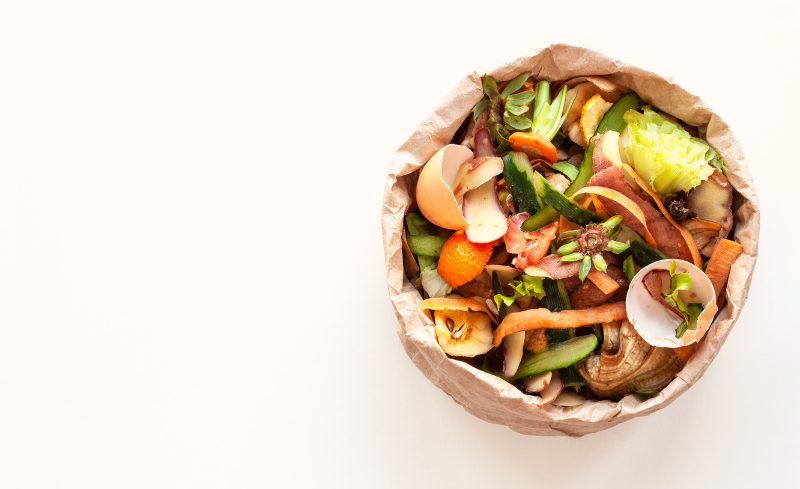
Food waste refers to food that, while fit for human consumption, is discarded at some point in the food chain: production, storage, distribution, sale, or final consumption.
“Waste” is what we throw away in stores, restaurants, or homes.
To speak of “loss” is to speak of food that never reaches the consumer.
It’s what never reaches the shelves of a supermarket or a restaurant plate: fruits that are discarded due to their shape, products that spoil in the logistics chain, production surpluses…
Both concepts have a common denominator: food becomes organic waste that requires management.
And this is where the difference between simply “throwing away” and managing with a circular economy vision becomes crucial.
Every September 29th, the calendar invites us to stop and think about a gesture as common as opening the refrigerator and finding expired yogurt or throwing away a stale loaf of bread.
It may seem insignificant, but added to millions of similar gestures around the world, it generates an impact that goes far beyond what we see in our trash. It’s not just an everyday gesture.
Why so much food is wasted
Losses in the production and distribution chain
Waste begins long before food reaches our table.
In the fields and warehouses, tons of food are already lost for reasons such as:
-
- Fruits and vegetables discarded for not meeting aesthetic criteria.
- Transportation or storage errors that spoil fresh produce.
- Excess production that exceeds actual consumption capacity.
For agri-food and distribution companies, this scenario is a challenge… but also an opportunity. Committing to traceability, selective collection, and waste recovery reduces the environmental impact and also boosts efficiency and corporate reputation, reinforcing consumer trust.
Homes, businesses, and restaurants: the last link in the waste chain
 This is where the problem becomes more commonplace.
-
- Buying more than necessary.
- Not planning menus.
- Poorly storing food.
- Confusing expiration dates with best-before dates.
These are small gestures that, when combined, make homes and restaurants key players in food waste.
In the case of retail and restaurants, the losses also translate into economic costs and waste that requires specialized management. The good news is that there are solutions: from better matching supply and demand to transforming food waste into new resources with the advice of specialized waste management companies.
Impact of food waste: the invisible cost of throwing away food
Environmental impact: how wasted food multiplies waste and CO₂
Throwing away food isn’t just about filling up a trash can.
Every kilogram of wasted food results in CO₂ emissions, unnecessary water consumption, fertilizer and energy use, and soil degradation. In other words: valuable resources are lost and an environmental footprint that contributes to climate change.
Every food thrown away leaves this footprint:
-
- Liters of water wasted in its production.
- Kilometers traveled in transportation.
- Energy used in its cultivation, processing, and preservation.
With efficient management, food waste can go from being a problem to an opportunity. Separating food waste at source ensures that food can be valued.
-
- Compost to regenerate agricultural soils.
- Biogas as a source of renewable energy.
- Raw materials that re-enter the circular economy.
Social and economic impact
The cost is not only environmental: it’s also social. While tons of food end up in the trash, millions of people lack access to a sufficient and healthy diet.
For businesses, waste means economic losses and additional waste management costs.
For governments, it puts more pressure on collection and treatment systems.
But there are alternatives: donation, redistribution, and recovery programs allow a problem to be transformed into an opportunity for social and business innovation.
Zero-waste food strategies promote the creation of green jobs, technological innovation, and the reduction of costs associated with waste management, contributing to a more sustainable and efficient economy.
Updated data on food waste
The year 2024 marks a turning point in the fight against food waste in Spain, according to the Ministry of Agriculture, Fisheries, and Food.
These are the most relevant data:
-
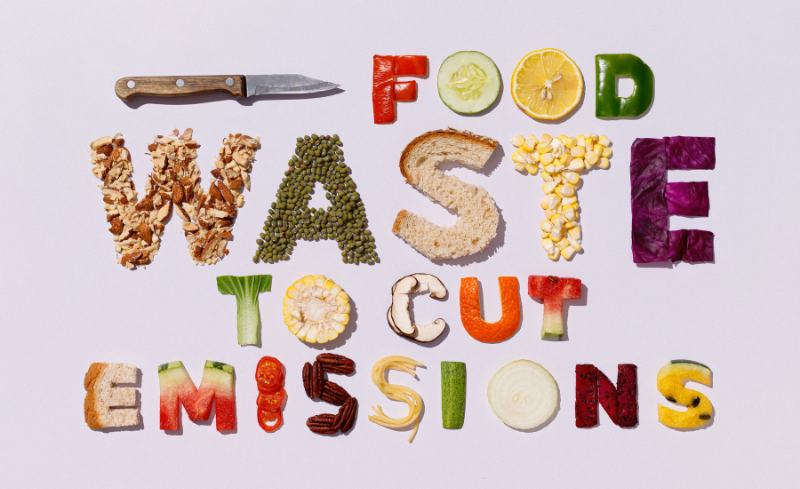
 51.5 million kilos/liters of food and beverages were saved from ending up in the trash thanks to public policies, awareness campaigns, and better habits.
- Each person threw away 24.3 kilos of food throughout the year. Although this is still a lot, the figure has been steadily decreasing since 2020.
- Only 3.7% of purchased food was wasted (that is, of every 100 kilos purchased, 3.7 ended up in the trash).
- Households account for 97.5% of the waste: 1,097 million kilos/liters. Even so, they threw away 48.9 million fewer than in 2023: the best figure since records began (2016).
- Indoors, 77.6% of what was wasted was unused food, and 22.4% was pre-cooked dishes.
- Outside the home (hotels and restaurants), waste was minimal: 28 million kilos/liters, just 2.5% of the total, a drop of 8.8% compared to 2023.
 51.5 million kilos/liters of food and beverages were saved from ending up in the trash thanks to public policies, awareness campaigns, and better habits.
HOW TO REDUCE FOOD WASTE: PRACTICAL TIPS FOR NOT THROWING AWAY FOOD
Daily habits are crucial.
The path to zero food waste involves small, everyday gestures and big, strategic decisions
How to use leftover food at home
-
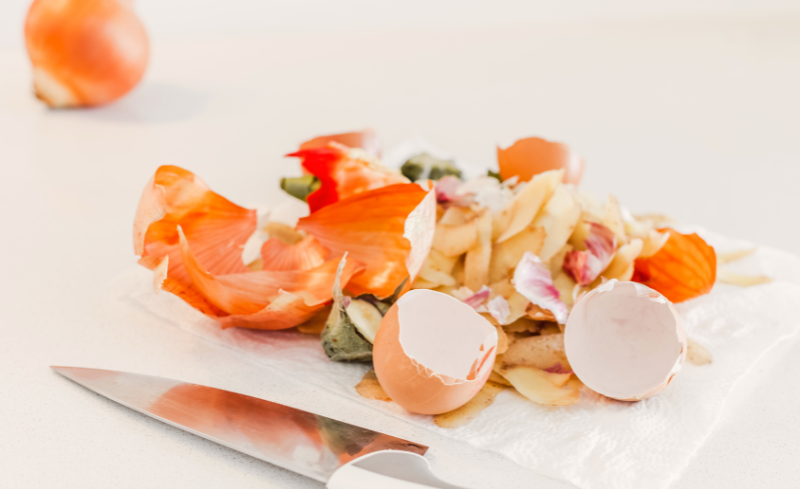
- Plan weekly menus to buy only what you need.
- Make a shopping list and stick to it: you’ll avoid impulse purchases that end up in the trash.
- Apply the FIFO (first in, first out) technique: put what expires first at the front and use those products first.
- Read labels carefully: “best before” doesn’t mean food is unsafe after that date.
- Use leftovers and create new recipes.
- Freeze in a timely manner.
- Adjust portions.
- Store properly: an airtight container can extend the shelf life of food.
- Buy in bulk whenever possible: reduce packaging and adjust quantities.
- Be creative in the kitchen: use foods we tend to throw away and create new recipes.
 Plan weekly menus to buy only what you need.
What to do with organic waste in businesses
-
- Conduct waste audits to identify critical areas and quantify losses.
- Adjust portions and offers: in restaurants, serve formats tailored to actual demand; in retail, plan promotions based on stock rotation.
- Apply dynamic discounts on products close to their expiration dates.
- Collaborate with food banks and social organizations: donate surpluses that are safe for consumption.
- Optimize storage and transportation logistics: cold chain, inventory control, and demand forecasting.
- Implement selective organic separation systems to ensure their recovery.
- Invest in staff training on food handling and preservation.
- Promote technological innovation: temperature sensors, traceability apps, AI to forecast demand.
- Avoid overproduction by adjusting planning to actual consumption data.
- Work with authorized waste managers to ensure recovery: biogas, compost, industrial by-products.
FROM WASTE TO RESOURCE: MANAGEMENT AND RECOVERY OF ORGANIC WASTE
Organic waste is all food and product scraps of biological origin that are no longer consumed: peels, skins, fruit and vegetable scraps, coffee grounds, stale bread, or kitchen leftovers.
Although we often view them as “garbage,” they actually represent a unique opportunity to close the loop and move toward a zero-waste model.
Therefore, managing them properly is a direct action to reduce environmental impact.
Circular Economy with leftover food
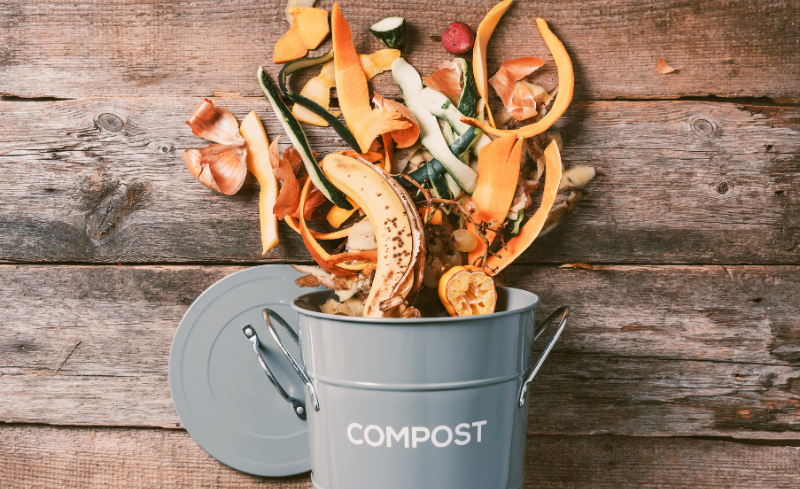
The great challenge, and the great opportunity, lies in what happens when food becomes waste.
With the Circular Economy of organic waste, we give waste a second life instead of disposing of it: viewing each organic waste as a resource creates opportunities for sustainability and efficiency that benefit the planet, households, and businesses.
The Circular Economy applied to food waste proposes that no food scraps be removed from the “this shouldn’t be thrown away because it can be used and could have a new life” cycle.
Examples of food waste recovery and Circular Economy:
-
- Composting: transforming organic waste into natural fertilizer for agriculture.
- Biogas: generating renewable energy from the anaerobic digestion of organic waste.
- Byproducts: using parts unfit for human consumption as raw materials for other sectors (animal feed, bioplastics, cosmetics).
- Redistribution: channeling surpluses to food banks or social projects.
Comprehensive waste management companies play a decisive role here: through optimized routes, low-emission vehicles, and authorized treatment plants, they turn food waste into a resource, aligning with sustainability goals and the principles of the circular economy.
TMA AND SUSTAINABLE FOOD WASTE MANAGEMENT
At TMA, we work every day to reduce the environmental impact of waste, promoting sustainable solutions and supporting companies and governments in the proper management of organic waste.
Our commitment is aligned with the Sustainable Development Goals (SDGs), especially SDG 12: Responsible Production and Consumption.
Closing the loop of food
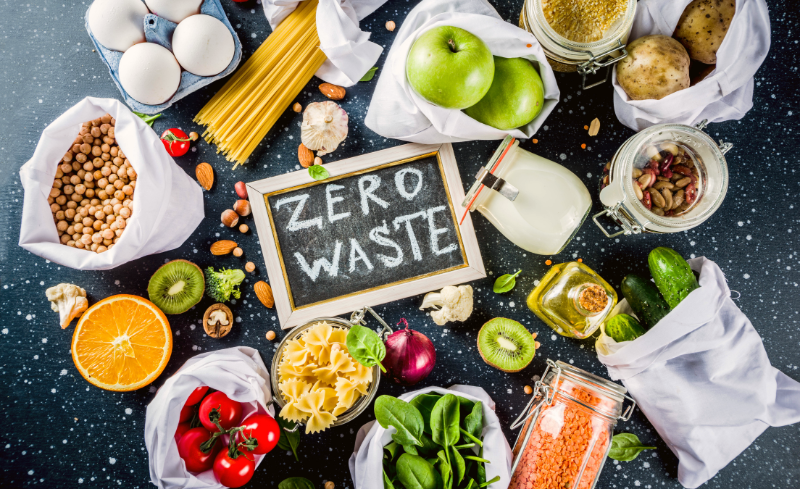
It’s about changing our perspective: stop seeing wasted food as a problem and start seeing it as an opportunity for transformation, innovation, and sustainability.
Every decision we make—as consumers, companies, or governments—influences whether food ends up in the trash or in a new value cycle.
The Circular Economy applied to surplus food prevents tons of food from going to waste and also fosters green jobs, drives innovation, and strengthens the sustainability of the food system.
It is possible to achieve a zero waste model with food waste and boost food sustainability.
We take care of our customers and we take care of the environment.
We are much more than comprehensive waste management.
If you want to comply with regulations, improve your environmental impact, or adapt your procedures, write to us at comercial@tma.es and we will be happy to provide you with a personalized proposal, fully tailored to your needs.
We are here to help you reduce the environmental impact of your waste and take care of the environment.
Discover our comprehensive Waste Management Services.
Follow us on TMA’s LinkedIn. Subscribe to our YouTube channel.
Contact us, we will be happy to advise and inform you.