

Every June 5th, World Environment Day is celebrated, a key date promoted by the United Nations to raise awareness of the environmental challenges we face as a society. In 2025, the central theme revolves around one of the most pressing problems of our time: free of plastic pollution. This material, present in almost every aspect of our lives, currently represents one of the greatest environmental challenges. Its accumulation in terrestrial and marine ecosystems causes irreversible damage that affects biodiversity, human health, and global climate stability. In this context, responsible management and recovery of plastics are essential to moving toward a sustainable model, and at TMA, we are actively committed to transforming the plastic problem into an opportunity for the circular economy. In this article, we discuss the challenges, opportunities, and solutions for managing plastic waste and protecting the environment.
THE IMPORTANCE OF REDUCING PLASTIC WASTE AND ITS IMPACT ON THE ENVIRONMENT
World Environment Day 2025 invites us to reflect and act in the face of a growing threat: plastic pollution. This year, the slogan is clear and direct: free of Plastic Pollution, a global call to reduce pollution caused by plastic waste and move toward a more sustainable model.
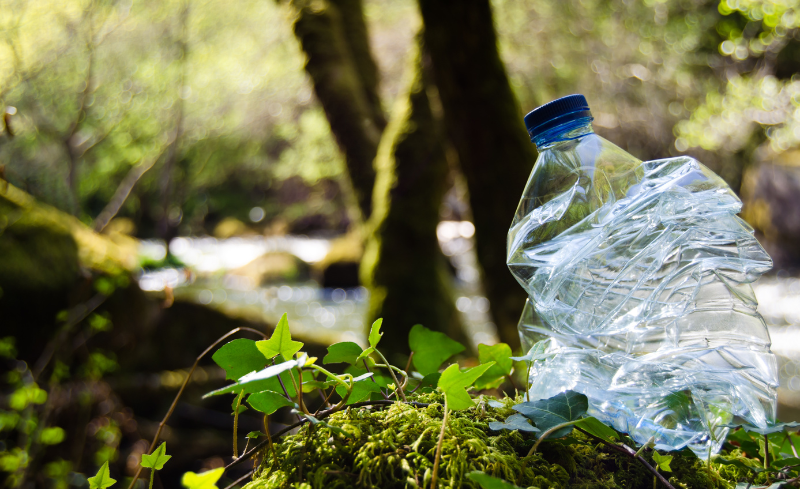
The goal is to drastically reduce the generation of plastic waste and promote its proper management through strategies based on reduction, reuse, and recovery.
At TMA, as a company specialized in waste management, we join this initiative with a firm commitment to contribute to a cleaner, safer, and healthier environment through efficient waste management and recycling, with a special focus on plastic waste management.
Our mission is to classify and recover plastic waste to give it a second life, minimizing its environmental impact and promoting a future free of plastic pollution.
This World Environment Day 2025 is a key date to continue raising awareness of the footprint and impact of plastic on the environment and to encourage us to act responsibly and decisively to protect our ecosystems.
WHY IS PLASTIC POLLUTION A GLOBAL THREAT?
Every year, more than 400 million tons of plastic are produced worldwide, a large portion of which ends up as poorly managed waste that pollutes oceans, rivers, soils, and cities.
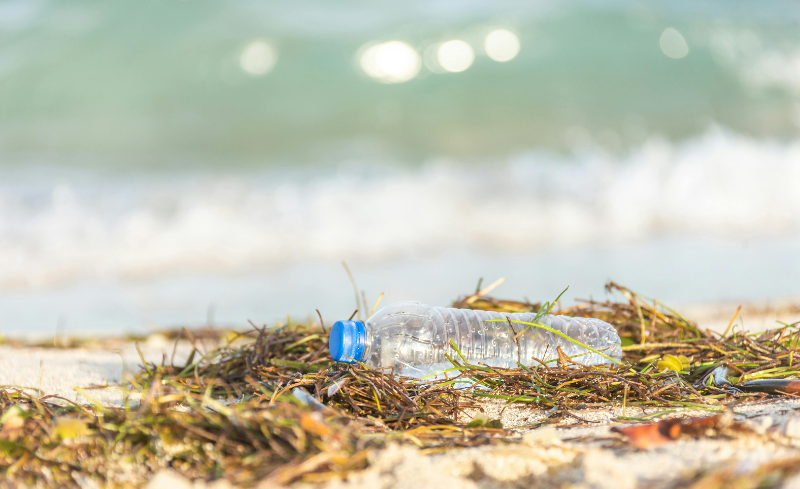
This pollution affects marine life, with thousands of species threatened by ingestion or entanglement, and also compromises the quality of the natural resources we use.
Plastic pollution is an environmental problem, but also a social and economic one.
It impacts sectors such as fishing, tourism, and public health.
Furthermore, its persistence in the environment, as it takes centuries to degrade, makes it a problem that accumulates generation after generation.
But plastic is so integrated into our daily lives that it’s hard to imagine a world without it.
From food packaging to electronic components, its widespread use is synonymous with convenience, but it should also be synonymous with responsibility.
Plastic waste: silent enemy of sustainability
Single-use plastics are those used for a short period, usually minutes, and then discarded.
This type of plastic is frequently used and includes everyday items such as bags, bottles, straws, cutlery, and containers.
Although their use facilitates many activities, these plastics generate a huge amount of waste that is not properly recycled.
This type of plastic is particularly problematic because it fragments into microplastics, which contaminate soil and water and enter the food chain.
Furthermore, the continued production of single-use plastics increases the demand for fossil raw materials and contributes to greenhouse gas emissions.
To change this scenario, it is essential to promote responsible habits, strengthen regulations, and develop technologies that allow for substitution with sustainable materials.
Microplastics: the plastic we can’t see (but we do breathe)
When we talk about plastic waste, we usually think of bags floating in the ocean or packaging abandoned on the side of the road.
But there’s another plastic that silently surrounds us: microplastics in the air.
Microplastics are tiny fragments of plastic that result from the degradation of larger pieces or are released directly into products like cosmetics and detergents.
These tiny pollutants have invaded every ecosystem, from the oceans to the air we breathe.
Microplastics have been detected in fish, shellfish, drinking water, and even food grown in contaminated soil.
Their presence poses risks to human health, although their exact effects are still being investigated.
And yes, they’re also in the air we breathe. How did they get there? Through the wear and tear of synthetic textiles, the rubbing of plastic packaging, the dust of everyday objects, the degradation of poorly managed waste.
Recycling is not enough. We must redesign materials, change habits, and rethink production from the source. Because, even if we don’t see it, plastic continues to enter our bodies every time we breathe.
To reduce its impact, it is essential to:
-
- Control the production and use of products containing microplastics.
- Improve waste management to prevent fragmentation and dispersion.
- Develop technologies capable of filtering these pollutants in treatment plants.
MEASURES TO REDUCE THE IMPACT OF PLASTIC WASTE IN THE AIR AND WATER
Avoid single-use plastics:
-
- Reject plastic bags, bottles, straws, cutlery, and disposable containers. Opt for reusable alternatives, such as cloth bags, glass or steel bottles, and metal cutlery.
Recycling and proper waste management:
-
- Separate and clean plastics before placing them in recycling bins to avoid material contamination and facilitate processing.
- Use efficient and well-located recycling bins to ensure that plastic waste is properly managed and does not end up in the natural environment.
Responsible consumption:
-
- Choose products without plastic packaging or packaged in alternative materials such as glass or cardboard.
- Buy fresh foods in bulk to avoid unnecessary plastic packaging.
Changes in daily habits:
-
- Use reusable bottles and thermoses instead of buying bottled water.
- Choose glass containers and reuse them to store food and cleaning products.
- Replace plastic straws and utensils with metal, bamboo, or paper alternatives.
These actions, combined, help reduce the amount of plastics entering the water and air, reduce pollution, and contribute to the protection of ecosystems and human health.
THE KEY BENEFITS OF EFFICIENT PLASTIC WASTE MANAGEMENT
Responsible and efficient plastic waste management contributes to environmental protection and also generates significant economic and social benefits that drive sustainable development.
The main benefits include:

-
- Significant reduction in greenhouse gas emissions, by reducing the need to manufacture new plastics from fossil resources, thus contributing to the fight against climate change.
- Savings in raw materials and energy, optimizing the use of natural resources and promoting more sustainable and less polluting processes.
- Active prevention of soil, water, and air pollution, avoiding the release of microplastics and toxic substances that affect the health of ecosystems and communities.
- Promotion of green jobs, driving job creation in the waste management, recovery, and recycling sectors, with a positive impact on the local economy.
- Compliance with increasingly stringent environmental regulations, ensuring corporate social responsibility and facilitating access to markets committed to sustainability.
Proper management of plastic waste is, therefore, a fundamental step in moving toward a circular economy and a cleaner, healthier planet.
FROM WASTE TO RESOURCE: PLASTIC VALORIZATION
From a Linear Economy to a Circular Economy: The Path to Sustainability
For decades, the linear economy dominated the way we produce and consume: extract, manufacture, use, and dispose.
This model has proven unviable in a planet with finite resources. Waste management, especially of plastics, requires an urgent paradigm shift.
The circular economy proposes an alternative based on the continuous use of resources. In this context, plastic is not seen as waste but as a valuable material that can be recycled or recovered, contributing to reducing emissions and saving raw materials.
Plastic recovery
Plastic recovery is a process that seeks to transform plastic waste into useful materials or energy, preventing it from ending up in controlled landfills or in the environment.
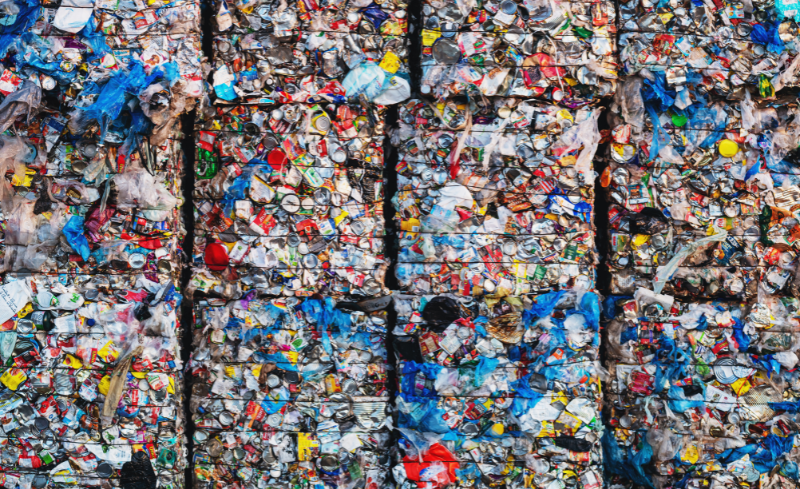
This is essential for moving toward a circular economy, where resources remain in use for as long as possible.
There are two main types of plastic recovery:
-
- Mechanical recovery: This involves the collection, sorting, and physical recycling of plastics to manufacture new products, thus closing the material cycle.
- Energy recovery: This is based on harnessing the energy content of plastic waste that cannot be recycled through controlled combustion processes that generate clean energy and reduce the amount of final waste.
These combined techniques reduce the extraction of virgin raw materials, reduce polluting emissions, and promote a responsible and sustainable management model.
Zero Waste: Reducing Plastic Waste from the Source
The circular economy involves recycling or recovering plastics and also preventing waste from being generated in the first place.
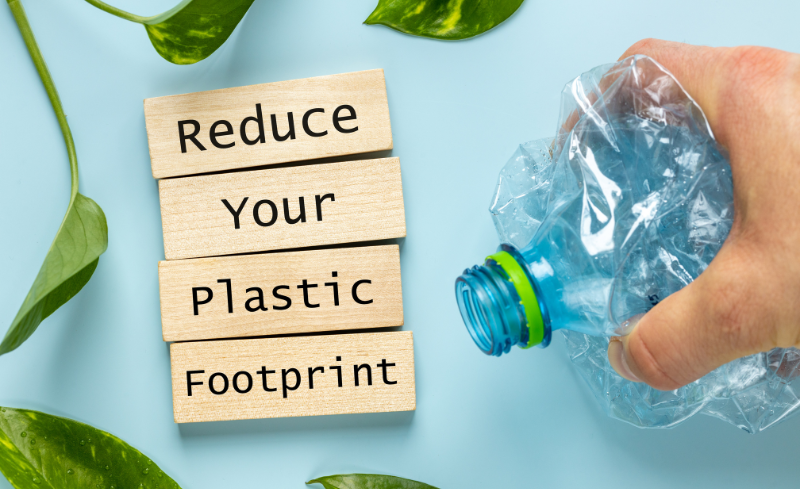
The Zero Waste philosophy seeks precisely this: minimizing the amount of plastic we produce, use, and throw away.
This means designing products and processes that allow materials to be reused, repaired, or recycled, and avoiding unnecessary waste.
At TMA, we believe that preventing waste is just as important as managing it well.
In this way, we combine efficient recovery with waste prevention and reduction, closing the loop completely and responsibly.
TMA AND SUSTAINABLE PLASTIC WASTE MANAGEMENT
At TMA, we understand that sustainable plastic waste management is key to mitigating pollution and promoting sustainable development.
We work daily to reduce the environmental impact of waste, with specialized services for the collection, sorting, treatment, and recovery of materials, including plastic waste.
Our work directly contributes to achieving the Sustainable Development Goals (SDGs), especially SDG 12 (Responsible Consumption and Production) and SDG 13 (Climate Action).
Our actions include:
-
- Selective collection of plastic waste in companies, industries, and public spaces.
- Sorting and separating plastics by type, facilitating their recycling.
- Efficient and safe transportation to our authorized treatment plants. We guarantee route optimization, waste traceability, and emissions reduction during waste transportation.
- We have specialized plants for waste treatment.
- Recovering and recycling of materials to give them a second life.
Our processes include advanced technologies for precise sorting, allowing us to separate the different types of plastic and ensure high-quality recycling.
Thanks to our infrastructure and specialized team, we are able to recover a significant percentage of the plastic waste we manage. This translates into a smaller environmental footprint and an effective contribution to the sustainability of the region.
At TMA, we want to contribute to the sustainable and efficient management of plastic waste, and this commitment to plastic circularity positions us as a benchmark in responsible plastics management in the sector.
GOOD PRACTICES TO REDUCE PLASTIC IN COMPANIES
Companies play a fundamental role in reducing plastic pollution.
From the design and production phase to the end of a product’s useful life, business decisions determine not only the amount of waste generated, but also its potential for sustainable and efficient management.
Adopting responsible practices in plastics management contributes to environmental protection and also strengthens corporate reputation, aligning with the sustainability values that more and more customers, investors, and collaborators demand.
Strategic actions for efficient plastic waste management in company
To move toward responsible and sustainable plastics management, companies can implement these key actions:
-
- Eliminate the use of single-use plastics in offices, facilities, and production processes, replacing them with reusable or biodegradable alternatives.
- Implement internal collection and selective separation systems that facilitate waste recycling and recovery.
- Prioritize the purchase of products made with recycled or recyclable materials, supporting the circular economy.
- Develop and integrate clear sustainability policies with measurable goals and ongoing training for the entire team.
- Promote the reuse and repair of materials and packaging before disposal.
- Invest in advanced technologies for the treatment and recovery of plastic waste.
- Ensure efficient reverse logistics to recover materials and minimize final waste.
- Choose suppliers committed to sustainability and the responsible use of materials.
- Proactively adapt to national and international environmental regulations, anticipating future legal requirements.
- Communicate and raise awareness among staff about the importance of responsible waste management and its environmental impact.
With these practices, your company will not only reduce its environmental footprint but will also improve its reputation and position itself as a leader in sustainability within its sector.
FOR AN ENVIRONMENT FREE OF PLASTIC POLLUTION
We know that plastic waste represents a major environmental challenge, but also an opportunity to move toward a circular economy.
Free of Plastic pollution is an urgent challenge that requires a collective commitment.
Each of us, from citizens to large industries, must assume the responsibility to reduce, reuse, and recycle.
To achieve a world free of plastic pollution, it is essential to move toward a circular economy model, in which products are designed to last, be reused, and recycled.
World Environment Day 2025 is a reminder that the future of the planet depends on our current choices.
At TMA, we work every day to lead the sustainable management of plastic waste and transform environmental challenges into development opportunities.
Changing the course is in our hands. Let’s commit to a cleaner, healthier, and fairer planet, so that future generations inherit a world where plastic is a resource, not waste.
We take care of our customers and we take care of the environment.
We are much more than comprehensive waste management.
If you want to comply with regulations, improve your environmental impact, or adapt your procedures, write to us at comercial@tma.es and we will be happy to provide you with a personalized proposal, fully tailored to your needs.
We are here to help you reduce the environmental impact of your waste and take care of the environment.
Discover our comprehensive Waste Management Services.
Follow us on TMA’s LinkedIn. Subscribe to our YouTube channel.
Contact us, we will be happy to advise and inform you.