
At TMA, talking about sustainable mobility isn’t limited to adding efficient vehicles to our fleet specialized in waste transport: it involves reflecting on how we transport waste, what means we use, the distances we travel, the type of fuel we use, and, above all, the impact we generate with each trip. In a waste management company like ours, these decisions are key to moving toward a more responsible and efficient model. Therefore, in the context of European Mobility Week, we want to share how we understand mobility and how waste transport can be a driver for reducing emissions, optimizing resources, and strengthening our commitment to environmental and operational sustainability.
EUROPEAN MOBILITY WEEK 2025
“Mobility for All”: Inclusive and Sustainable Mobility
From September 16 to 22, 2025, European Mobility Week will be celebrated under the slogan “Mobility for All.”
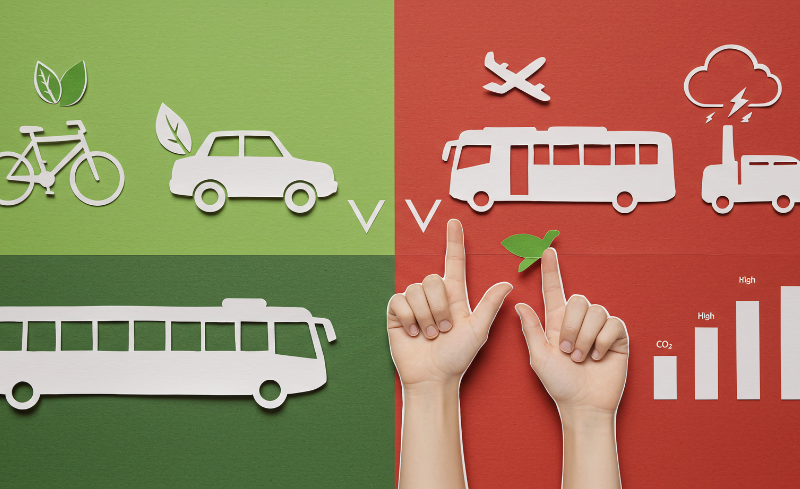 An initiative that underscores the need to guarantee universal access to sustainable means of transportation, regardless of economic status, place of residence, gender, or abilities.
At TMA, we join this day and this much-needed sustainability goal with concrete actions:
-
- Committing to a less polluting fleet.
- Investing in technologies that improve efficiency.
- Designing routes that reduce the carbon footprint.
- Facilitating responsible logistics in urban environments.
SUSTAINABLE MOBILITY IN WASTE MANAGEMENT
When we think about waste, we must also think about transportation.
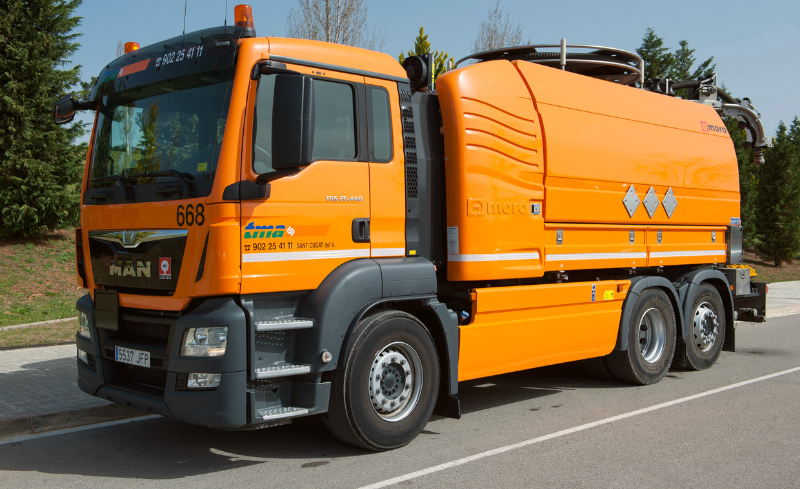
Waste transportation is a key link in the entire integrated waste management chain: from collection to its final destination (whether treatment, recovery, or disposal), each waste must travel a specific route.
And how that journey is made can make a huge environmental difference.
All of this involves complex and constantly evolving logistics, where efficiency and sustainability must go hand in hand.
Furthermore, in a context where European and national regulations increasingly require traceability, control, and efficiency, waste transportation cannot be left out of the energy transition.
It must be a planned, controlled, and optimized process in both environmental and operational terms.
Sustainability in waste transportation
Sustainable mobility should not be an exception limited to one week a year.
At TMA, sustainable waste transportation is a way of working, deciding, and continuously moving forward.
Our fleet, our decisions, and our logistics planning are aligned with a sustainability model that goes beyond regulatory compliance: it is part of our corporate culture.
Mobility at TMA is integrated into all levels of the organization:
-
- From the acquisition of cleaner and more efficient vehicles
- To the planning of optimized and digitalized routes
- From relationships with committed suppliers
- To internal management and responsible communication with our customers.
Everything is part of a mechanism where mobility acts as a driver of change toward a more resilient, efficient, and environmentally friendly model.
This vision is a current and future strategy, short, medium, and long-term, that defines our way of operating.
TMA’S FLEET: SUSTAINABILITY IN WASTE TRANSPORTATION
At TMA, we understand that sustainable mobility goes beyond the use of electric vehicles. It involves a comprehensive vision of transportation, where innovation, efficient planning, and environmental responsibility work together to reduce the impact of our operations.
With a modern and diverse fleet, we are committed to real solutions to contribute to cleaner, more efficient, and more accessible mobility for all.
Variety, capacity, and specialization
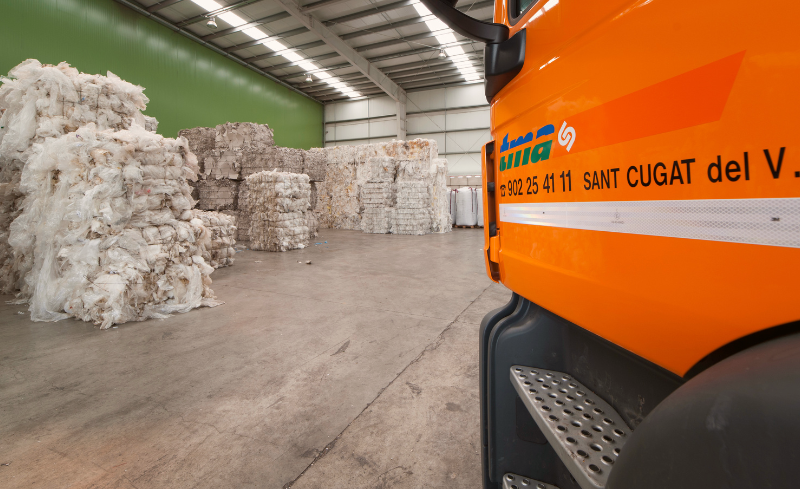 Our land-based fleet is comprised of more than 250 vehicles of 11 different types, ranging from heavy-duty trucks to electric and hybrid LPG vehicles, designed to adapt to different logistical needs:
-
- Transportation of hazardous and non-hazardous waste (solid and liquid).
- Selective collection in urban and industrial environments.
- Mobile compaction of industrial waste.
- Geolocation technology to optimize routes and reduce kilometers traveled.
Sustainable mobility is a reality.
With all this, we reduce CO₂ emissions, as well as fuel consumption, noise in urban environments, and operating costs.
Through the progressive integration of clean technologies, we are reducing our environmental footprint without compromising service quality.
Thanks to this diversity, we can offer a fast, personalized, and efficient service for each client and each type of waste.
Innovation applied to waste transportation
Sustainable mobility also involves making smart decisions:
-
- Route planning that minimizes travel.
- Collections grouped by waste type, volume, and destination.
- Coordination with clients to reduce unnecessary trips.
- Digital tracking systems that allow for real-time monitoring and adjustments.
These practices have an environmental, economic, and social impact: they generate efficiency, reduce costs, and improve service quality. In other words: fewer vehicles on the road, fewer emissions, and greater efficiency.
Real-time geolocation
Efficiency lies not only in the vehicle itself, but also in how it is managed.
That’s why, at TMA, we apply advanced geolocation technology that allows us to:
-
- Monitor the status of all services in real time.
- Detect incidents immediately.
- Optimize routes and travel times.
- Reduce unnecessary kilometers.
This digitalization allows us to be more precise, faster, and more sustainable with each trip, as well as adapt to unforeseen events and increase the overall efficiency of our operations.
Reducing emissions in waste transportation
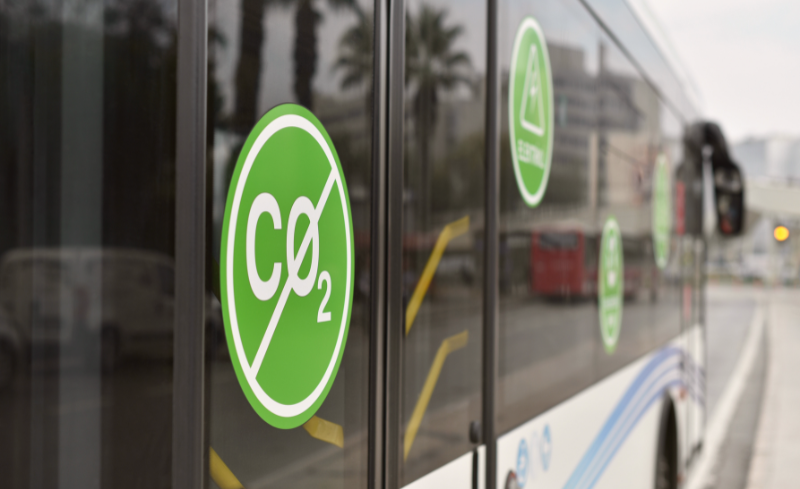
The incorporation of electric and hybrid LPG vehicles allows us to significantly reduce greenhouse gas (GHG) emissions in our operations. Furthermore, we contribute to improving air quality in urban environments, where reducing particulate matter and noise is especially important.
Every optimized journey and every liter of fuel saved represents a step toward cleaner and more conscious mobility.
Sustainability in daily operations
It is not enough to have good vehicles and systems.
It is also essential to have committed people.
That is why, at TMA:
-
- We use digital planning tools.
- We implement best practices in vehicle maintenance.
- We encourage the involvement and responsibility of our teams in every action.
Sustainability is a shared effort, where technology, processes and, above all, people make it possible for it to be reflected in daily operations.
TMA’S COMMITMENT TO SUSTAINABLE WASTE TRANSPORTATION
At TMA, sustainability is a tangible strategy, backed by data and results.
Every action we take has an impact that can be measured, evaluated, and improved.
Thanks to the progressive renewal of our fleet and increasingly intelligent and optimized logistics, we have achieved:
-
- Reduced fuel consumption per ton transported, improving the energy efficiency of our operations.
- Avoided the emission of tons of CO₂ per year, actively contributing to the fight against climate change.
- Sped up response times and improved service quality, without compromising respect for the environment.
 These advances are part of a global commitment, integrated into a roadmap that also includes:
The annual measurement of our carbon footprint, which allows us to make decisions based on real data. We obtained the Calculo Seal in 2022 and 2023, a milestone that demonstrates our commitment to measuring the emissions generated in waste transportation in order to chart a roadmap toward a more environmentally friendly activity.
This recognition implies transparency, responsibility, and continuous improvement because knowing emissions data allows us to implement effective reduction measures and advance toward the “I Reduce” and “I Offset” levels.
Obtaining environmental certifications such as ISO 14001 (environmental management) attests to our commitment to continuous improvement and compliance with the highest international standards.
In addition, ISO 9001 (quality management) and ISO 45001 (occupational health and safety) reinforce our commitment to offering an efficient, safe, and responsible service, ensuring not only environmental protection but also the quality of our operations and the well-being of those involved in waste transportation and management.
Ultimately, at TMA, we understand sustainability as a rigorous, transparent, and results-oriented process. Because only what is measured can be improved.
And what is improved leaves a mark. And at TMA, we want ours to be a positive mark on waste transportation.
BEST PRACTICES IN WASTE TRANSPORTATION
During this European Mobility Week, we want to share some of the best practices we apply daily at TMA to promote more efficient, safe, and sustainable mobility.
These measures reduce the environmental impact of our operations, increase efficiency, and add value to both our customers and the environment.
These actions can be replicated and adapted by other companies in the logistics and waste management sectors.
Avoiding empty journeys
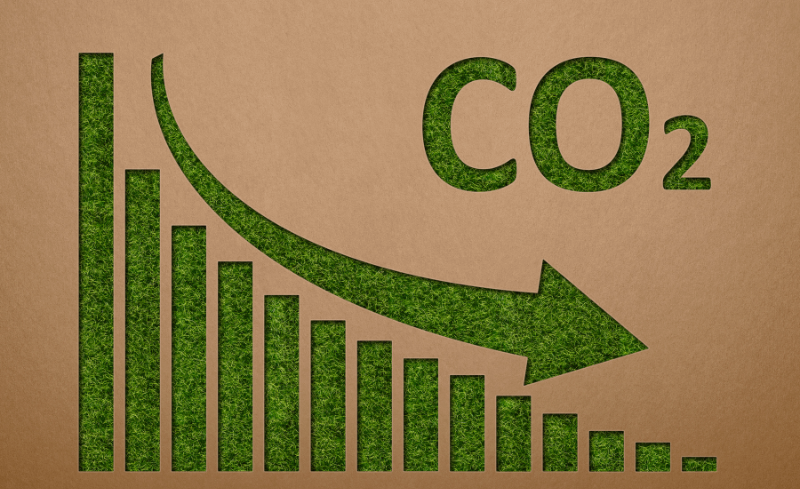
One of the basic principles of efficient mobility is ensuring that each journey makes sense. At TMA, we plan our routes so that vehicles always travel with cargo or with a clear operational objective, avoiding unnecessary journeys and reducing both fuel consumption and emissions.
We achieve this thanks to digital management tools, advanced service planning, and close coordination with our customers and authorized facilities.
Maintenance and periodic inspections
A well-maintained fleet is synonymous with efficiency and safety. For this reason, at TMA we perform regular technical inspections on all our vehicles, ensuring they operate at peak performance and within established emissions limits.
A well-maintained vehicle consumes less fuel, minimizes the risk of breakdowns, and extends its useful life, generating a lower environmental impact throughout its entire life cycle.
Efficient Driving
Our drivers perform their services using efficient and safe driving practices, with the goal of reducing fuel consumption, avoiding harsh braking or acceleration, and improving road safety, especially in urban areas.
In addition, we foster a culture of responsible mobility, where every driver is aware of how their driving habits can contribute to reducing emissions and improving the quality of service.
Technology Integration
Technology is a great ally in sustainable mobility. At TMA, we apply innovation to adapt our routes in real time, avoiding congested areas, reducing travel time, and improving service punctuality.
This approach also contributes to reducing emissions associated with stopped or slow-moving vehicles, especially in urban environments.
Logistics coordination between departments and clients
Another key aspect lies in internal and external coordination. Thanks to fluid communication between our different teams (logistics, operations, customer service, and plant) and with our clients, we can consolidate collections, optimize loads, and minimize duplication.
This reduces the number of necessary trips, makes better use of vehicle capacity, and increases the efficiency of the entire system.
These best practices are the result of years of experience, commitment, and constant adaptation to new environmental challenges.
At TMA, we continue to make progress every day so that every kilometer counts, every route is optimized, and every decision is aligned with our values of sustainability and efficiency.
SUSTAINABLE MOBILITY AND CIRCULAR ECONOMY
Waste management is an essential component of the circular economy, and sustainable mobility is part of this same logic: doing more with less, reducing impacts, and increasing efficiency.
In the field of waste management, transportation is much more than a journey: it is a key phase in ensuring traceability, efficiency, and resource utilization.
Therefore, at TMA, we align our mobility policy with the principles of the circular economy, reducing unnecessary travel and investing in systems that promote the reuse and recovery of waste.
Waste transportation thus ceases to be a simple logistical movement and becomes an opportunity to move toward more responsible production and consumption models.
Furthermore, the circular economy requires closing cycles, and one of these is mobility: optimizing routes, reducing empty trips, minimizing the use of fossil fuels, and ensuring that each journey makes sense within the value chain.
MOVING IS SUSTAINABLE
In the world of waste management, transportation is not just an operational necessity: it is a key lever for transforming the production model.
Every optimized journey, every liter of fuel saved, every replacement of a polluting vehicle represents a step closer to a circular, low-carbon economy.
That’s why at TMA, we understand sustainable mobility as a way of working.
Our fleet, our technologies, and our teams work toward a common goal:
-
- Reducing the environmental impact of each trip.
- Increasing operational efficiency.
- Accelerating the transition to a cleaner model.
During this European Mobility Week, we want to invite you to reflect on how transport—even in technical sectors like ours—can become a key tool for positive change. Because moving is also recycling. And every movement counts.
And you, how do you move?
This European Mobility Week is also an invitation to collective reflection.
As citizens, as professionals, as companies:
How many trips can we avoid?
What modes of transportation do we choose?
How can we make our logistics more efficient?
At TMA, we will continue promoting cleaner, more efficient, and responsible transportation solutions, confident that the shift toward sustainable mobility is built day by day and reaffirming our commitment to mobility that cares for the planet and people.
We take care of our customers and we take care of the environment.
We are much more than comprehensive waste management.
If you want to comply with regulations, improve your environmental impact, or adapt your procedures, write to us at comercial@tma.es and we will be happy to provide you with a personalized proposal, fully tailored to your needs.
We are here to help you reduce the environmental impact of your waste and take care of the environment.
Discover our comprehensive Waste Management Services.
Follow us on TMA’s LinkedIn. Subscribe to our YouTube channel.
Contact us, we will be happy to advise and inform you.


