
Summer is often associated with vacations, reduced activity, and a slowdown in the economy. However, for many industrial, commercial, port, and service companies, this time of year represents precisely the opposite: a period of operational reorganization characterized by a concentration of maintenance, technical shutdowns, extraordinary cleanings, facility renovations, and changes in activity.
These interventions generate significant changes in industrial waste flows and require adapting collection, storage, and management systems to a different reality.
All of this has a direct impact on waste generation and management during the summer. Therefore, waste management in companies during this period requires specific planning to anticipate activity peaks, avoid operational incidents, and ensure efficient, safe, and sustainable management.
From our experience in waste management for industrial companies and port environments, we observe a recurring situation every summer: organizations that have properly planned their operations, but haven’t always anticipated how these changes affect waste generation, segregation, storage, and collection.
The challenge is to properly manage the waste that appears in greater volumes, in less time, and with characteristics different from the usual.
This reality is observed in both industrial facilities and logistics and port environments. In sectors linked to maritime activity, summer doesn’t imply a reduction in activity, but rather operational continuity that demands efficient port waste management and constant planning of associated services.
Therefore, beyond the holidays, summer represents a true test of capacity for any waste management system in industrial and port companies. Organizations that anticipate these challenges avoid operational incidents and also improve their efficiency, optimize resources, and advance their sustainability and circular economy goals.
HOW WASTE MANAGEMENT CHANGES IN COMPANIES DURING THE SUMMER

Waste generation in a company usually follows relatively stable patterns for most of the year. However, these patterns change during the summer months.
In the industrial sector, it is common to concentrate preventive maintenance, machinery replacement, or facility upgrades. In other sectors, variations in activity lead to changes in the volume of packaging, cardboard, plastic, or other waste generated by daily operations.
As a result, waste management in the summer faces several simultaneous challenges:
-
- Temporary increases in certain waste fractions.
- Waste accumulation during specific periods.
- Need to adjust collection frequencies.
- Emergence of waste associated with extra work.
- Increased pressure on temporary storage areas.
COMMON PROBLEMS IN SUMMER WASTE COLLECTION
Although each activity has its own characteristics, there are a number of issues that recur year after year.
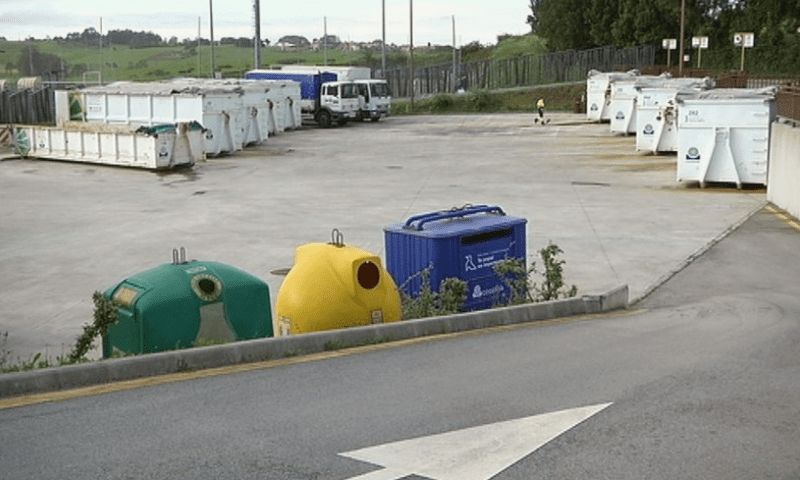
Saturation of containers and storage areas
One of the most frequent problems is the lack of capacity to absorb temporary increases in waste.
What works correctly for most of the year can be insufficient when extra work is concentrated or certain waste fractions increase.
This generates accumulations that hinder operations and reduce the efficiency of internal processes.
Mismatch between waste generation and collection frequency
Often, collection frequencies remain stable even though waste generation changes significantly.
When collection doesn’t adapt to the actual rate of generation, overflows, operational incidents, and a greater need for urgent action occur.
Loss of quality in source separation
During maintenance or facility reorganization work, it’s common for different types of waste to be in the same areas.
Without proper planning, source separation suffers, and the possibilities for subsequent recovery decrease.
INDUSTRIAL WASTE MANAGEMENT IN SUMMER: TECHNICAL SHUTDOWNS, MAINTENANCE, AND PEAK GENERATION
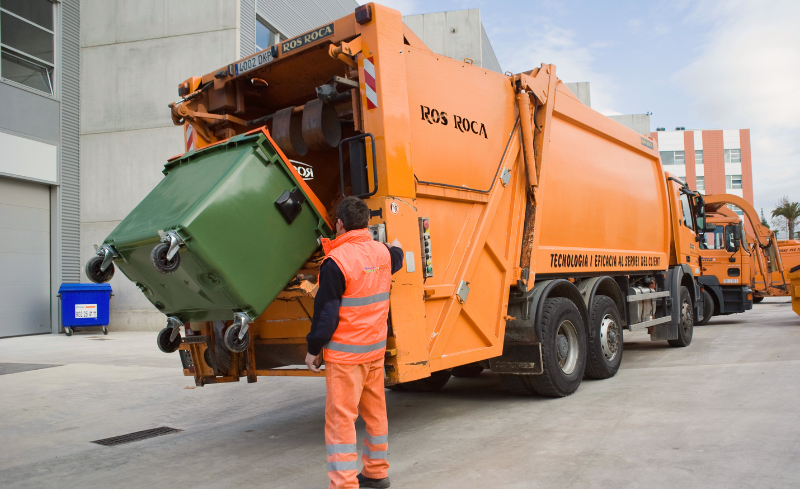
One of the most characteristic phenomena of summer is the concentration of technical shutdowns in industrial facilities.
Many companies take advantage of these weeks to carry out work that would be difficult to perform during the rest of the year without affecting production:
-
- Equipment renewal.
- Component replacement.
- Deep technical cleaning. Structural repairs.
- Production line improvements.
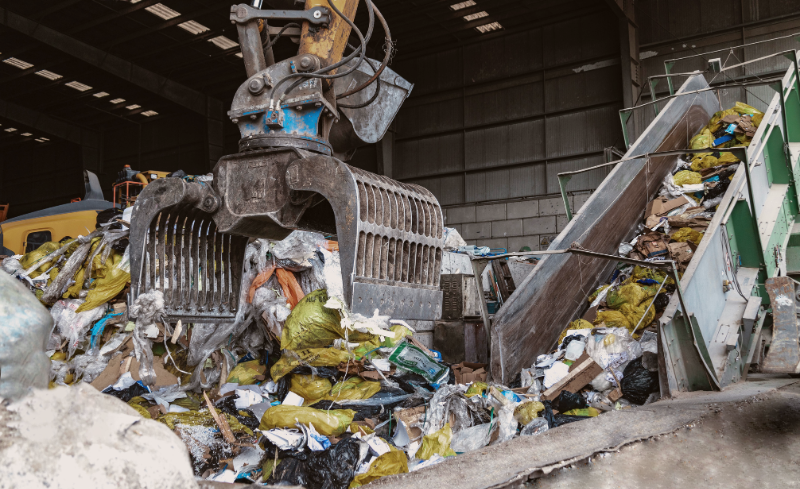
These activities generate specific types of waste that can significantly increase the usual volumes of certain waste streams.
Materials such as metals, wood, industrial plastics, and maintenance waste increase considerably.
When these generation peaks are not properly planned, problems arise that directly affect operations:
-
- Overflowing containers.
- Waste accumulation in work areas.
- Difficulties maintaining source separation.
- Increased costs associated with urgent collections.
For this reason, industrial waste management during the summer must be integrated into the overall planning of the maintenance shutdown and not treated as a secondary issue.
PORT WASTE AND MARPOL IN THE PORT OF BARCELONA IN SUMMER
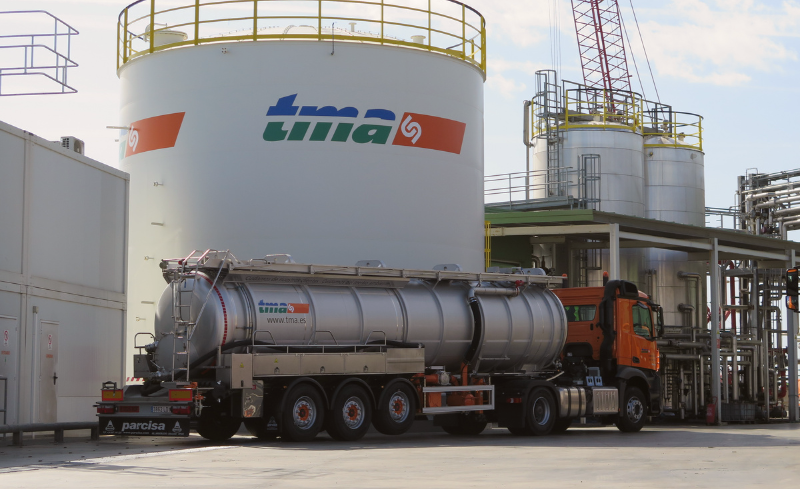
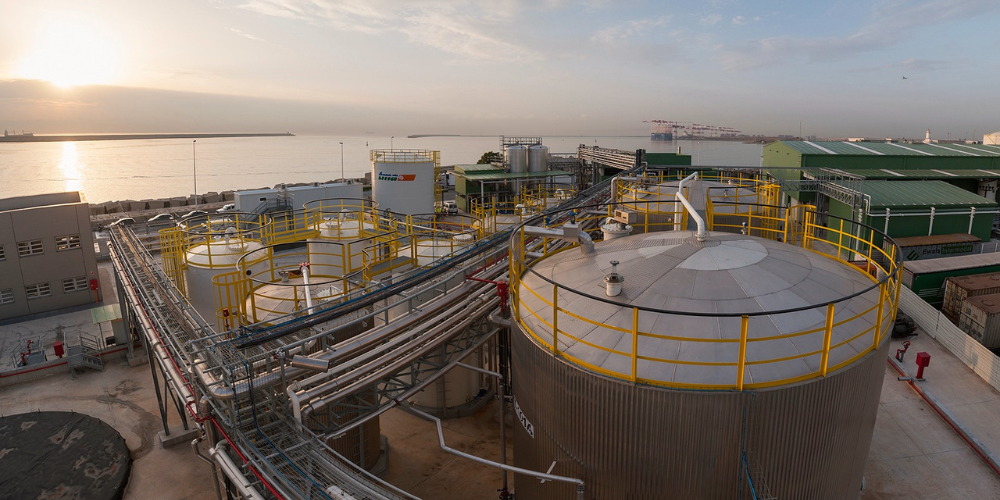
In the port sector, seasonality manifests itself very differently than in other sectors. While many industrial activities take advantage of the summer to carry out maintenance shutdowns or temporarily reduce production, maritime activity maintains a constant pace. Ships continue operating, terminals continue moving cargo, and port services function without interruption.
In commercial ports like Barcelona, summer does not imply a reduction in waste, but rather greater operational complexity.
The combination of maritime traffic, auxiliary services, logistics operations, and land-based activity generates continuous flows of waste that require specific planning and a constant capacity to respond.
Unlike other environments where waste generation may decrease during certain weeks, in the port, operational continuity requires maintaining fully active collection systems.
Furthermore, in summer, additional factors intensify the pressure on the service:
-
- Greater vessel turnover, especially on regular routes.
- Increased organic and similar waste due to the heat.
- Increased environmental sensitivity in coastal areas.
- Need to guarantee operations without interfering with maneuvers or critical services.
Ports play an essential role in receiving waste from ships, regulated by the MARPOL Convention, which includes oily water, sewage, solid waste, cargo residues, and other flows that require strict traceability and regulatory compliance.
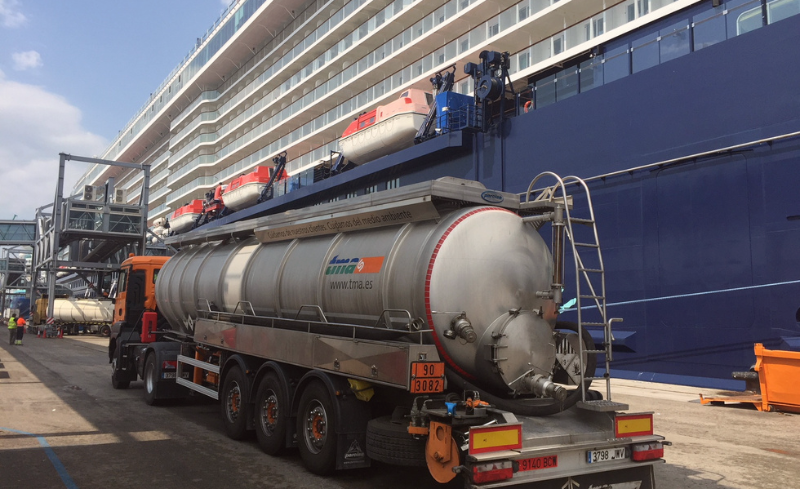 In summer, MARPOL management takes on an even more strategic dimension. The heat accelerates degradation processes, increases the need for faster waste removal, and demands precise coordination between shipping agents, agents, terminals, and authorized waste management companies. Planning must consider:
-
- Operational windows adjusted to vessel sizes.
- Agile communication systems between all stakeholders.
- Reinforced security protocols.
- Document traceability with no margin for error.
Based on TMA’s experience in port environments, one of the main challenges is coordinating highly diverse needs within a space where multiple operators and activities coexist.
The ability to adapt services to the rhythms of maritime activity, anticipate collection needs, and ensure waste traceability is key to maintaining operational efficiency and regulatory compliance.
Therefore, port waste management should not be understood solely as an environmental service. It is a strategic activity for the daily operation of the port, the protection of the marine environment, and the continuity of an essential infrastructure for the economy.
HOW TO OPTIMIZE WASTE MANAGEMENT IN SUMMER: BEST PRACTICES FOR COMPANIES
Experience shows that most waste-related incidents during the summer are not due to a lack of management capacity, but rather a lack of planning.
Problems arise when waste generation changes and collection systems continue to operate exactly as they do the rest of the year.
Therefore, companies can minimize risks and improve their operational efficiency by implementing a series of best practices that allow them to anticipate the changes inherent to the summer season.
1. Anticipate Waste Generation Peaks
One of the most common mistakes is planning a maintenance shutdown or extraordinary work without first assessing what waste will be generated.
Before starting maintenance work, replacing machinery, reorganizing warehouses, or adapting facilities, it’s advisable to make a rough estimate of the expected volumes and the different waste fractions that will be generated.
Every summer, we see situations where a planned improvement to a facility ends up causing operational problems simply because the temporary increase in waste associated with that work wasn’t anticipated.
Having this information allows you to anticipate container needs, adjust collection frequency, and ensure that waste can be managed without affecting operations.
2. Review Temporary Storage Capacity at the Plant
 Temporary storage spaces that function correctly for most of the year can become insufficient when extraordinary activities are concentrated.
In many industrial facilities, waste from maintenance or renovations is generated in just a few days, which can lead to overcrowding if there isn’t enough capacity to handle those peaks.
Therefore, it is advisable to review both the available capacity and the location of storage points in advance.
In certain cases, it may be necessary to enable additional spaces or temporarily reinforce the means used to contain the waste.
Proper planning prevents unnecessary accumulations and helps maintain safety and order in the facilities.
3. Adjust waste collection frequencies to actual activity levels
Waste collection should be adapted to the company’s activity, not the other way around.
During the summer, it is common for certain waste fractions to increase significantly in volume, while others maintain levels similar to the rest of the year.
Maintaining the exact same collection frequencies can lead to inefficiencies or, conversely, to situations of saturation.
For example, packaging waste, cardboard, industrial plastic, or materials from maintenance work often experience temporary increases in many companies.
Adapting collection frequencies to these changes allows for resource optimization, avoids incidents, and maintains control over waste flows.
4. Strengthen Source Separation
 Source separation remains one of the most important factors for ensuring efficient and sustainable waste management.
However, it is precisely during peak activity periods that this separation is most easily compromised.
The appearance of unusual waste, the presence of external companies, or the simultaneous execution of different tasks can hinder the correct classification of materials.
Therefore, it is advisable to reinforce internal instructions, review the signage in storage areas, and ensure that each type of waste has the appropriate container.
Proper segregation facilitates the recycling and recovery of materials such as metals, cardboard, wood, and industrial plastics, in addition to reducing costs associated with subsequent treatment.
5. Coordinate Production, Maintenance, and Waste Management
Waste management should not be viewed as an isolated activity within the organization.
Production, maintenance, general services, prevention, and environmental managers must share information for planning to be truly effective.
In our experience, many problems arise when waste is considered a secondary consequence of an action rather than an integrated part of the planning process.
When there is coordination between all the areas involved, it is much easier to anticipate needs, avoid accumulations, and ensure that waste management adequately supports the company’s activity.
HOW GOOD WASTE MANAGEMENT IMPROVES OPERATIONAL EFFICIENCY IN SUMMER
Properly planning waste management during the summer not only contributes to environmental compliance but also has a direct impact on operational efficiency and business continuity.
-
- It allows for a reduction in incidents associated with overflowing containers, accumulations in work areas, or unforeseen urgent collections, resulting in more stable and uninterrupted operations.
- Better planning facilitates the control of waste flows and improves document traceability, a key aspect in industrial and port environments from a regulatory and sustainability perspective.
- Optimizing available space in the plant or facility prevents unnecessary accumulations and contributes to improved safety, operational order, and efficiency in daily work.
- It increases the possibilities for recycling and material recovery, promoting circular economy objectives and reducing the amount of waste sent to landfills.
Overall, efficient waste management in the summer allows for reduced indirect costs, minimized operational disruptions, and improved overall control of the management system.
CIRCULAR ECONOMY AND WASTE VALORIZATION IN SUMMER: AN OPPORTUNITY FOR COMPANIES
Summer is a particularly relevant period for advancing circular economy strategies within companies.
Maintenance activities, equipment upgrades, and facility reorganizations generate waste with high recovery potential if managed correctly from the source.
The key is to avoid unnecessary mixing and ensure proper segregation from the moment the waste is generated.
Proper sorting increases the chances of recycling and recovery, reduces management costs, and decreases the volume destined for disposal.
Waste management in the summer should not be seen merely as an operational obligation, but as a lever for improving resource efficiency and moving towards more sustainable production models.
SUMMER AS AN INDICATOR OF MATURITY IN INDUSTRIAL AND PORT WASTE MANAGEMENT
Based on our experience managing waste in industrial and port environments, summer acts as a true stress test for any waste management system.
It’s not just a temporary increase in activity, but a change in how waste is generated, concentrated, and managed within a facility.
When planning is adequate, the typical summer activity increases—technical shutdowns, maintenance, process reorganization, or variations in logistics—are absorbed without significant incidents. Waste flows remain controlled, segregation is stable, and operations are unaffected.
Conversely, when waste management is not integrated into the company’s overall planning, operational issues arise: accumulations in plants or logistics areas, saturation of collection points, increased costs for urgent services, and loss of control over waste traceability.
In this context, summer waste management should not be seen as a seasonal problem, but rather as an indicator of the maturity level of an organization’s waste management system.
Companies with well-structured processes take advantage of this period to optimize resources and improve their operational efficiency, while those with weaker planning see existing problems amplified.
TO LEARN MORE ABOUT SUMMER WASTE MANAGEMENT
Summer waste management can be approached from different perspectives depending on the type of activity and the analytical approach.
If you want to broaden this perspective with a more general approach applied to everyday life and environmental awareness, we recommend these related resources:
How to Recycle in Summer and Reduce Waste on Vacation
A practical approach to reducing waste generation during vacation periods and improving daily recycling habits.
Waste Doesn’t Go on Vacation: How to Recycle in Summer
A reflection on the importance of maintaining proper waste management even during periods of lower activity.
If you need efficient waste management, tailored to your business and aligned with your 2026 environmental goals, we would be delighted to help.
Write to us at comercial@tma.es and we will prepare a personalized proposal for you.
Discover our comprehensive waste management services and join us on the path to a more sustainable future.
We take care of our customers and we take care of the environment.
We are much more than comprehensive waste management.
Follow us on TMA’s LinkedIn. Subscribe to our YouTube channel.
Contact us, we will be happy to advise and inform you.