
The fight against climate change has become a global priority. Under the slogan “NOW for climate,” World Environment Day 2026 focuses on the need to accelerate actions that can reduce the environmental impact of our activities and move towards more sustainable economic models.
In this context, concepts such as the circular economy, waste valorization, decarbonization, and corporate sustainability have become central to organizational strategy. However, there is one area that often doesn’t receive the attention it deserves: the role of waste management in climate action.
The way companies manage their waste directly influences resource consumption, emissions generation, and the ability to move towards more efficient production models.
Therefore, sustainable waste management has become a key tool for improving environmental performance and contributing to climate goals.
But what do we really mean by climate action in the business environment, and how can waste management be part of it?
CLIMATE ACTION IN THE BUSINESS SECTOR AND THE ROLE OF WASTE MANAGEMENT
The concept of climate action refers to the set of measures aimed at reducing the causes of climate change and minimizing its effects on the environment and society.
In the business sector, this approach implies a transformation that goes far beyond energy consumption or the incorporation of renewable energies. It directly affects how organizations design their processes, use resources, and manage the waste they generate.
Climate action in companies translates into concrete decisions such as:
-
- Improving the efficiency of material use
- Reducing waste generation at the source
- Optimizing production processes
- Promoting circular economy strategies
- Reducing the carbon footprint associated with the activity
Each of these actions contributes directly to the decarbonization of business activity and the improvement of environmental indicators.
 In this context, waste management is positioned as one of the most relevant and measurable tools within corporate sustainability strategies, as it allows for action both in reducing impact and in recovering resources.
World Environment Day 2026, under the theme “NOW for climate” reinforces precisely this idea: the need to accelerate actions to address climate change across all sectors of the economy.
While climate action is usually associated with the energy transition or sustainable mobility, waste management is a key area that directly influences resource consumption, emissions generation, and the transition to more circular models.
For this reason, efficient waste management has become a strategic element for organizations seeking to advance sustainability, improve their environmental performance, and strengthen their ESG commitments.
HOW WASTE MANAGEMENT INFLUENCES CLIMATE CHANGE
Climate change cannot be understood without considering the role of waste.
Every material that is not recovered has a double impact: on the one hand, the loss of potentially reusable resources; and on the other, the need to produce new materials from scratch, with the consequent energy consumption and associated emissions.
Furthermore, improper waste disposal contributes to greenhouse gas emissions and increases pressure on natural ecosystems.
Conversely, efficient management based on selective collection, sorting, and recovery significantly reduces this impact and moves toward more circular and sustainable models.
In this sense, waste management has ceased to be a purely operational activity and has become a strategic component within corporate sustainability policies.
BENEFITS OF EFFICIENT WASTE MANAGEMENT FOR BUSINESSES

Proper waste management not only has a direct impact on the environment, but also provides strategic value to organizations at multiple levels: environmental, operational, and economic.
Among its main benefits are:
-
- Reduced dependence on virgin raw materials and greater efficiency in resource use.
- Optimization of costs associated with waste management and treatment.
- Improved overall environmental performance of the organization.
- Increased traceability and control over material flows.
- Strengthened positioning in sustainability and business competitiveness.
- Contribution to ESG strategies and environmental regulatory compliance.
These benefits solidify waste management as a key element within business strategy, beyond its environmental dimension.
CIRCULAR ECONOMY AND CLIMATE CHANGE: THE REAL IMPACT OF BUSINESS DECISIONS
For decades, the prevailing economic model has followed a linear logic: extract, produce, consume, and discard.
This system has enabled significant industrial development, but it has also generated increasing pressure on natural resources and the environment.
The circular economy emerged as a response to this model, proposing an approach based on keeping materials in use for as long as possible.
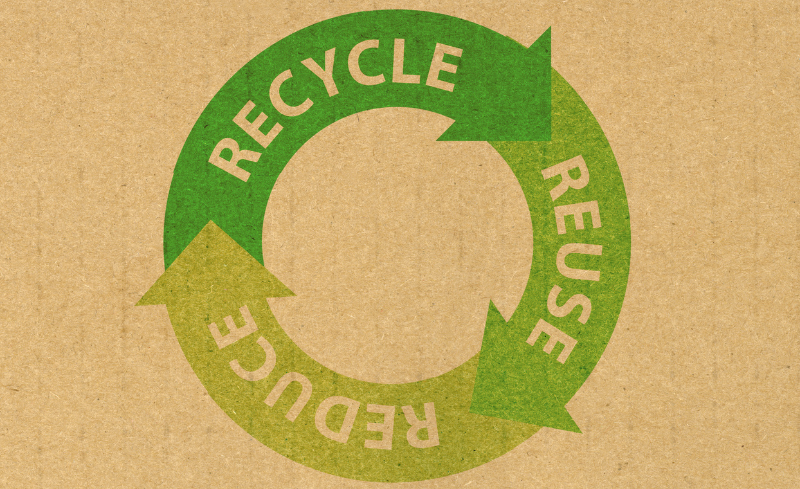
This model is structured around three key principles:
-
- Reducing resource use.
- Reusing materials and products.
- Recycling and recovering value from generated waste.
The circular economy not only reduces environmental impact but also improves the efficiency of production processes and contributes to emissions reduction.
In this context, waste ceases to be a problem and becomes a strategic resource.
WASTE MANAGEMENT AS A CLIMATE ACTION TOOL
The relationship between waste and climate action is direct.
Inefficient management leads to the loss of valuable materials and an increase in the environmental impact associated with their treatment and disposal.
In contrast, a management approach focused on value creation allows for:
-
- Reducing the consumption of virgin raw materials.
- Decreasing waste destined for disposal.
- Optimizing resource use.
- Improving the efficiency of industrial processes.
- Reducing the environmental footprint of organizations.
Companies that integrate the circular economy into their operations not only contribute to sustainability, but also improve their competitiveness and their ability to adapt to new regulatory and environmental challenges.
NOW FOR CLIMATE: HOW WASTE MANAGEMENT HELPS REDUCE THE ENVIRONMENTAL IMPACT OF COMPANIES

“NOW for climate” is the slogan for World Environment Day 2026, a reminder that climate action cannot wait. In the business world, this action translates into concrete measures that reduce emissions and move towards more sustainable models.
In the case of waste management, these actions include:
-
- Prevention of waste generation at source.
- Efficient separation and classification of materials.
- Increased appreciation versus elimination.
- Reincorporation of materials into the production cycle.
- Reduction of emissions associated with treatment and transportation.
- Progress towards Zero Waste models.
Each of these actions contributes directly to reducing the environmental impact of companies and their transition towards more circular models.
“Por el clima YA” es el lema del Día Mundial del Medio Ambiente 2026, un recordatorio de que la acción climática no puede esperar. En el ámbito empresarial, esta acción se traduce en medidas concretas que permiten reducir emisiones y avanzar hacia modelos más sostenibles.
En el caso de la gestión de residuos, estas actuaciones incluyen:
-
- Prevención de la generación de residuos en origen.
- Separación y clasificación eficiente de materiales.
- Incremento de la valorización frente a la eliminación.
- Reincorporación de materiales al ciclo productivo.
- Reducción de emisiones asociadas al tratamiento y transporte.
- Avance hacia modelos de Residuo Cero.
Cada una de estas acciones contribuye directamente a reducir el impacto ambiental de las empresas y a su transición hacia modelos más circulares.
HOW WE DO IT AT TMA: TRANSFORM WASTE MANAGEMENT INTO POSITIVE CLIMATE IMPACT
At TMA we understand waste management as a strategic tool within the environmental transformation processes of companies, not only as an operational service.
Our work focuses on helping organizations move towards more circular, efficient models prepared for the current challenges of sustainability and climate action.
To achieve this, we combine comprehensive waste management solutions with an approach based on recovery, traceability and continuous process improvement.
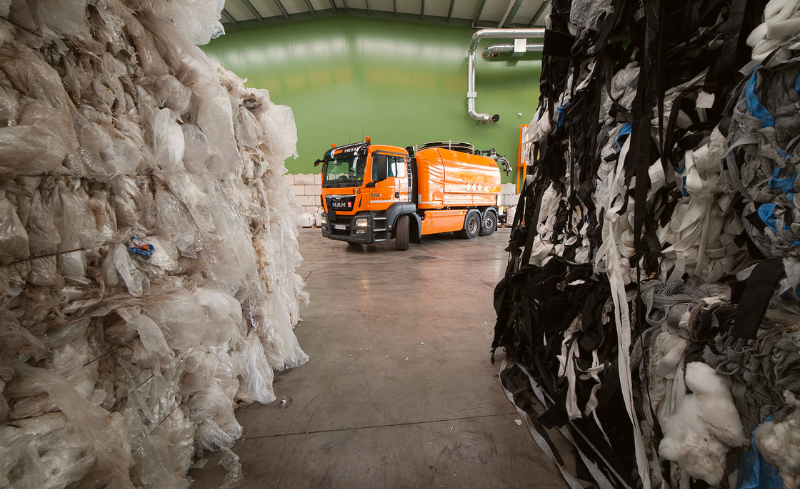
We have our own treatment plants and a specialized fleet that allows us to comprehensively manage the entire waste cycle, guaranteeing traceability, operational efficiency and compliance with the highest environmental standards.
This model allows us to respond to the needs of different production environments, adapting to each type of waste and the specific requirements of each client.
We work with organizations from different sectors where efficient waste management is a key element both from an operational and environmental point of view, especially in those areas with high generation or complexity of waste.
Thanks to this operational capacity, at TMA we can ensure a complete service that ranges from collection and transportation to the treatment and recovery of materials, contributing to their reincorporation into the production cycle whenever possible.
In addition, we promote Zero Waste projects that allow organizations to progressively reduce waste generation and maximize its recovery, moving towards more sustainable models aligned with the circular economy.
This approach is complemented by our commitment to measuring and reducing our environmental footprint, supported by obtaining the “Calculo” seal for three consecutive years.
Together, these actions allow us to accompany companies not only in the management of their waste, but also in their transition towards more responsible, efficient models aligned with current climate objectives.
Environmental support for companies: promoting business sustainability
The transition towards more sustainable models does not depend solely on regulatory compliance, but on the ability of companies to transform their way of operating.
At TMA we accompany organizations in this process, helping them to:
-
- Improve your waste management.
- Increase your valuation rates.
- Reduce your environmental impact.
- Advance ESG strategies.
- Integrate the circular economy into your activity.
Waste management thus becomes a real tool for transformation, not only environmental, but also organizational and strategic.
THE FUTURE OF CLIMATE ACTION LIES IN BETTER WASTE MANAGEMENT
 Climate change requires a global response, but also concrete actions at the business level.
The way companies manage their waste directly influences their environmental impact and their ability to move towards more sustainable models.
Therefore, climate action does not depend only on how energy is produced, but also on how existing resources are managed.
Climate action also depends on how we manage the resources we have. At TMA we believe that efficient waste management is key to reducing the environmental footprint of companies, moving towards a more sustainable model and protecting the environment.
At TMA we work every day to make this transformation possible.
Because when waste becomes a resource, not only does a cycle close: the door opens to a more efficient, responsible economic model aligned with the future of the planet.
MORE NEWS ON SUSTAINABILITY AND ENVIRONMENTAL CARE
All the information on corporate sustainability and environmental responsibility to mitigate climate change through integrated waste management.
World Climate Day: why waste management is key in the fight against climate change.
How waste management helps reduce emissions and carbon footprint and contributes to business decarbonization.
How to manage waste properly in companies: prevention, recovery and business sustainability.
Integrated waste management in companies: towards the Circular Economy.
How Environmental Education promotes sustainable habits to care for the environment.
What is Clean Energy? Challenges, opportunities and practical advice for the energy transition.
Efficient waste management: a key strategy against climate change.
Good practices for energy saving and efficient energy consumption.
How to improve energy efficiency: a complete guide and best practices.
If you need efficient waste management, tailored to your business and aligned with your 2026 environmental goals, we would be delighted to help.
Write to us at comercial@tma.es and we will prepare a personalized proposal for you.
Discover our comprehensive waste management services and join us on the path to a more sustainable future.
We take care of our customers and we take care of the environment.
We are much more than comprehensive waste management.
Follow us on TMA’s LinkedIn. Subscribe to our YouTube channel.
Contact us, we will be happy to advise and inform you.