Every May 17th, the world celebrates World Recycling Day, a key date to reflect on the way we manage waste and the impact that management has on the planet. But beyond the typical advice of “separate, reduce, and reuse,” today we want to go a step further. This article is not a standard guide. It’s an invitation to understand how you can know if you’re recycling correctly (or not), both at home and at your business. Discover why recycling is much more than separating waste and how you can recycle better in your daily life.
WHAT IS WORLD RECYCLING DAY?
Every May 17th, World Recycling Day is celebrated with the aim of raising awareness about the importance of reducing, reusing, and recycling our waste. This date, established by UNESCO, reminds us that natural resources are not infinite and that our daily actions have a direct impact on the planet.
But beyond being a symbolic day, it’s an opportunity to rethink our consumption habits and reflect on how we can contribute more actively to sustainability. Because recycling implies assuming collective environmental responsibility. It means rethinking how we buy, how we use, and what we do with what we no longer use.
WHY IS RECYCLING KEY TO CARING FOR THE PLANET?
What is recycling?
Recycling is much more than separating waste.
Recycling is not just an ecological practice; it is an environmental, economic, and social necessity.
In a world that produces more waste than it can sustainably manage, recycling becomes an essential tool to minimize our impact on the environment.
Recycling doesn’t simply mean throwing everything in its bin.
It involves a circular process, in which the materials we consume can return to the production cycle and become new products, reducing the extraction of natural resources and the emission of polluting gases.
But for that to happen, the first link (you) must know exactly how to act. If the first step already fails, it will be very difficult for recycling to fulfill its fundamental role: helping the environment.
Recycling well at home, in the office, or in stores contributes to a more efficient waste management system, cleaner cities, healthier seas, and a more habitable planet.
Recycling as a brake on the overexploitation of resources
Every time we recycle paper, plastic, glass, or metals, we avoid the extraction of new raw materials. This translates into fewer trees being cut down, less water and energy consumption, less mining, and less pressure on ecosystems. For example, recycling a ton of paper saves 18 trees and 50,000 liters of water.
Thus, recycling directly contributes to the conservation of natural resources and slows habitat degradation.
Less waste, less pollution
When we don’t recycle, most waste ends up in landfills or incinerators. In landfills, waste generates greenhouse gases such as methane, 25 times more potent than CO₂, and polluting liquids (leachates) that can infiltrate the soil and groundwater. Incineration, meanwhile, can release toxic particles and heavy metals if not properly controlled.
Recycling reduces the volume of waste that needs treatment and therefore reduces air, water, and soil pollution.
Helps in the fight against climate change
Recycling consumes less energy than producing new materials from scratch.
This reduction in energy consumption translates into fewer greenhouse gas emissions, making recycling a key ally in mitigating climate change.
TYPES OF WASTE: HOW TO RECYCLE AND WHAT HAPPENS IF WE DON’T RECYCLE
Knowing the types of waste we generate is essential to managing it properly and minimizing its environmental impact.
Not all waste goes in the same container or is recycled in the same way.
Below, we explain the main types of waste, how to separate it properly, and what happens when it’s not recycled.
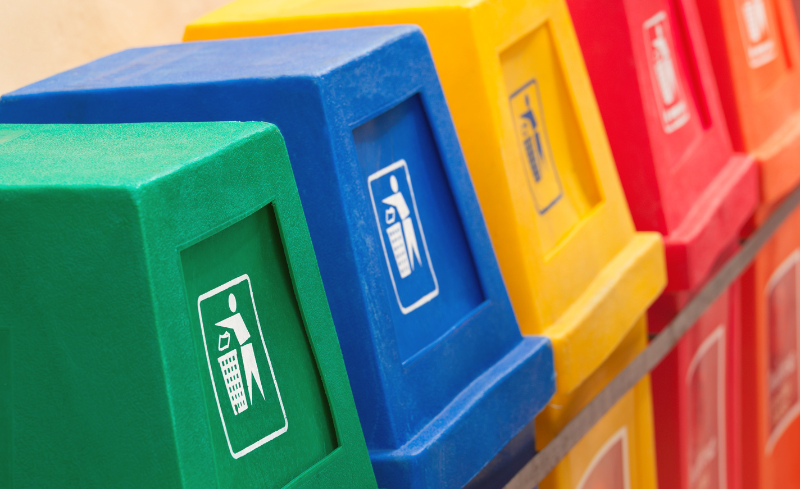
Lightweight packaging waste (yellow container)
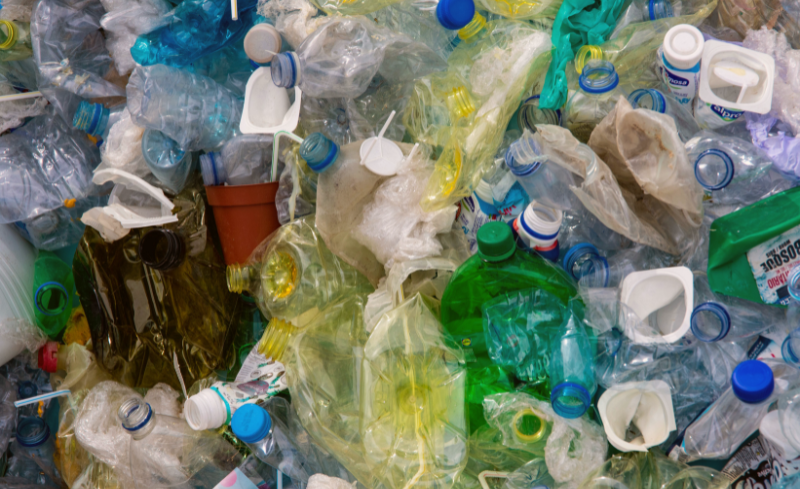
What goes: plastic bottles, cans, cartons, metal lids, plastic wrap, aluminum trays, potato chip bags, yogurt containers (empty).
What doesn’t go: plastic toys, disposable cutlery, baby bottles, kitchen utensils, coffee capsules (if not separated).
Consequences if not recycled:
-
- Ends up in landfills or incinerators, generating polluting gases such as methane and CO₂.
- Plastic can take between 100 and 1,000 years to degrade.
- The possibility of reusing valuable materials is lost, and oil is still being extracted to produce new plastic.
Paper and cardboard waste (blue bin)
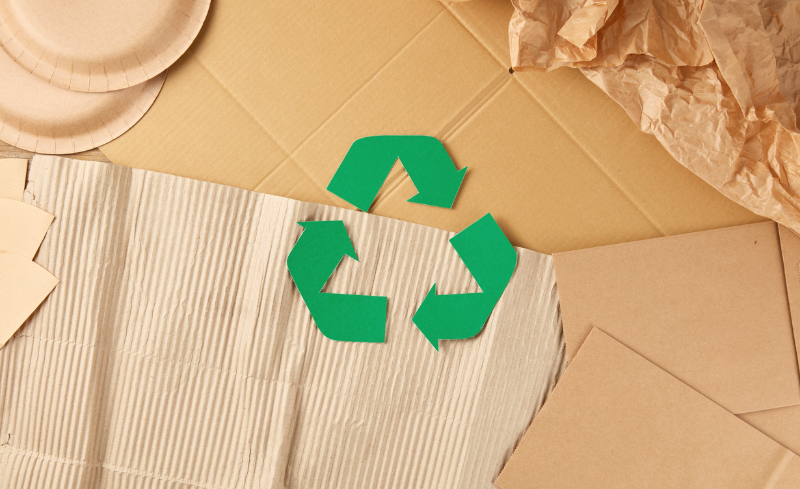
What goes: newspapers, magazines, boxes, cardboard packaging, paper bags, sheets of paper, ring-bound notebooks.
What doesn’t go: soiled napkins, used tissues, laminated paper, cardboard stained with grease or food.
Consequences of not recycling:
-
- Tons of cellulose that could be reused are wasted.
- Tree felling increases to obtain new raw material.
- More water and energy are consumed producing virgin paper than recycling it.
Glass (green bin)
What goes: bottles, jars, and flasks (without metal or plastic lids or caps).
What doesn’t go: mirrors, light bulbs, glass cups, ceramics, window panes.
Consequences of not recycling:
-
- Glass never degrades: it can remain in nature for thousands of years.
- A 100% recyclable and infinite material is lost, which could be reused indefinitely without loss of quality.
- Manufacturing new glass from scratch consumes more energy than melting down recycled materials.
Organic waste (brown bin, if available)
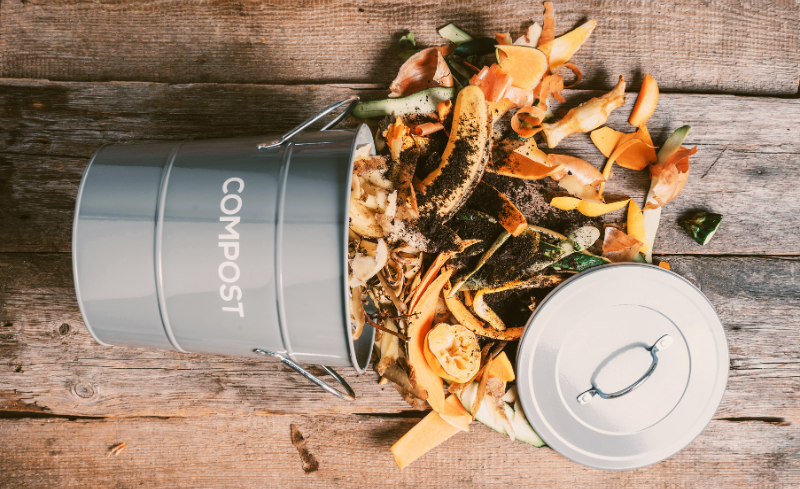
What goes in: food scraps, fruits, vegetables, eggshells, coffee grounds, dirty kitchen paper, stained napkins.
What doesn’t go in: meat scraps with large bones, diapers, cigarette butts, sanitary napkins, plastic or metal materials.
Consequences of not recycling:
-
- They end up in landfills, where they generate leachate and greenhouse gases.
- Their potential to generate compost or biogas is wasted.
- Waste treatment costs and the use of chemical fertilizers increase.
Hazardous Waste
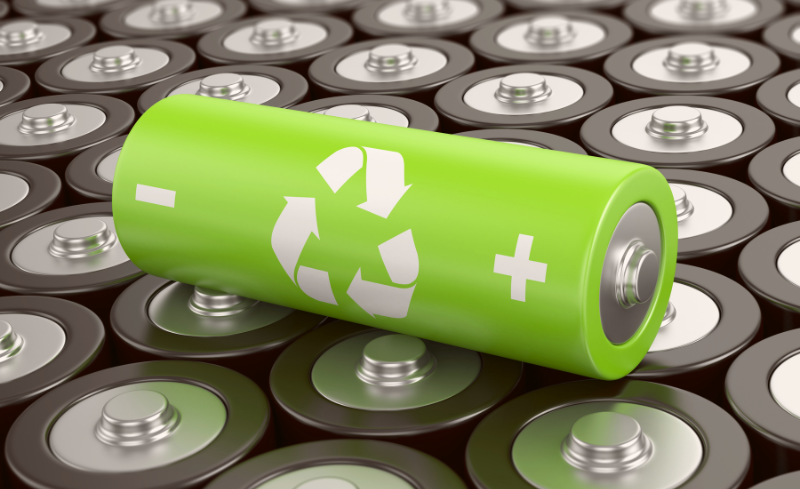
What it is: batteries, fluorescent lights, paints, aerosols, cleaning chemicals, expired medications.
How to recycle it: take it to recycling centers, pharmacies (in the case of medications), specific collection points in supermarkets, or municipal centers.
Consequences of not recycling it:
-
- It can contaminate soil and water with heavy metals (mercury, cadmium, lead).
- It poses a risk to human health and biodiversity.
- A single battery can contaminate up to 600,000 liters of water.
WEEE (Waste Electrical and Electronic Equipment)

What is WEEE: cell phones, computers, printers, cables, small appliances, televisions, refrigerators, etc.
How to recycle it: hand it in at recycling centers, in the store when purchasing a new one (legal obligation of the distributor), or through municipal collection.
Consequences of not recycling:
-
- They contain hazardous materials (such as lead or arsenic) and valuable materials (such as gold or lithium).
- Discarding this waste can lead to landfill fires or toxic emissions.
- The opportunity to recover useful components for the technology industry is lost.
Non-recyclable waste (gray bin)
What goes in: diapers, cigarette butts, sanitary napkins, dust, ceramics, broken objects that cannot be recycled.
What doesn’t go in: any waste that fits into the other categories.
Consequences of overusing this bin:
-
- The overall recycling rate is reduced.
- The volume of waste sent to landfills or incineration increases.
- Resources that could be reintroduced into the production cycle are not utilized.
Recycling well begins with knowing what each waste is. Separating waste at source (at home, in the office, in stores) is the first and most important barrier to preventing waste from ending up in the wrong place.
And every time we don’t recycle, we generate a double impact: environmental, due to pollution, and economic, due to the cost of treating something that could have been reused.
For recycling to work, we must all do our part: separate correctly, know the containers, and cooperate with collection systems.
REDUCE, REUSE, RECYCLE: THE 3Rs
0magine if everything you use had a second chance.
That glass container could be melted down to become a new bottle. Or that a cardboard box could be returned to the market as part of a book or notebook.
That’s the reason for the 3Rs: reduce, reuse, and recycle.
 Reduce: the first step to Zero Waste
 Reduce: the first step to Zero Waste
Reducing means questioning our consumption habits.
Do we really need that extra packaging? Can we choose a product with less packaging or buy in bulk?
Every decision counts. When we reduce, we prevent waste from being generated from the start.
And most importantly, we also reduce the use of energy, transportation, emissions, and raw materials.
This first step is the most powerful, but also the most demanding.
It involves thinking before consuming: choosing quality over quantity.
And realizing that sustainability begins long before any waste reaches our hands.
Reuse: extending the lifespan of products
Reuse is the art of giving objects more than one life.
From using a cloth bag hundreds of times to repurposing a glass jar into a glass or an organizer.
But we also talk about repairing, donating, exchanging, or selling. In the business world, reuse means extending the lifespan of office supplies, furniture, or even packaging.
Every time we reuse, we reduce the need to manufacture something new. Less production, fewer emissions, less waste. It’s a direct action that promotes resource efficiency.
Recycle: closing the loop properly
Recycling comes at the end of the process, when we can no longer reduce or reuse. It involves transforming waste into new raw materials. Although it’s the most well-known step, it shouldn’t be the first. Even so, it’s still essential: if we don’t recycle, the chain is cut and the cycle is broken.
CIRCULAR ECONOMY AND RECOVERY: FROM THE 3Rs TO A SUSTAINABLE MODEL
The Circular Economy is not just a trend.
It is a profound transformation in the way we produce, consume, and manage resources. Rather than the linear “use and throw away” model, the Circular Economy proposes a continuous cycle where materials remain in use as long as possible.
Circularity is:
Designing to last.
Repairing before replacing.
Making use of what already exists.
From waste to resource: the power of waste recovery
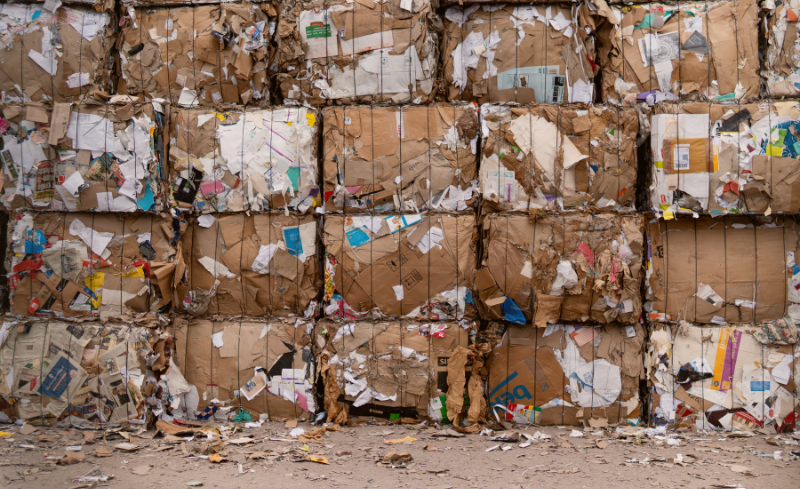
The concept of waste recovery also comes into play here, going a step beyond traditional recycling.
Recovery means finding new uses for what seemed useless. It means giving it a second life, or even a complete transformation.
-
- Organic waste can be used to make compost to enrich the soil.
- Non-recyclable waste can be used to create alternative fuel.
- Some industrial waste becomes raw material for other industries.
At TMA, we apply recovery processes that minimize the volume of unused waste.
This is only possible thanks to proper separation, advanced technological processes, and, above all, a clear vision: every piece of waste is an opportunity waiting to be transformed.
RECYCLING AND CIRCULAR ECONOMY: LESS WASTE AND MORE SOLUTIONS
Recycling is part of a larger model: the circular economy. It’s an approach that seeks to keep resources in use for as long as possible, minimizing waste generation and maximizing its utilization.
 At TMA, we apply this approach not only to the services we offer but also to our own operations: we choose recyclable materials, reduce waste at source, and prioritize recovery. We believe in a sustainability practiced every day.
-
- The Circular Economy changes the logic of “produce-use-throw away” to “reduce-reuse-recycle-recover.”
- Recovery converts waste into raw materials or energy.
- Recycling is not the end, but the beginning of a smarter model.
Because yes: recycling is not enough, but it’s a great start.
Recycling does make a difference.
And when you do it well, consciously and in connection with other efforts (such as consuming less, choosing better, repairing, sharing), then yes: recycling becomes a powerful tool for transformation.
Because every piece of waste managed properly is a resource that returns to the wheel of the system.
DO YOU RECYCLE WELL AT HOME? KEYS TO CHECK IT AND IMPROVE IT
Recycling poorly is like not recycling at all. Many people believe they do it well, but small mistakes can make the effort useless.
Here’s a quick guide to find out if you recycle well at home and improve your habits starting today.
- Do you separate your waste properly?
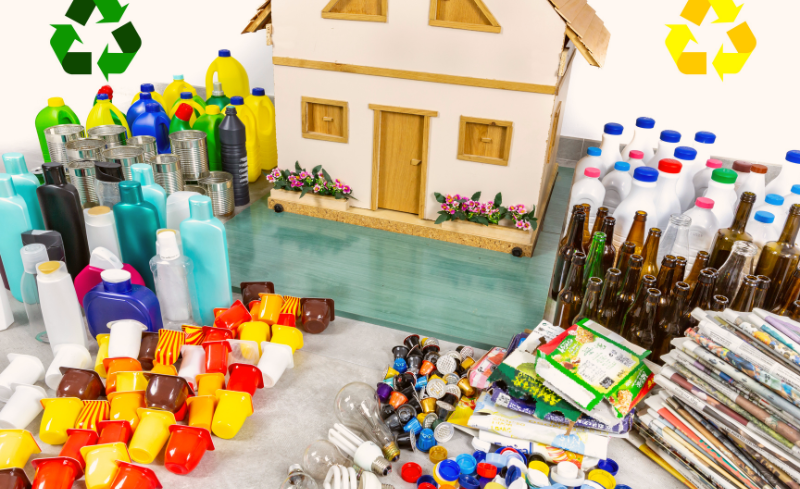 Do you separate your waste properly?
Brick to the yellow bin. Correct… but remember:
-
- Empty it completely
- Rinse it lightly
- Fold it to save space
Dirty napkins to the blue bin. Common mistake.
Even though they’re made of paper, they should go:
-
- In the brown bin (if there’s an organic bin)
- Or in the gray bin (other than the brown bin), if there’s no brown bin in your area.
- Do you know what to do with electronic waste?
A broken charger, an old cell phone, or a toaster don’t belong in the bin.
Take them to the recycling center or return them to the store if you buy a new one.
They contain valuable metals and contaminants that must be properly treated.
- What do you do with used oil?
Pouring it down the sink contaminates thousands of liters of water.
Store it in tightly sealed plastic bottles and take them to the recycling center or a specific container.
- Do you reduce and reuse?
Before recycling, reduce and reuse:
-
- Avoid overpackaged products
- Use reusable bags
- Save jars, boxes, and containers for other uses
- Do you know what goes in each bin?
Common mistakes:
-
- Greasy cardboard (like pizza boxes): DOES NOT go in the blue bin
- Dirty coffee capsules: DO NOT go in the yellow bin, unless they are 100% plastic or aluminum and are clean
- Use a recycling app or check with your local council
- What are the differences between material, packaging, and waste?
Material: Plastic, glass, paper…
Packaging: What a product contains (e.g., bottle, can).
Waste: What you throw away.
For example, a toothbrush is made of plastic, but it’s not a container: it goes in the gray bin or a recycling center.
- Do you have less and less waste in your gray bin?
If your “waste” bag remains full every week, something is wrong.
Do a weekly review: What could you have separated better?
- Do you reuse when you can?
Always carry a cloth bag with you.
Use glass jars for preserving or storage.
Reuse boxes to organize, store, or ship.
Reuse is the most forgotten “R”… but one of the most powerful.
- Do you know what goes in the brown bin?
YES: food scraps, peels, dirty napkins, stale bread.
NO: diapers, cigarette butts, wipes, hair, or shellfish shells.
If your municipality doesn’t have a brown bin, that waste goes in the gray (remains).
- Do you rinse containers?
It’s not necessary to wash them thoroughly, but you do need to:
-
- Empty well.
- Rinse quickly.
- Cover if it’s liquid.
- Crush to save space.
- Do you shop with recycling in mind?
Do you prefer glass over plastic?
Do you avoid unnecessary packaging?
Buying in bulk, choosing products with reusable or biodegradable packaging… is also recycling.
- Do you use a recycling center?
It’s the right place for: light bulbs, batteries, aerosols, paints, small appliances, etc.
Find the nearest one or find out if they offer mobile or home collection.
- Do you recycle your online purchases correctly?
Ecommerce has brought in tons of packaging.
Reuse boxes for other shipments or storage.
If there’s excess packaging, contact the company and suggest improvements.
HOW TO RECYCLE BETTER AT HOME: PRACTICAL GUIDE TO HOME RECYCLING
Here’s a complete guide to know if you’re doing it right (or if you can do even better):
Identification and sorting

-
- Correctly separate your waste into organic waste, paper, plastic, glass, and discarded waste.
Not all plastic goes in the yellow bin. Learn about these and correct common mistakes. - Identify the recycling centers or special containers in your municipality.
Batteries, light bulbs, electronic devices… don’t go in your trash can at home. - Know which containers have the green dot symbol and what it means.
It doesn’t indicate recyclability, but rather that the manufacturer has paid for its collection. - Also recycle in rooms like the bathroom or home office.
Where do you throw away shampoo bottles, brushes, or staples? - Check the waste before throwing it away to empty or clean what’s necessary.
A yogurt with leftovers can ruin an entire recycling bag.
- Correctly separate your waste into organic waste, paper, plastic, glass, and discarded waste.
Conscious Consumption

-
- Buy products with recyclable or reusable packaging.
The simpler the packaging, the easier it is to recycle. - Reuse bags, jars, boxes, and containers.
A glass jar can be used for a lamp, a spice rack, or a flower pot. - Avoid single-dose or overpackaged products.
If you need to open three packages for a single product… it’s not a good sign. - Bring your own containers or bags when you shop.
Every bag you don’t use counts. Every habit you maintain multiplies. - Support brands with sustainable packaging or logistics policies.
Research, choose wisely, and reward those who do it well.
- Buy products with recyclable or reusable packaging.
Household Management and Habits
-
- Have separate and well-placed containers at home.
If separating is inconvenient, you won’t do it. Make your life easier to make life easier for the planet. - Involve the whole family, including children and adults.
Recycling isn’t imposed; it’s contagious. Do it with creativity and example. - Perform regular cleanups to properly dispose of accumulated waste.
Drawers filled with “just in case” items become invisible tons. - Check the contents of the trash before taking it out.
A quick check can prevent mistakes that contaminate the entire batch. - Consult reliable sources when you have questions about recycling.
Don’t just rely on what the label says. Consult official websites or waste managers.
- Have separate and well-placed containers at home.
Monitoring and improvement
-
- Keep a small monthly record of the volume of trash generated.
It’s not an obsession; it’s awareness. And it can be done with a simple note on your phone. - Set monthly reduction or reuse challenges.
Can you live 30 days without buying new plastics? - Measure your progress and celebrate your personal or family achievements.
You’ve reduced your trash by 40%! This deserves a sustainable celebration. - Share your experience with those around you to inspire change.
Sustainability also goes viral through everyday conversations. - Keep recycling.
It’s not about being perfect, it’s about being consistent. Every little helps.
- Keep a small monthly record of the volume of trash generated.
DOES YOUR COMPANY RECYCLE? HOW TO KNOW IF YOUR COMPANY MANAGES WASTE WELL
Companies, regardless of their size, generate waste: from packaging scraps to industrial or hazardous waste.
But managing waste well is not just a legal obligation: it’s a strategic decision that reduces costs, improves reputation, and actively contributes to the circular economy.
Recycling is an opportunity to create an environmental culture, to innovate in processes, and to rethink the design of products and materials from the very beginning so they can have a second use.
Only some companies manage waste with a long-term vision and real commitment.
Waste management as part of corporate culture
Recycling in a company should not be seen as an administrative procedure.
It is a tool for transformation. It involves rethinking products, redesigning processes, and building more conscious teams.
Because every company generates waste.
But only some manage it with vision, leadership, and commitment.
Managing waste intelligently is also a way to take care of your business… and the planet.
Key questions to assess your company’s waste management
This “test” can help you identify where you are… and where you should move forward.
These aspects make the difference between a company that meets the minimum standards and one that leads with environmental responsibility:
-
- Have you identified the type of waste you generate?
Each waste must be classified with its corresponding LER (European Waste List) code. This is not only mandatory but also allows for proper treatment and tracing of its route. - Do you have an authorized waste manager and a signed contract?
Hiring just any transport company is useless. The manager must be authorized by the competent authority, and the relationship must be documented. Without this, you risk a fine. - Do you have a waste minimization plan?
If you generate hazardous waste, it is mandatory. If you don’t, it is highly recommended. A good plan includes objectives, specific measures, and periodic review. - Do you train your team in waste separation and prevention?
80% of success in corporate recycling is decided at the moment the waste is generated. Training prevents errors such as mixing materials or contaminating recyclable fractions. Improperly separated waste is more costly to treat. Human error at source is one of the main leaks in the system. - Do you have environmental indicators or KPIs?
What isn’t measured can’t be improved. Monitoring is essential: kilos recycled, percentage recovered, hazardous waste properly treated, year-over-year reduction, etc. - Do you have internal protocols for each type of waste?
Not all are managed equally: healthcare waste, toxic waste, organic waste, bulky waste… each requires its own flow. - Are environmental objectives communicated and reviewed with the team?
Setting goals is important, but sharing them and reviewing compliance is what drives continuous improvement. - Is your staff aware of current regulations and does it apply them in their daily work?
Proper management doesn’t depend solely on the environmental department: it involves the entire team, from logistics to administration. - Are there clear and public indicators?
Companies that publish their environmental results gain transparency and credibility with customers, employees, and administrations.
- Have you identified the type of waste you generate?
Best practices to improve waste management in companies
It’s not enough to “do it right”: companies that want to make a difference must go a step further. A responsible company implements a comprehensive waste management plan and reviews it periodically.
These practices improve management, generate savings, innovation, and reputation:
-
- Conduct annual waste audits.
They detect leaks, identify hidden waste, and allow for process optimization. They are key to moving from compliance to improvement. - Apply circularity criteria in purchasing.
Prioritize recycled products, biodegradable materials, or reusable packaging. Circularity begins with purchasing decisions. - Include sustainable clauses in supplier contracts.
Require the same from your partners that you apply internally. You can request packaging collection, reverse logistics, or the use of recycled materials. - Promote the reuse and recovery of materials.
From pallets to furniture, including industrial waste that can have a second life in other sectors. - Digitize waste control.
Platforms that allow you to record inputs and outputs, verify traceability, and automate reports. You gain control and reduce errors.
- Conduct annual waste audits.
WASTE MANAGEMENT IN THE COMPANY: EVERYTHING YOU NEED TO KNOW TO BE A MORE SUSTAINABLE COMPANY
This checklist not only serves to assess regulatory compliance but also to pave the way toward environmental excellence. The more points you meet, the more circular and competitive your company will be.
-
- Identify the types and quantities of waste generated.
Knowing what waste you produce is the first step: paper, plastics, WEEE, hazardous waste, organic waste, etc.
Example: Differentiate between office paper and packaging waste. - Classify waste according to its LER (European Waste List) code.
This coding is mandatory for proper management and traceability. - Hire an authorized waste manager and have all documentation in order.
Check that the manager has current permits and keep contracts, delivery notes, and certificates.
Example: It’s not enough that they “remove the waste”; they must prove it during an inspection. - Record all collections with delivery notes and treatment receipts.
Every waste output must be documented and filed. - Implement waste minimization measures at source.
Reduce waste from the design or purchase stage.
Example: Buy products in bulk, avoid unnecessary materials. - Regularly train the team on separation and best practices.
More training means fewer errors at source and lower treatment costs. - Monitor waste management indicators (KPIs).
Kilos per type, % recovered, year-over-year reduction, etc.
Example: Reduce the “remains” fraction by 10% in one year.
- Have well-marked and accessible containers.
Location and design directly influence their use. - Conduct waste audits at least once a year.
Evaluate efficiency and identify opportunities for improvement.
Example: An audit may reveal that recyclable plastics are being mixed with waste. - Communicate environmental achievements internally.
Strengthen team engagement.
Example: “We have recycled 2,000 kg more cardboard than the previous year.” - Have a reviewable management plan and annual objectives.
A living document, not just an obligation. - Digitize control and monitoring processes.
Use apps or platforms to easily record, view data, and generate reports. - Integrate environmental clauses into supplier contracts.
Require sustainable packaging, packaging removal, reverse logistics, etc. - Apply circular economy criteria in purchasing and processes.
Favor recycled or recyclable products, closed processes, or reusable materials. - Focus on reuse over recycling.
Recycle furniture, boxes, trays, etc. - Properly manage electronic waste (WEEE).
Do not store it indefinitely.
Example: Old cell phones and computers should be taken to an authorized waste disposal facility. - Properly collect and manage used cooking oil (if applicable) and used machinery.
Example: Store in approved containers and deliver to an authorized waste manager. - Reduce the volume of hazardous waste and treat it properly.
Replace products with less toxic versions whenever possible. - Publish sustainability results on the website or in corporate reports.
Transparency and commitment. Improve your reputation as a responsible company. - Encourage active employee participation with internal campaigns and challenges.
Example: “Paperless office” challenges, waste reduction ideas competition, etc.
- Identify the types and quantities of waste generated.

RECYCLING WELL IS A STARTING POINT, NOT THE DESTINATION
Recycling is a powerful tool, but it shouldn’t be an excuse to continue generating waste without questioning its origin. The key is to change our mindset: from passive consumers to responsible citizens.
This World Recycling Day is the perfect opportunity to review what you do, learn what you didn’t know, improve what you can, and commit to more conscious and transformative waste management.
We take care of our customers and we take care of the environment.
We are much more than comprehensive waste management.
If you want to comply with regulations, improve your environmental impact, or adapt your procedures, write to us at comercial@tma.es and we will be happy to provide you with a personalized proposal, fully tailored to your needs.
We are here to help you reduce the environmental impact of your waste and take care of the environment.
Discover our comprehensive Waste Management Services.
Follow us on TMA’s LinkedIn. Subscribe to our YouTube channel.
Contact us, we will be happy to advise and inform you.